There
is more to Spanish culture than many tourists
see.
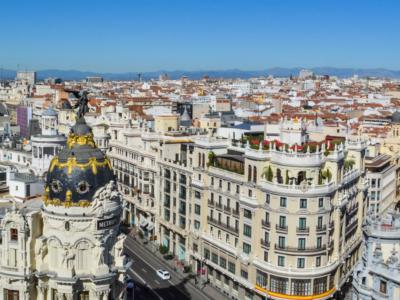
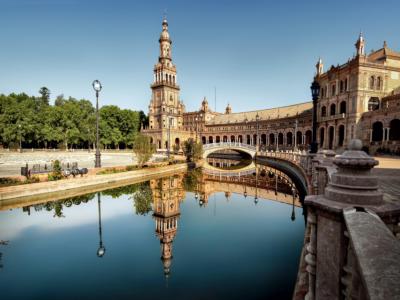
Spain boasts
plenty of buildings of great
architectural interest, particularly
its churches
and castles.
But even the humblest town or village usually
has its charms. Every town and village has
its plaza mayor
or main square, often reached by a covered
arcade. The square
is usually an extended forecourt of the
town or village hall.
The country
is also famous for its furniture
(particularly chests); tapestries
and embroideries;
gold,
silver
and iron
work (including wrought iron screens); sculpture;
and ceramics
(including azulejos,
glazed pottery tiles).
Spain has
consistently produced painters of note,
dating back to the tenth century. Perhaps
two of the most famous are Goya
(1746-1828), who played a significant role
in the evolution of painting in Europe and
Velázquez
(1599-1660) who most significant works include
Las Meninas
and La Rendicion de Breda,
both if which can be seen at the
Prado in Madrid.
This century
the ‘Paris
School’
has produced such internationally known
names as
Salvador Dali
and Pablo
Picasso.
Composers
such as Enrique
Granados,
Isaac
Albéniz,
Manuel
de Falla and
Joaquín
Rodrigo
have gained international recognition.
Placido
Domingo is one of Spain’s most
famous operatic
performers, closely followed by José
Carreras. Cataluña’s
Montserrat Caballé
is known to be one of the most outstanding
sopranos in the world.
The cinema
is the most popular form of entertainment
and, in addition, most cities of any significance
have a theatre.
This is mainly due to the development programme
by the Partido
Socialista Obrero Español
government in the 1980s
and ‘90s.
Flamenco
is the musical tradition in the south of
the country, particularly in Andalucia.
It has roots in the
cante jondo
(deep song) of the gypsies. Sevillana,
on the other hand, is more of a folk dance
and almost without exception, girls all
over the country learn to dance the sevillana.
Flamenco
shows
which are tourist-orientated usually lack
the emotion of real flamenco
and it is preferable to try to catch a performance
by one of today’s leading personalities
such as Joaquín
Cortes
and Manuel
Vargas.
One of
the most important sports in Spain is football,
which has a greater national following than
in Britain.
Around 300,000
spectators
attend the games in the Primera
División
and millions more follow the games on television.
People gamble on the football
results through the quiniela
or football pools.
La corrida
de toros
or the bullfight,
still has a tremendous following within
Spain. La lidia,
another name for bullfighting,
gained enormously in popularity
in the mid-eighteenth century, when breeders
developed the first breeds of
toro bravo
or fighting bulls.
Cafés
usually provide the centre of social activity
in the town and village. Spaniards usually
start the day with a very
light breakfast (desayuno),
often being little more than a coffee,
brunch
(almuerzo)
around 10.30 am, lunch
(comida)
between 1.30 pm and 4 pm, and dinner
(cena)
being as late as 10 pm or 11 pm.
Tapas
are also an important part of the Spaniards’
way of life. Tapas are
mini snacks,
often displayed on the counter in bars,
and include things as calamares (squid),
callos (tripe),
gambas (prawns),
albondigas (meatballs)
and boquerones (anchovies)
marinated in vinegar. Tapas can be taken
as a meal
in themselves or as a tasty bite before
going on to a restaurant for dinner.
The actual translation of tapa is lid. The
story is, that in the last century, bar
owners used to cover drinks
with a piece of bread to keep flies away.
It then became practice to put a titbit
on the bread and this evolved into the tapa
of today. Each region of Spain has its own
specialities.
Source:
BlevinsFranks
See
also
Flamenco
Bullfighting
Painting
& Sculpture
History
at a Glance
History
|