| A childish game for a bored millionaire …or an attempt to rebuild history? The seven wonders of the world were clearly not chosen for their durability. The only one that remains is the Pyramids of Cheops (fifth photo), Chephren and Mycerinus in Giza, Cairo – all the others have fallen into ruin. Representing the finest points of the classical world, these spectacular man-made phenomena include the hanging gardens of Babylon, in Iraq; the temple of Artemisa in Éfeso and the mausoleum of Halicarnaso, both in Turkey; the statue of Zeus in Olympia and the Colossus of Rhodes, both in Greece; and the lighthouse of Alexandria, in Egypt.
With six of the seven having bitten the dust, a huge slice of Ancient history has disappeared and Swiss millionaire Bernard Weber felt sufficiently moved by this thought to choose some replacements. A romantic idea that has turned into a global contest attracting 40 million votes, the seven new wonders are due to be picked this year.
Given the vast number of potential candidates worldwide – compared to the previous lot, all of which were based around the Eastern Mediterranean – makes one wonder, why only seven? In theory, there should be no limit on how many can be picked, if they are worthy of the title. "Seven is the average number of objects the brain can remember with the minimum of effort,” reveals Weber, who launched the foundation New 7 Wonders seven years ago.
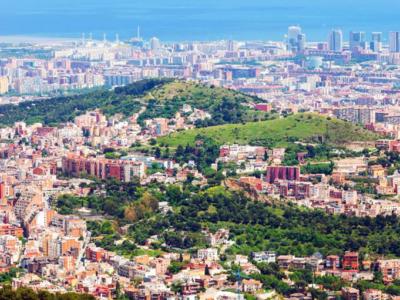
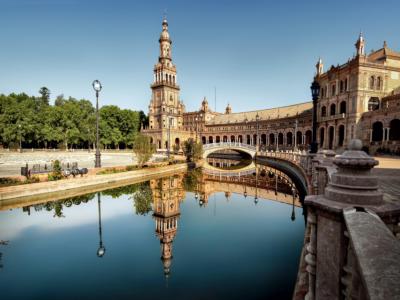
According to the rules, the only prerequisites are that the potential wonder must have been built more than 2,000 years ago, and be man-made (mountains and waterfalls don’t count, so Ayers’ Rock and Niagra are both out). Candidates range from Chichén Itzá in Mexico and Machu Picchu in Perú (fourth photo) to the Great Wall of China and the Taj Mahal (second photo), the entries are diverse but equally as dramatic, awe-inspiring and drenched in history. Even Paris’ Tour Eiffel, Rome’s Colosseo and Stonehenge in the UK were serious candidates.
The wonders of Spain As the final decision is due to be made on July 7 – predictably, to continue the lucky number’s prevalence throughout the contest – radio phone-ins worldwide will probably start soon with the public voting for everything from their local church to the Statue of Liberty. Incidentally, the latter has already made the shortlist.
ThinkSPAIN|today carried out a survey to see which places you all thought were worthy of the honour, either in your town or nationwide. Answers ranged from the cave houses of Andalucía and the hanging houses of Cuenca to Benidorm’s Hotel Bali, the tallest in Europe. Plus Burgos’ spectacular cathedral, a UNESCO heritage site that took half a millennium to build and is a wealth of artistic splendour covering the early Gothic through to the Baroque. Surprisingly, two readers picked Oliva’s Santa Ana castle, a ruin atop a mountain that is far more impressive from the ground than close up. “It’s a lovely walk up the calvario - it depicts the final journey that Christ made to the cross and the views across Oliva are fantastic,” say Robin and Julie from the UK, who have a holiday home in the town. They also thought the Pego-Oliva Marjal with its famous paddy fields was a good candidate – “man-made with Mother Nature thrown in,” they declared.
Oliva’s readers seemed to have the strongest opinions on the subject than anywhere else in the region – one woman, who identifies herself by the unlikely name of Shirley Knott, voted for the precarious-looking chimneys of the ceramic works, which are visible from miles outside the town. Yet there was a surprising absence of readers’ votes from further afield – nobody mentioned Dénia’s castle, Lorca’s Taller del Tiempo or the attractive and imaginative dolphin roundabout on Jávea port.
“The bridge in Beniopa, near Gandia, which was designed by Santiago Calatrava. Oh, and the bridge over the river Jalón, because it’s the only way into the village,” commented Cristina, 29.
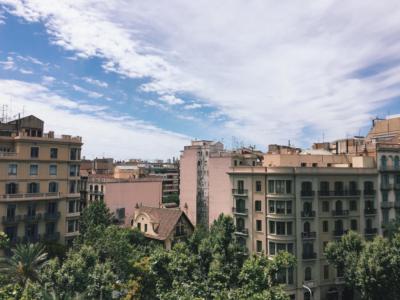
In keeping with the Calatrava theme, the Ciudad de las Artes y las Ciencias in Valencia got the thumbs-up – ironically, given that its clone down under, the Sydney Opera House (third photo), made it to the real shortlist.
Beyond our immediate borders, the unique Mudéjar tower of Teruel, any one of Spain’s mediaeval walled towns, the Roman theatre in Mérida (Extremadura) and the aqueduct in Segovia (Castilla y León) were also firm favourites.
Those whose money was on Gaudí’s Sagrada Familia cathedral in Barcelona were fairly close to the mark, as it was originally one of the real candidates for Spain along with the Mezquita (mosque) of Córdoba and Sevilla’s Giralda cathedral. However, out of the total of 77 possibles, now narrowed down to 21 (again, a multiple of seven) only Granada’s Alhambra Palace (main photo) remains.
Weber reassures us that “Spain should not give up and admit defeat” since the favourites are not necessarily picked for their grandeur, uniqueness or finery – in many cases, the wide geographical distribution is one of the deciding factors. Indeed, even Real Madrid FC’s Santiago Bernabéu stadium received a mention.
Granada, the last city in Spain to fall to the Catholic Monarchs during their ethnic cleansing exercise that saw the deep-rooted Islamic culture purged from the Peninsula, is known for its spectacular palace, also a fortress and formerly the medina (historic quarters) of the city. Founded in the 9th century by the Al-Ahmar dynasty, it became a Christian court after the Reconquest in the 1450s. Attracting tourists from all around the globe, the Alhambra – which translates as ‘red castle’ is by no means out of contention and there are still weeks to go. With 100,000 new votes a day by email, text message and telephone, there is every chance Spain’s potential wonder will become one of Weber’s seven.
Solidarity is not lacking for the Spanish candidate. Not only have King Juan Carlos and Queen Sofía, president José Luis Rodríguez Zapatero and Minister for Culture Carmen Calvo voted for the Alhambra, but a human chain surrounded the building on April 29. Organised by the fire brigade, more than 8,000 joined in. A spokesman for the event explained that they wanted to give the Alhambra a giant hug on the day the royal baby, Sofía, was born and have suggested the king and queen vote for the palace in the newborn’s name.
Silly souvenirs help repair history Many slam Weber’s scheme as infantile and a bit of fun for a bored rich man, with little to do with artistic appreciation. Others even accusing him of using the project as a means of incrementing his already sizeable fortune. Yet the man behind the Wonder War insists that the New 7 Wonders foundation idea arose through his own passion for the arts and is far from lucrative or relaxing.
“It’s been interesting, fun, but the logistics of organising a tour like this of 21 countries involves a lot of work and stress,” Weber explains. “We haven’t even raised enough money to cover our expenses. “If we do we’ll use it to finance restoration of monuments – like the statues of Buddha that the Taliban blew up,” he clarifies.
Funds are being raised by mass production of somewhat naff merchandise such as badges, caps and T-shirts, and even, tragically, a pop song dedicated to the seven wonders of the world.
A more appealing money-spinner is a series of guided tours of the various wonder-sites. Those who are keen on the latter idea can start planning their holidays after July 7, when the wonders are unveiled. If you want to be part of the remaking of history, click onto www.new7wonders.com and cast your vote while the on-line ballot box remains open. |