Search thinkSPAIN.com for  in 
spain jobs
backprinttell a friend

Living with Spain's wilder side: Wolves, raptors and Quixote's wild boar
By:
Penny Lapenna , Friday, September 18, 2009

2009 has been one of the worst in a decade for forest fires in Spain, destroying over 10,000 hectares of wild forest land, with a resultant effect on the wildlife population. But we know comparatively little about the native species that have been affected on the Iberian Peninsula, since wildlife tends to increase in areas depopulated by humans. It is only our absence that allows many species to flourish. If it were not for some dedicated wildlife experts who have studied rural areas in Spain, we would be unaware that the Iberian wolf had made a comeback from near extinction to over 2,000 individuals, that more than 15 types of raptor are flourishing, and that wild boar (which became extinct through over hunting in Great Britain in the 17th century) are abundant, even near the populated suburbs of Madrid.

The depopulation of rural areas in Spain is however also responsible for some of the worst forest fires being allowed to rage unchecked. As villages with declining native populations are being re-invigorated by foreign inhabitants, an awareness of their human effect on local species must be considered.

What can we do to balance our presence with that of local wildlife?

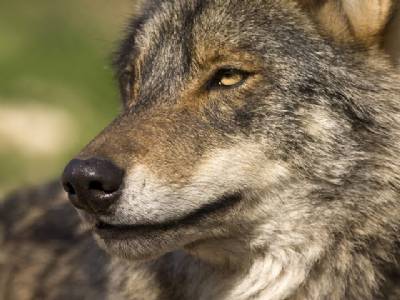
For an example of the beneficial effects of wildlife campaigns look no further than the midnight howls of the Iberian wolf, which now range across much of Spain's rural northwest after decades as an endangered species in remote mountain ranges. But this success story celebrated by conservationists was muted by complaints from Spanish livestock breeders until an old tradition reared its head. Breeders have turned to Mastiff guard dogs to keep their herds safe. The smell of the powerful dog is often enough to keep wolves at bay and deter packs from territories too close to humans and their farms.

The ban in the 1980s on hunting or poisoning of the Iberian wolves, coupled with the more recent abandonment of rural lands, has led them back to territories their kind once called home. Now the Iberian wolf population is slowly recovering from its 1970 low of 400-500 odd individuals with latest figures estimated at as many as 2,000-2,500 in Spain, almost 30% of European wolf numbers outside of the Russian Federation.

From being considered a pest in Spain, and a sign of the country's lack of civilization, the wolf is now beginning to be appreciated as a draw to tourists. Unfortunately, hunting wolves legally has made a comeback too, although most hunts tend to end in failure. The Iberian wolf with its distinctive black markings along jowls, back and tail is currently being considered as a sub-species of the traditional wolf or Canis Lupus which will give it specialist status for conservation.

Another threat to the Iberian wolf (Canis Lupis Signatus) is in-breeding with the thousands of wild dogs that roam loose in rural areas, although the idea that this could generate a wolf-dog hybrid has not been studied in depth. Feral dogs cause far more damage than wild wolves to Spanish flocks and herds. An estimated 87,000 dogs were abandoned in Spain in 2003, and packs can often be seen roaming the edge of villages to scavenge food or diminish resident cat populations. By contrast the fear of wolves is more prominent. In 2000, Asturian sheep farmers put in more compensation claims for sheep killed by wolves than there were sheep in the province.

By allowing prey species such as roe deer and chamois to increase unchecked by hunting, wolf packs can be sustained in balance with human populations. Promoting tolerance for the wolf through educational programmes, reducing tensions between farmers and conservationists, and the swift payment of compensation by the authorities for livestock killed may all provide a stay of execution for this wild predator.

A change in attitudes to local species is always slow, but you only need to cross central or northern Spain to appreciate the immense emptiness of the landscape and its potential to support rich and varied fauna. Iberian lynx, brown bears, bats, wild goat, deer, otters, beavers and rabbits are among the many mammals seen and hunted, along with the numerous birds – raptors such as eagles, buzzards, osprey and vultures, plus game birds like partridge and duck.

Songbirds are still caught using the ‘parany' method of sticks or trees covered with sticky bird lime, a practice which is illegal but persists in small Spanish villages. Local bird lovers have had some success reporting illegal hunting activities, and in this way, hunting wildlife becomes restricted to managed hunting concessions where the populations are artificially controlled.

Quixote's Wild Boar

The wild boar is an ancestor of the domestic pig which can be found wild throughout almost all of the Spanish Peninsula, except the driest parts of the south-east. This is because the pigs lack sweat glands and must cool themselves by wallowing in muddy ditches. Boars are crepuscular, that is they forage from dusk until dawn and they are the only hoofed animals known to dig burrows. They have an important ecological role in helping to clear the forest floor, especially since the decline of the rabbit in Spain. In any Iberian forest you'll see large patches of bare earth scuffed up by boars as they search for worms and grubs, which create seedbeds beneficial to trees and shrubs.

In 2006, there were some 50,000 wild boar in Catalonia alone, even though approximately 24,000 are hunted and killed each year. Hog roasts are extremely popular although generally Spanish butchers sell cultivated boar not the wild variety. The Spanish obsession with boar has been well documented, for instance, by Miguel de Cervantes in Don Quixote where he describes “a huge boar, closely pressed by the hounds and followed by the huntsmen, making towards them, grinding his teeth and tusks, and scattering foam from his mouth. As soon as he saw him Don Quixote, bracing his shield on his arm, and drawing his sword, advanced to meet him; the duke with boar-spear did the same...” The reverence for the animal is akin to the Spanish love of the bull – that is to say, they enjoy the hunt, the kill and the taste, and have woven all sorts of stories and phrases around the creature.

The male boar is big, muscular and has three-inch canine teeth that grow continuously, so it makes a mean adversary. Boar is served on many of the finest tables in Spain, in recipes such as Jabali con higos en Rioja (Boar with figs and white wine) and has long been a part of the Spanish and French diet, in the way that pork is popular in the UK. It is difficult to imagine much enthusiasm for hunting domestic pigs however.  Somehow, the fact that this powerful and self-sufficient creature has been allowed to survive in the wild in Spain is linked to its popularity, with boar hunts still conveying medieval images of proud lords on horseback.

Only the Iberian wolf forms any kind of natural predator to these immense creatures, which have been known to grow up to 200kg in weight, about 150cm long. Vultures will feast on the remains of boar carcasses that mountain wolves discard, so when you next spot boar on the menu, spare a thought for the link between preserving wolves, raptors and boar in Spain's wilder reaches.

 
Print Share Article RSS News Feed
print tell a friend stumble it!  delicious  digg it!  facebook   rss feed View feed | Add to my RSS reader rss feed

Latest ThinkSpain News
'Eyeballing', 'Oxy-shots' and 'Tampodkas': Dangerous and growing drinking trends among Spain's youth
Health/Beauty/Fashion - (25/5/2013)
New law will mean company debt does not affect personal assets
Business/Economy - (25/5/2013)
Three dead and one critical in light aircraft crash
Crime/Incidents - (25/5/2013)
 
Latest Environment/Nature articles
Greenpeace members park fishing boat outside ministry of agriculture and anchor themselves to it
Madrid  - (22/5/2013)
Madrid was the world's coldest capital city on Friday at 9.2ºC
Madrid  - (19/5/2013)
Cosmic shower 'Eta Acuaridas' visible from Spain tonight
Spain  - (5/5/2013)
 
  back
Follow thinkSPAIN on
Facebook Twitter


Spanish news archive Costa Blanca news Costa del Sol news Alicante news Castellon Valencia news Barcelona news Catalonia Costa Brava news Madrid news Tenerife news Canary Islands Malaga news Marbella news Andalucia news Sevilla news Costa Almeria news Murcia news Costa Calida Aragon news Asturias news Balearic news Mallorca Menorca news Ibiza Basque news Bilbao Cantabria news Castilla La Mancha news Castilla Leon news Extremadura news Galicia news La Rioja news Navarra news Spanish Travel Tourism news Spanish Property Spain directory services Spanish A B C D E F G H I J K L M N O P Q R S T U V W X Y Z Jobs in Spain Postcodes Spanish weather Spain History Spanish Culture Flamenco dancers Sevillanas Bullfighting bullfight bull fighting matador bullfighter Spanish Education Spain Schools Facts about Spain Clubs in Spain mortgages Spanish bank Spain banking Spanish banks Spain inheritance Spanish wills Spanish healthcare in Spain Working in Spain work Spanish employment Driving Spain cars Spanish car Spain Tax & Spanish Residency Property in Spain for Sale Spanish property to rent Spain holiday lets Spain news Spanish Properties SpainSave costa blanca 1 2 3 4 5 6 7 8 9 10 11 12 13 14 15 16 17 18 19 20 21 22 23 24 25 26 27 28 29 30 31 32 33 34 35 36 37 38 39 40 41 42 costa del sol 1 2 3 4 5 6 7 8 9 10 11 12 13 14 15 16 17 18 19 20 21 22 23 24 25 26 27 28 29 30 31 32 33 34 35 36 37 38 39 local news/info Spanish estate agents Off Plan property Spain | costa blanca property sales properties for sale real estate costa blanca villas | costa del sol property sales properties for sale real estate costa del sol villas | costa de la luz property sales properties for sale real estate costa de la luz villas | costa brava property sales properties for sale real estate costa brava villas | costa almeria property sales properties for sale real estate costa almeria villas | costa calida property sales properties for sale real estate costa calida villas | costa valencia property sales properties for sale real estate costa valencia villas | costa azahar property sales properties for sale real estate costa azahar villas | costa dorada property sales properties for sale real estate costa dorada villas | costa garraf property sales properties for sale real estate costa garraf villas | costa maresme property sales properties for sale real estate costa maresme villas | costa vasca property sales properties for sale real estate costa vasca villas | costa verde property sales properties for sale real estate costa verde villas | costa da morte property sales properties for sale real estate costa da morte villas
 
© 2003-2013 Think Web Content, S.L. - All rights reserved