Longest summer so far of the 21st century started this morning at 07.04hrs
Longest summer so far of the 21st century started this morning at 07.04hrs
TODAY (Friday) sees the start of the longest summer in Spain in many years, having officially began at 07.04hrs Spanish tier and continuing until September 22.
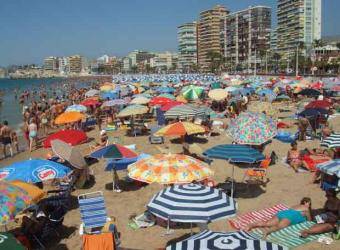
This means summer 2013 will last for a full 93 days and 15 hours, giving an excellent boost to tourism as sunseekers have longer than ever to enjoy their holidays in Spain.
The so-called longest day of the year – with 15 hours and three minutes of daylight in Madrid, compared to the shortest day which has just nine hours and 17 minutes, and is normally on December 21 – is never on the same date ever year, says the National Geographic Institute (IGN).
Over the course of the 21st century, the latest start to the summer will be – and was – in 2003, compared to the earliest, which will be in 2096.
The start of the astrological summer falls between June 20 and 22 in the northern hemisphere and is when the sun is at its most northern point, although in practice the 'official' start to the summer varies considerably from country to country and, by the same token, the 'official' start to the winter in the southern hemisphere does not necessarily occur on the 'shortest' day in June.
In south-eastern Australia, the summer starts officially on December 1 and winter on July 1, whilst in Perú the summer is considered to start just before Christmas.
And in practice, given that the earth orbits the sun at an angle, during the summer and winter solstices, the longest and shortest days are not necessarily on the day of the astrological start to either season.
At both these points in the year, the time shown on the clock is out of synch with the 'actual' time as shown by the sun's position – in 2013, the sun came up the earliest on June 14, and will set the latest on June 27.
Between the tropics and particularly on the equator, there is no difference year-round between sun-up and sundown time, and little change in temperature, with no official summer or winter – merely a dry season and a rainy season, lasting typically six months at a time.
And the extremes of longest and shortest days happen in the Arctic and Antarctic circles – today will see 24 hours of daylight in the North Pole and 24 hours of darkness in the South Pole.