Madrid's 2020 vision blurred by doping and financial crisis
Madrid's 2020 vision blurred by doping and financial crisis
Why did the Spanish capital's fourth Olympic bid fail?
SPAIN'S capital has in fact lost its Olympic bid four times, not three – but its first-ever attempt is a distant memory, since it was in 1960 with the hope of hosting the 1972 Games.
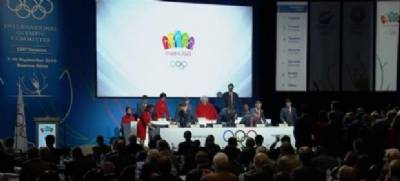
And after losing out three times consecutively since the Millennium – Madrid faced disappointment in September 2005, 2009 and now 2013 whilst London got the Games in 2012, Rio de Janeiro in 2016 and this weekend, Tokyo won its 2020 bid – another attempt looks extremely unlikely.
Support for Madrid 2020 has not been overwhelming from the Spanish population, particularly those living in the capital, since an investment of at least 915 million euros would be required initially to finish off the infrastructure – even though 80 per cent of it is already in place – from the public coffers of a city which is seven billion euros in debt with over a quarter of its working-age population and more than half its non-student head count under the age of 30 out of a job.
The Olympics would have been run on a shoestring, which did not convince the COI, and with hospitals being privatised in the city to save money, teachers' jobs and State pensions being cut, and the general population and local businesses being suffocated by high taxes and Social Security contributions to pay for Spain's deficit and bank bail-outs, the likelihood of civil unrest in the lead-up to the Games would have been high.
Francisco Blázquez, head of the Spanish Handball Federation, says the COI knew Spain was 'scraping by' financially and in particular its sporting federations – something which carried 'great weight' in his view, since many of the COI members are in fact presidents of these organisations from other countries.
And Spanish Olympic synchronised swimmer Thaïs Henríquez said: “Nobody has any confidence in Spain's financial capabilities, and nobody doubts that of Japan.”
Japan's economic stability, highly-modern infrastructure and meticulous nature means they would have been ready for a spectacular 2020 Games on time and well within budget, and with the full support of the people who, following the 2004 Boxing Day tsunami and the Fukushima disaster, as the presentation team told the COI in Buenos Aires, badly needed the Olympics to happen to lift their spirits.
Their trump card was probably Paralympic sportswoman Mami Sato, who had lost a leg through cancer caused by the Fukushima leak and whose home town had been wiped out by the tsunami, giving a tear-jerking speech to the COI.
And there is no doubt Japan's anti-doping laws are watertight.
But Spain's loss in the first round of voting is something its sports community finds hard to swallow and accusations of bias have been rife – former athlete Fermín Cacho said that until the COI members were 'voted for by sportspeople' and the Committee was 'truly democratic', he would not be involved in any possible future presentation, whilst members of the public outside the iconic Puerta de Alcalá archway in the city centre called the verdict a 'fraud' and accused the COI of 'acting like a mafia'.
In the first round, Tokyo got 42 votes and Istanbul and Spain drew with 26, but a tie-break led to 49 votes for Turkey and 45 for Madrid, putting the Spanish capital out of the running.
Tokyo then beat Istanbul by 60 votes to 36.
Losing to Turkey hit Spain hard, since they say the Euroasian country had suffered greater doping scandals and more street riots than Spain and being a border nation with war-torn Syria meant public safety was a grave concern.
But Turkey made a great show of its spectacular economic recovery and financial stability as a country following years of hyper-inflation up to a decade ago which saw its wealthier inhabitants swapping their sumptuous villas for tiny starter homes just to be able to make ends meet.
Doping: Spain's second-largest stumbling block
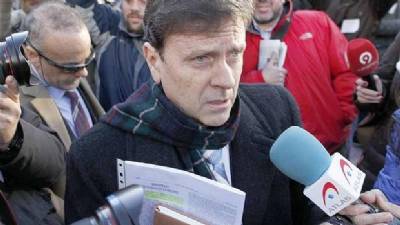
WHEN the British member of the COI Adam Pengilly asked Spain about the infamous 'Operation Port' and the destruction of blood-bags ordered by the judge dealing with the Dr Eufemiano Fuentes (pictured) doping racket, which was uncovered last year and caused shock-waves throughout the sporting world, Madrid's chances of hosting the Olympics took a notable nose-dive.
And Norwegian Committee member Gerhard Heiberg asked about the cases involved and what the authorities' attitude and actions were.
Both men touched a raw nerve with Spain, which had been harshly thrust into the spotlight for all the wrong reasons, and Spanish Olympic Committee member Alejandro Blanco gave the best possible answer – although one that still left the COI sceptical.
“Spain has its finger on the pulse in the fight against doping, not just through the number of tests carried out but through its government's and athletes' firm commitment to battle against this blot on its sporting landscape.
“We have had problems because we've toughened up the law and made doping into a legal matter, and the process of our fight against it has been dragged out as a result, but all this has come about through Spain's commitment to crack down on the practice,” Blanco told the COI.
But with the doctor behind the international racket which put sportsmen's and women's lives at risk still not behind bars, the anonymity of the competitors involved having been agreed and the judge in charge having ordered the blood-bags to be destroyed without testing them – even though this decision has been appealed against – Spain's commitment to eradicating doping did not strike the COI as firm enough.
Spain has, at the request of its sporting community, brought its anti-doping laws in line with the much stiffer international ones.
“Please have not doubts that Spain is one of the members which can most be trusted to wipe out this scourge. We believe in clean competition,” Blanco added.
Madrid knew that the doping issue, along with the economic crisis, was going to be one of its largest handicaps, but even the president of the COI, Jacques Rogge, could not say for certain whether this was what ruined Spain's chances.
“COI members pay a lot of attention to the fight against doping, but it's difficult to evaluate whether it played a major part in the voting,” Rogge admitted.
Even if it did, the doping racket led by Dr Fuentes cannot have been the only drawback for Madrid in the eyes of the COI, since Istanbul has been rocked by a similar drugging scandal in the past few months with dozens of sports personalities arrested – far more than the number involved in the network created by