Ancient Egyptian statesman's tomb opened by Spanish historians for first time in 4,000 years
Ancient Egyptian statesman's tomb opened by Spanish historians for first time in 4,000 years
A TEAM of Spanish archaeologists have discovered a tomb belonging to the enigmatic 11th Dynasty in Luxor, Egypt.
Dating back to between 2150 and 1990 BC, the necropolis was discovered in the Dra Abu al-Naga area just outside the ancient city in the south of the country whilst historians from Spain were digging in three known common graves, near that of the high dignatory Djehuty, who led the Egyptian Court over 3,500 years ago.
Head of the mission, José Manuel Galán, said the period between the 11th and 17th Dynasties is a crucial era in the history of what used to be known as Thebes and is now Luxor: the time when the city became the capital of the recently-united kingdom of High Egypt (in the south) and Lower Egypt (in the north).
Whilst exploring the common graves, investigations led to the discovery of a tunnel of some 20 metres in length which led to a tomb that had never been found in thousands of years.
It had first been used over 4,100 years ago, but was occupied again nearly 3,500 years previously, as shown by the artefacts stored inside.
Ancient Egyptians were buried with their most valuable possessions and hieroglyphics on the walls depicted the life they led and the type of person they were.
Their main organs were stored in four jars to preserve them for the afterlife.
Human remains were found in the tomb, which has lain hidden since around 2000 BC.
The Egyptian Museum in Cairo – where the famous young Pharaoh Tut Ankh Amon's gold, jewels and mask are displayed – says the bones in the sarcophagus probably belonged to a 'man of State', given its size and traces of its splendour, including annexes leading off it.
He was probably a member of the Royal family or a great country leader, say Egyptologists.
But remains of several humans were found in various crypts of the tomb, leading Egyptian Museum manager Ali al-Asfar to believe the underground 'den' may have been used as a hide-out from enemy forces.
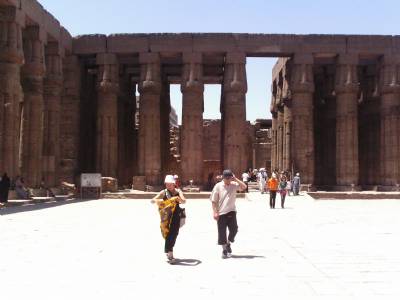
Picture: Luxor temple in the southern Egyptian city of the same name, once known as Thebes, near where the tomb was found