La Fe hospital's mechanical heart saves a man with a fortnight to live
La Fe hospital's mechanical heart saves a man with a fortnight to live
A VALENCIA hospital has 'cured' a father's deadly heart condition, which had left him with less than a fortnight to live, by fitting a 'robot' organ.
The city's La Fe centre, one of Spain's – and Europe's – leaders in pioneering research and treatment told the retired shoe-maker from Elda (Alicante province) that he could only be saved by a heart transplant, but there was no chance of his surviving this because his illness was too far gone.
Also, the waiting list was far longer than his life expectancy.
José Sarabia, 67, had ischaemic heart failure, a condition caused by the gradual closure of main arteries to the organ, is normally diagnosed after the patient complains of constant breathlessness, and very gradually deteriorates over years or decades.
Whilst patients treated initially – often with 'stents' fitted to widen the arteries – can generally lead a normal life in the beginning provided they do not exert themselves or lift heavy objects and are regularly checked and medicated, but the person's ability to exert him or herself gradually reduces over the years.
Sr Sarabia had got to the stage where he was not even able to walk or eat without gasping for breath and had been forced to retire due to his heart problems.
By mid-January this year, the slightest movement left him totally breathless, and medics told him he would be lucky to live another fortnight.
José's kidneys were not working properly but, although this condition was not fatal in itself, combined with the seriousness of his heart failure he was not considered a candidate for a transplant as he would not have survived the ordeal.
And it would have taken far longer than a fortnight for a donor organ to become available, meaning he would not survive the wait – so doctors decided there was little point in putting him on the transplant list.
Medication and a pacemaker had not had any effect.
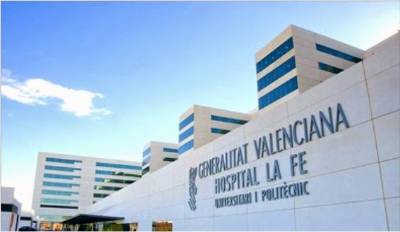
Cardiologists at La Fe hospital, which was treating him by the time José was given a death sentence, explored every option and the patient's daughter Rachel says all of them, in particular Dr Pilar Zaurazola, seemed 'determined not to give up'.
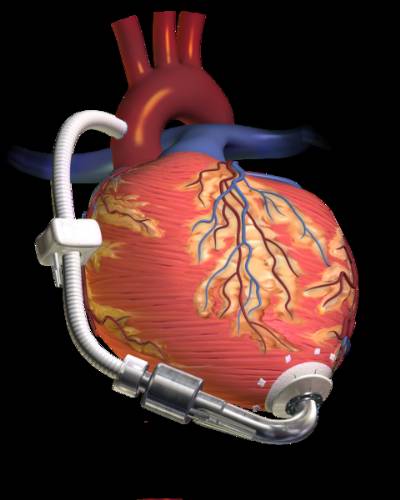
Finally, they decided to fit him with a Ventricular Assistance Device (VAD), or a 'robot' heart.
His six-hour operation was a delicate, knife-edge process, but will never need to be replaced.
Head of Cardiology, Dr Anastasio Montero says: “What started off as an anecdote has become a reality, because these devices are literally giving life to people who were waiting at death's door.”
Sr Sarabia's operation was on February 4 this year, and he now says he has no chest pains, does not get tired doing anything and never gets out of breath, and expects to be fighting fit and leading a normal life very soon.
His is only the second VAD to have been fitted in Spain.
Last March, La Fe fitted the first-ever to 51-year-old Vicente Sorribes, although this will need to be replaced in a few years' time, unlike José's which is for life.
“I've been given a new life, with no pain, no fatigue, but with a future,” said Sr Sarabia, who admitted he had never believed in miracles until now.
The 'robot' heart – a HeartWare model, which is the most advanced in the world – is a small device with a tube which pumps using a built-in magnetic levitation system.
It is fitted to the lower left-hand part of the heart – the left ventricle – and connects to the aorta in order to carry out the blood-pumping action that the patient's own heart is incapable of.
The mechanical heart is connected via a cable which comes out through the patient's abdomen and attaches to a small computer which he or she must carry around everywhere, and which works using rechargeable batteries.
It is also connected to a central computer in the hospital's Cardiology unit so doctors can monitor the patient's condition.
“We're gradually starting a new era in terminal heart failure treatment which is increasing life expectancy for many people who, like José Sarabia, had lost all hope of survival,” Dr Montero reveals.
José's daughter Rachel cannot praise the Cardiology team enough.
“I want to say thank you, thank you, a thousand thank yous, and that God does indeed exist and is in the hands of La Fe's cardiologists,” enthuses the young woman.
“I'll never live long enough to be able to thank you all enough, especially Dr Zaurazola – all this is thanks to you, for never giving up and for fighting so hard for my dad's life.”