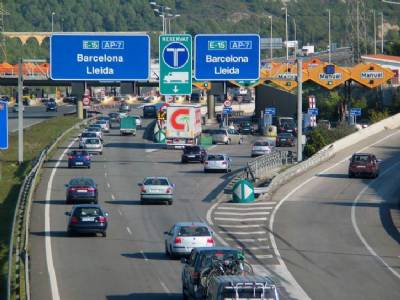
SPAIN'S government wants to increase the speed limits on motorways and toll roads to 140 kilometres per hour to encourage drivers to use them more.
They say that security measures on major roads are so high that the increase in speed limit will not make a difference to the accident rate.
In fact, MP Paco Vañó (PP), who proposed the rise to 140 kilometres per hour, has already been a victim of a motorway crash, but still believes that the extra attention to safety on toll roads justifies allowing people to drive faster.
Vañó was left disabled as a result of his accident, and is the first paraplegic to become an MP.
He says that although he is not against proposals by the ministry of traffic (DGT) to cut speed limits on B-roads to 90 kilometres per hour, motorways are built for faster driving and it would not pose a greater safety risk if all motorists were travelling at about the same speed.
Wider lanes and fewer bends mean a higher speed is feasible, says Vañó.
He also added that in the UK, the Conservative government is considering increasing speed limits on motorways and dual carriageways.
Toll roads, paid for by drivers themselves, are managed by private companies who hold a franchise.
This means they are responsible for maintenance of these parts of motorways, so it does not come out of already stretched public funds.
At the moment, due to the recession, toll roads are being used less often and the companies are not making much of a profit – but greater freedom with speed limits would mean drivers are more likely to have an incentive to use them, particularly when it means they can cover very long distances in a much shorter time.