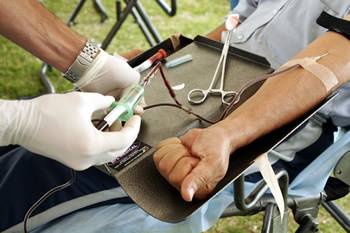
Five blood transfusions a minute are given and 80 lives are saved a day thanks to donors in Spain
Five blood transfusions a minute are given and 80 lives are saved a day thanks to donors in Spain
BLOOD donors in Spain save up to 80 lives a day and help a further 375 back to health – but of all those who are able to give blood, just five per cent do so.
And with Easter coming up, blood donations tend to plummet whilst with more traffic accidents due to a greater number of cars on the road, the need is even higher.
The Spanish Federation of Blood Donors is urging all those who can to give blood, since all types of patients need regular transfusions.
Cancer and leukaemia sufferers, women who undergo extremely traumatic childbirth, transplant patients, people with kidney failure, patients with anaemia of a severe and life-threatening level, traffic accident victims, people undergoing all types of surgery, and heart patients, among many others need transfusions, the Federation stresses.
And many people do not give blood because of common urban myths putting them off, they say.
People with high blood pressure – even where they are on medication, who are taking oral contraceptives, who currently have their period, have taken aspirin or anti-inflammatories, have minor allergies, or who are allergic to antibiotics can still give blood.
Donations are made while the donor is lying down and fluids and sweet snacks are given afterwards.
Each donation is around a pint (660ml) and qualified nurses are always on duty to ensure donors' wellbeing.
Women can give blood up to three times a year and men up to four times a year, provided they have not done so in the last two months.
Donors must be in good health with no hereditary or blood disorders, must be aged 18 or over and must weight at least 50 kilos (7st 12lb) irrespective of their height.
Unlike going for a blood test, donors should not give blood on an empty stomach – they should always have eaten something first.
Every minute in Spain, five transfusions are given – a total of over 6,000 every day, says the Federation.