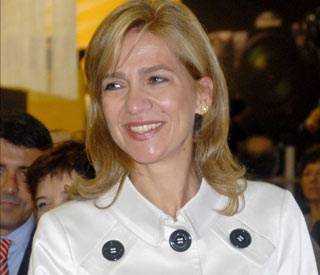
Demonstration over charges being dropped against the Infanta Cristina
Demonstration over charges being dropped against the Infanta Cristina
A HUGE protest has been planned for May 25 over the fact that the Infanta Cristina has once again been released from her obligation to testify over the infamous Nóos case which her husband, Iñaki Urdangarín, is facing trial over.
The King and Queen's eldest daughter was called up twice over suspicions that she may be involved in the money-laundering and fraud racket which Urdangarín and his co-director Diego Torres allegedly used the Nóos Institute as a front for, but on both occasions she has been let off.
Although the judge handling the case believed there was reason to suspect the Infanta's involvement, the prosecution service did not agree, saying there was no evidence to show she had committed any criminal offence and claiming that she was being discriminated against, or used as a public example because of her status.
Yet the protesters believe that it is precisely her status as Infanta and Duchess of Palma that has meant she is no longer facing trial.
Potentially hundreds of demonstrators, including prestigious figureheads from the legal, intellectual and academic worlds, will march from the Plaza Cibeles – the roundabout opposite the Bank of Spain – to the central Puerta del Sol square.
They will read a manifesto to the press three days before.
It is being organised via popular social networks by the Anti-Corruption League, which says 80 per cent of those interviewed – both legal experts and members of the public – believe the Infanta should still testify, and nearly 89 per cent say that 'justice is not equal' in her case.
The Duchess of Palma is known as an 'Infanta', like her sister Elena, rather than a 'Princess', because she is not a direct heir to the throne or married to one.
Their brother Felipe is known as a 'Prince' because he is first in line to the throne, and his wife Letizia and daughters Leonor and Sofía are known as 'Princesses' because of Letizia's marital status in her case, and the girls for being second and third in line to become monarchs.