Spanish nutritionists' book dispels 98 'potentially dangerous' food myths
Spanish nutritionists' book dispels 98 'potentially dangerous' food myths
FRUIT does not ferment in the stomach – unless the consumer has a medically-diagnosed intestinal obstruction – excess sleeping does not make people fat and oysters are not an aphrodisiac, according to a new book written by three Spanish nutrionists.
Antonio Ortí, Ana Palencia and Raquel Bernacer, co-authors of Comer o no comer: Falseades y mitos de la alimentación ('To eat or not to eat: Dietary myths') dispel 98 of the most popular old wives' tales about food.
Neither fruit nor any other food ferments inside the body, and whilst oysters are healthy because they are a source of vitamin A and D, potassium,iodine, calcium, phosphorus and magnesium, there are no scientific grounds for their being considered as heightening sexual desire, and although the body burns off less energy whilst sleeping, getting eight to 10 hours' kip a night is optimum and protects against piling on weight.
Some of the myths that cause the greatest health problems are those which include 'eating nothing but pineapple helps you lose weight' and 'cutting out carbohydrates aids weight loss', says Palencia.
“There is no one, single food that contains all the nutrients you need to stay healthy, except breast milk, which we only drink for the first few months of our lives,” she stresses.
“A healthy diet should never eliminate any essential food group, such as carbohydrates. It should include a bit of everything in moderation, and regular light exercise.”
Consuming just one or two types of food, eliminating entire food groups or skipping breakfast in a bid to lose weight are not only counter-productive, slowing down the metabolism, but heighten the risk of illnesses, particularly infectious or contagious ones, Palencia adds.
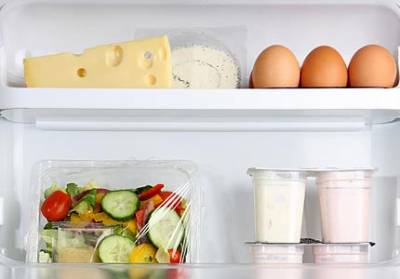
Eating more than two to three eggs a week does not cause cholesterol levels to rise dangerously, the three authors state, and a healthy person can easily eat seven a week whilst a person who already has seriously high cholesterol can still eat three or four without any problems.
Another common myth is that margarine is 'just one ingredient away from plastic' and therefore carcinogenic, and that it was originally invented purely as turkey food.
The writers call this 'alarming' and say 'nothing is further from the truth', but that in fact it was invented when, in 1866, Napoleon III of France offered a reward to anyone who could create a healthy, cheap and easy-to-conserve spread for bread, for the benefit of the poor and the working classes.
Ana Palencia, who worked for many years in the nutrition department at Unilever, said other popular misconceptions dispelled in the book are that sweets make children hyperactive; cheap meat comes from cloned animals; the crumb of bread is more fattening than the crust; brown eggs are more nutritious than white eggs; diets should be chosen according to blood group; honey cures everything; drinking coffee after alcohol 'sobers you up' and leads to a lower reading on a breathalyser, and ignoring cravings during pregnancy has a direct effect on the baby.
The authors are anxious to counter these old wives' tales, since they say they can do more harm than good.
Their book is now on sale, and the entire proceeds from any purchases of it will go to Cáritas, a nationwide charity which is working around the clock to provide food and assistance to residents in Spain who are either homeless or have little or no income.