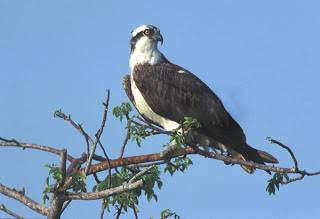
OSPREYS could be breeding once again in the Basque Country after having been extinct there for many years, thanks to a joint project between Spain and the Scottish Natural Heritage (SNH) authorities.
Experts took 12 young birds from their nests in Scotland and released them in suitable conditions in the Basque Country after obtaining the requisite permission from the SNH.
The birds, which were taken from the Highlands and Moray region, were set free on the edge of the Urdaibai estuary near the town of Mundaka in the Vizcaya province (Bay of Biscay), a pit-stop on the way to West Africa during the migrating season, and food and nest platforms have been provided.
But the young birds are said to be doing very well in Spain and one of them quickly learnt how and where to find its own fish from the estuary.
Ospreys were considered a pest in Spain in Mediaeval times and were shot at when seen raiding ponds, lakes and rivers for fish, since these were essential sources of food for inhabitants of all walks of life, in farmsteads, villages, monasteries and castles – and as a result they became practically extinct in their normal breeding grounds in Spain.
But Scotland's once-waning Osprey population – frequently threatened by nest-egg thieves – has recovered spectacularly in the last two or three decades and enough are breeding now that they can be released abroad in areas where the population has died out.
Over five years ago, Ospreys from Germany, Scotland and Finland were released in the southern Spanish region of Andalucía to repopulate the breed's old habitats, and the first-ever eggs which laid and hatched were recorded by ornithology experts.
The mother was found to be Scottish and the father German, and another 12 breeding pairs have appeared since then.