CPR within three minutes can increase survival chance by 50 per cent, but 88 per cent of Spanish residents do not know how
CPR within three minutes can increase survival chance by 50 per cent, but 88 per cent of Spanish residents do not know how
ONLY around 12 per cent of people in Spain know how to perform CPR – or cardiac massage and mouth-to-mouth – and yet the chances of a heart attack victim surviving are increased by 50 per cent if first aid is given.
According to the Spanish Society of Intensive and Critical Medicine and Coronary Units (SEMICYUC), the likelihood of a person suffering a cardiac arrest coming out alive unless someone starts CPR within three minutes is about five to 10 per cent.
Heart attack deaths in Spain continue to be far too frequent, says the SEMICYUC, especially when prompt attention by any bystander even without medical training could save half of those people's lives.
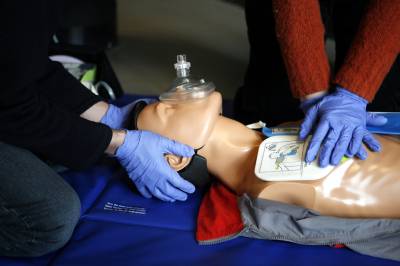
They say the simple 30/2 rule – 30 compressions in the centre of the patient's chest with the heels of both hands for every two breaths into the person's mouth – should be something that everyone knows how to do and they aim to increase the number of non-healthcare-trained people in Spain who are able to perform CPR up to at least 20 per cent of the population.
Every second counts in the event of a cardiac arrest and CPR needs to be started within three minutes to give a 50-50 chance of survival.
Each extra minute increases the risk of death by 10 per cent, and after an eight-minute delay in commencing first aid, the chances of survival are almost nil.
And even where the patient lives, the quicker CPR is started, the less chance there will be of the patient suffering major organ failure or permanent brain damage due to the lack of blood and oxygen supply which comes with a heart attack.
Where a person is unconscious and there is no pulse or respiration, anyone present should find the centre of the chest – where the bra strap would be in the case of a woman – and press down hard 100 times a minute, roughly twice a second, with the heel of one hand on top of the heel of the other.
Pressure needs to be extremely strong to be effective, and the first-aider should never worry about the possibility of breaking bones since this is preferable to death and correct cardiac massage often leads to fractured ribs.
For every 30 presses, the first-aider should give two mouth-to-mouths – tipping the head back and closing off the nose, covering the patient's entire mouth with the first-aider's own and breathing hard into that of the victim.
It is important that the nose is closed off and the helper's mouth covers the patient's to prevent any air entering the lungs from leaking back out.
The procedure should continue non-stop until qualified help arrives, but if the patient's pulse and breathing return in the meantime, he or she should be put into the recovery position – on one side with an arm raised and a knee bent upwards.
This is to ensure that if the victim vomits, he or she will not choke to death.
Should the pulse and breathing stop again, the first-aider should put the victim on his or her back again and continue CPR.
CPR should never be carried out on a live, conscious person who has a pulse and is breathing, and first aid courses always use rubber dummies for practice.
Classes in first aid are offered free of charge or at a cheap price by local Red Cross stations in most towns.