Spanish life expectancy is second-highest in Europe, fourth in the world, and its population is generally healthy, says OECD research
Spanish life expectancy is second-highest in Europe, fourth in the world, and its population is generally healthy, says OECD research
SPAIN has the second-highest life expectancy in the EU after Italy, and levels of health among the population are generally good, even though chronic conditions are on the increase, says the Organisation for Economic Cooperation and Development (OECD).
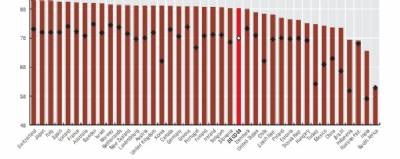
Life expectancy in Spain is the third-highest on the European continent, at 82.4 years, beaten by Italy at 82.7 and Switzerland at 82.8 - coming out on top of the world.
Worldwide, Italy and Japan were in joint second place at 82.7 years, putting Spain in fourth place on the planet.
Life expectancy for countries in the OECD was lowest for Mexico, at 74.2, largely due to poor nutrition, obesity leading to cardiovascular illnesses and diabetes, poor access to healthcare – insufficient numbers of doctors, nurses and hospital beds – and 50 per cent of healthcare expenditure coming out of Mexicans' pockets, leading to a downward sliding scale of life expectancy in relation to financial wealth.
This calculation did not include the so-called 'emerging' countries of the OECD – Brazil, Russia, India, China (known as the BRIC countries), Indonesia and South Africa.
South Africa's life expectancy is the lowest of all at barely 55 years, largely thought to be due to HIV and AIDS epidemics which broke out in the late 1980s and are taking their toll nowadays, and limited access to ongoing medical treatment which, in the first world, can ensure HIV-positive patients lead a normal life and live to old age.
Turkey and the USA had lower-than-average life expectancies, although that of Turkey has grown considerably in the last decade, and the OECD says there is a direct connection between how much the public has to spend on its own healthcare and how long they can be expected to live.
Average life expectancy exceeds 80 years for the first time, but chronic illnesses on the rise
For the first time ever, the OECD average life expectancy has reached 80 years, although Spain has been above this level – at least for women – for some time now, and its life expectancy for both sexes has gone up by a decade since 1970, when it was 72.4 years.
Females in the developing world live an average of five-and-a-half years longer than men, although this figure rises to six years in the case of Spain.
Chronic conditions, as is the case in many of the OECD countries, are on the rise, however – seven percent of the 20-79 age-group in the developed world suffers from diabetes, albeit Spain falls below this at 6.5 per cent, and dementia affects five per cent of citizens in OECD nations, a figure Spain exceeds at six per cent – with some dementia sufferers being as young as 60.
Spain above average in general health
The OECD report covers various areas of health in each country, including infant mortality, road traffic accidents, smoking, hospital admissions for diabetes and asthma, birthing difficulties, underweight newborn babies, babies vaccinated against Hepatitis B, numbers of people caring for dependent family members, number of mammograms carried out, and demographic information about doctors.
In Spain, 14 per cent of the over-50s are carers, of which 85 per cent do so full time (compared to 15.6 and 66 per cent in the OECD) and 65 per cent in Spain – compared to 62.3 per cent in the OECD – are women.
Doctors in Spain who are female make up 51 per cent, above the OECD average, but the number of medics aged 55 and over is lower at 23 per cent as opposed to the typical figure for the developed world of 32 per cent.
Babies born underweight account for 7.8 per cent in Spain, which is slightly above average, but 96 per cent of infants under one year are vaccinated against Hepatitis B, higher than in the rest of the OECD.
Incidences of mammograms performed on women aged 50 to 69 is also much higher in Spain, with three-quarters of females in this age-group having had at least one, compared to six in 10 in the 34 countries of the OECD.
Birthing difficulties in Spain are much lower than elsewhere in the first world – 2.8 per cent for 'non-natural' labours and 0.6 per cent for 'natural' births, compared to six per cent and 1.6 per cent respectively on average across the 34 nations.
One in a thousand diabetes sufferers is admitted to hospital per year in Spain, and one in 2,500 patients affected by asthma, next to 1.5 per thousand for diabetes and one in 2,000 for asthma in the other 33 countries.
Child mortality is below average in Spain – 3.2 infants under a year old for every 1,000 born alive per annum, next to 4.1 per thousand on average in the OECD – and has fallen by nearly 23 per cent since the year 1970.
Smoking and traffic accidents decline – but so does public spending on healthcare
Smokers in Spain account for 23 per cent of the adult population, compared to 20.9 per cent in the rest of the OECD, and the number of smokers in the western world has gone down on average by a quarter in the last decade.
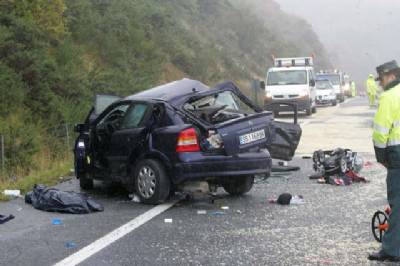
Traffic accidents in the European Union have decreased by over half since the year 1990, with the greatest decrease – 75 per cent – seen in Spain due to changes in road safety policy, including drink-driving, points-based licences and seatbelts and child seats becoming compulsory.
Finally, the report covers government spending on healthcare between the years 2009 and 2011, and shows that one in three countries in the OECD has cut its expenditure on public medical care in that period.
In Spain, any further reduction in its spending will put it below the OECD average for investment in healthcare, since it is currently right on the mean figure of 9.3 per cent of its Gross Domestic Product being used to fund public medical assistance.