Parot Doctrine prisoners released: Alcàsser triple murderer Miguel Ricart follows 60 terrorists to freedom
Parot Doctrine prisoners released: Alcàsser triple murderer Miguel Ricart follows 60 terrorists to freedom
THE man found guilty of the multiple rape, torture and brutal murder of three teenage girls in Alcàsser (Valencia) has been released from prison.
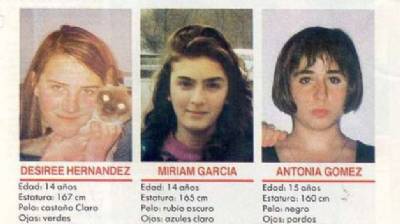
A case which rocked Spain in the winter of 1992, Toñi, Miriam and Désirée, aged 14 and 15, were kidnapped when hitching a lift to a disco, taken to a remote house and gang-raped for 24 hours, beaten and mutilated before being forced to walk into their own common grave and shot in the head.
One of the girls, whose arm was sawn off above the elbow when she was still alive, spent a further hour being beaten whilst tied up and lying on the bodies of her two friends, who had been shot in the head, before meeting the same fate.
Another of the girls had a nipple ripped off with pliers whilst conscious, and all three had been sexually-assaulted with very large and in some cases, extremely sharp objects thrust into both orifices.
The DNA of seven people was found inside their anuses and near their ovaries, but only two people were found guilty – Antonio Anglés and Miguel Ricart, both in their 20s. Half-Brazilian Anglés reportedly fled the region, catching a ferry from Lisboa to Plymouth and then another to the Republic of Ireland, but is said to have jumped ship just off the shores of the Emerald Isle when he believed the authorities were on his trail, drowning in the sea.
Ricart was sentenced to 170 years in prison, of which he would only have to serve a maximum of 30 under Spanish law. Due to the application of the so-called Parot Doctrine – named after ETA terrorist Henri Parot – his 'good behaviour' credits, being one day's early release for every two days' work carried out in prison – would be applied to his sentence, not to his maximum custodial term.
But a recent ruling by the European Court of Human Rights (ECHR) in Strasbourg, France, meant the Parot Doctrine was overturned and along with numerous ETA terrorists, at least two rapists and a paedophile who killed a 10-year-old boy after raping him, Ricart's early-release credits have been applied to his maximum jail term of 30 years and allowed him to be freed.
The Court of Valencia rejected an appeal from the State prosecution service for the Parot Doctrine to be upheld in Ricart's case, since prison officers did not believe he was rehabilitated and feared he may reoffend. Also, he is said to have nowhere to go as his entire family, including a daughter who was born to his ex-partner the day he was remanded in custody, has refused to have anything to do with him, he has little chance of finding work and has no home.
The verdict, however, is open to appeal within three days of its notification, and the State Law Service intends to do so at first light on Monday.
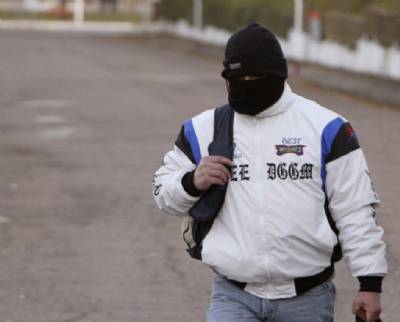
In the meantime, Ricart was released from the Herrera de la Mancha prison in Ciudad Real, central Spain, at 17.39hrs yesterday (Friday). Nobody was waiting for him at the door aside from a group of reporters, and he was wearing a balaclava to cover his face when he caught a taxi. It is not known where he was headed.
Conspiracy theories still abound over the case, which involved the most bloodthirsty and sadistic random murder ever seen in Spanish history in peace times. Many members of Valencian society, including the surviving parents of the victims – one girl's mother and another's father have both died since due to illnesses thought to have been brought on by the trauma – and even a number of police officers believe Ricart and Anglés were mere scapegoats.
They believe the real culprits could have been wealthy business tycoons or important figureheads in the Catholic Church or in politics, who commissioned the two men to kidnap teenage girls at random for satanic sexual practices, paying them and their families handsomely to take the rap.
Many question how Anglés was able to abscond and to leave the country without being discovered, and suspect he is still alive, having been given a new identity. But to date nothing has been proven and others consider that the conspiracy theories are borne out of a failure to accept that such violence could be perpetuated against innocent teenagers by total strangers, given that other than national terrorism in the 1980s and early 1990s, violent crime in Spain since the Civil War has always been statistically-low and the majority of murders reported appear to show killers who knew their victims well and were often partners, ex-partners or family members.
As a result of the Parot Doctrine having been overturned by Strasbourg, 60 convicted ETA terrorists have been released in the past month.
The PP government, which is against the ECHR verdict but is morally – if not legally – bound to uphold it is considering whether the 'hero's welcome' given to released ETA members could be thought to fall within the description of the criminal offence of 'exaltation of terrorism'.
They are also studying whether to prevent released prisoners under the Parot Doctrine reversal being able to claim any kind of State benefits to cover their living costs.