Medical negligence costs 798 lives and leaves 242 disabled, reveals patients' ombudsman
Medical negligence costs 798 lives and leaves 242 disabled, reveals patients' ombudsman
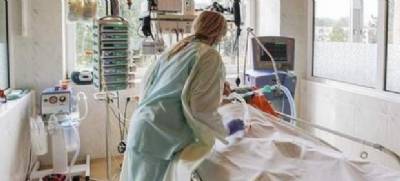
MEDICAL errors are on the increase and 798 patients have died as a result of negligence in hospital, says the healthcare ombudsman.
It leader, Carmen Flores, blames the 'brutal cutbacks' made by the current government for the fact that 106 more people died through medical negligence last year than in 2012 – of whom 77 perished because the ambulance either took an hour to reach them or was not sent out at all.
She says 14,307 mistakes by healthcare staff were confirmed in 2013 – a total of 525 more than in the previous year.
The patients' ombudsman's annual report, where the figures are published, refer only to confirmed cases, but Sra Flores warns the actual numbers could be much higher because 'a large number' of incidences of 'negligence' are never reported.
As well as ambulances not turning up or arriving an hour or more late being responsible for 77 deaths, another 66 patients died through infections caught in hospitals with 'inadequate hygiene standards' caused by cutbacks in the cleaning budget.
Additionally and according to the ombudsman's report, 149 babies were born with preventable disabilities because of 'poor' delivery procedures, 93 patients were left disabled as a result of operations unconnected with their present condition and caused by 'negligence' during surgery, whilst 59 patients have contracted Hepatitis C through treatment in hospital.
A total of 315 cases of cosmetic surgery went wrong and 31 ophthalmology procedures poorly performed left patients with inadequate results or permanent damage, including loss of vision.
The greatest number of incidences of negligence was recorded in Madrid, the hospital coming off worst being the Gregorio Marañón and the department most complained about being traumatology.
Andalucía follows with 2,113 cases, the majority relating to A&E and predominantly in the Virgen del Rocío hospital in Sevilla, followed by Catalunya with most complaints relating to waiting lists and the hospital most frequently the subject of grievances being the Vall d'Hebron in Barcelona.
La Rioja and Navarra, with 82 incidences of negligence each reported, followed by Cantabria with 217, are the regions with the lowest levels of complaints.
Flores blames 'staff shortages and lack of resources' for the 'appalling' decline in quality of a health service which, until just a few years ago, was officially the second-best in Europe.
“Shameless funding cuts in health, which translate to funding cuts in human life, are leading to extremely serious anecdotes which are more in keeping with a third-world country,” Flores stormed, when presenting her report.
She cites 'shoddy' situations such as a CAT scanner suffering a mechanical breakdown and not being repaired for days, or not enough nurses to go around, leaving one professional having to attend to 10 patients at a time – and yet, ironically, Spanish nurses are leaving the country to find work as there are not enough jobs in the industry to absorb all the newly-qualified workers.
A report 10 days ago in the London daily newspaper, the Evening Standard, says nurses and doctors from Spain and Portugal now make up the majority of foreign employees recruited by the NHS, far exceeding the Eastern Europeans, Philippine and Australian professionals of 10 or 15 years ago, Indian nationals of the 1960s and 1970s, and Afro-Caribbeans of the 1950s.
Waiting lists
Healthcare funding cuts are also leading to 'unacceptably long' waiting lists, says the patients' ombudsman.
Andalucía has 95,000 patients awaiting surgery, the highest in the country ahead of Catalunya at 83,500 and Madrid at 70,000, and even those regions with the lowest numbers of people waiting for operations have a sizeable backlog – Cantabria and Navarra have lists of up to 10,000 patients and La Rioja, the lowest, 8,500.
The average wait for surgery is highest in the central region of Castilla-La Mancha at five months and 10 days, followed by Catalunya at four months and 10 days and the Canary Islands at four months.
Those with the shortest waits are in the Basque Country and La Rioja, at two months, and Asturias, at two-and-a-half months.
“A patient can easily go to his or her GP and then wait another two or three years for their operation – it's scandalous, people are piled up like herds of pigs in waiting rooms,” slammed Flores.
'Playing with lives'
These shock findings have caused outcry from the general public, with many pointing out that in 40 years, Basque terrorist cell ETA has killed 800 people, whilst medical negligence has killed 800 people in one year.
Flores says these figures are 'totally unacceptable' and that the government is 'playing with people's lives' by making funding cuts that are leading to a higher number of preventable deaths and disabilities.
“The government has no shame when it comes to dicing with people's lives and health,” Flores slammed.
“They are very creative when it comes to finding ways of getting more money out of the taxpayer, but are completely incapable of resolving serious pr