WhatsApp 'fraudulent' messages costing mobile customers a fortune, warns FACUA
WhatsApp 'fraudulent' messages costing mobile customers a fortune, warns FACUA
A LEADING consumer protection association has warned about a scam through the free text-messaging service WhatsApp which has led to mobile phone users receiving massive bills.
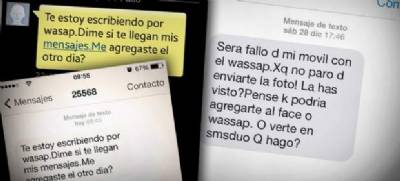
The firm Iebolina Tradicional, S.L., which has been reported by FACUA with a view to prosecution, has been sending messages from the number 25568 to random users pretending to be a friend, or contact.
They include texts such as: “I'm writing to you from 'Wassap' [sic]. Did you add me the other day? Tell me if my messages are getting through to you!” or, “There must but a problem with my mobile, it keeps sending you the same photo! Have you seen it? Shall I add you on Facebook or 'Wassap', or via SMSDuo? What do you think?”
Mobile users who reply to these messages then find out they have come from a private-sector firm and a premium-rate number when they receive their bills and find each response has cost them an extortionate amount of money.
FACUA has presented a formal complaint about the firm to the Secretary of State for Telecommunications, the Society for Information and the consumer authorities in several of Spain's federal regions, since they consider it to be fraudulent or deceptive advertising.
Anyone who has received, and replied to, one of these messages should contact their network operator and request they are not charged for them, and also report the incident to their local consumer protection authority and to the Telecommunications Customer Service Office of the Ministry of Industry, says FACUA.
The association has called for the firm in question to be fined and ordered to cease the practice of sending messages of this type immediately.
Photograph: The offending WhatsApp messages. (Picture by consumer organisation FACUA)