New York Times asks if Spain should 'reset the clock' and change working hours to improve efficiency
New York Times asks if Spain should 'reset the clock' and change working hours to improve efficiency
AN ARTICLE on everyday Spanish customs in The New York Times asks whether now is a good moment for the country to rethink its working hours and prime-time TV slots, if not actually to return to GMT – a time-lag it was in before World War II.
Spain, Land of 10pm dinners, asks if it's time to reset the clock describes a group of young adults in a bar in Madrid sitting down to watch a football match whilst evening meal orders are being taken around them at 22.00hrs at night.
It highlights how programmes on the television aimed at capturing the highest viewer ratings do not finish until around 01.00hrs and that according to surveys, a quarter of Spaniards are still watching TV at this time of night on weekdays.
The reporter speaks to one of the football-watchers, who has to get up the next morning to start his bank job at 08.00hrs, and does not find the late dinner and match anything unusual, calling it 'the Spanish identity'.
Following this, the article questions whether part of the reason for Spain's ongoing economic crisis is that its working hours are 'inefficient' and not conducive to productivity, which may change if it 'adopted a more regular schedule' which was 'more in sync with the rest of Europe'.
This would mean the long break for a drawn-out main meal for lunch at home, followed by a nap of 20 to 30 minutes, would be replaced by 'something closer to a nine-to-five timetable' with TV shows broadcast an hour earlier, according to The New York Times.
It cites politician Ignacio Buqueras, described as 'the most outspoken advocate of changing the Spanish schedule', as saying: “We want to see a more efficient culture – Spain has to break the bad habits it has accumulated over the past 40 or 50 years.”
But although the report says a Parliamentary Commission recommended in September introducing a non-stop eight-hour working day and turning the clocks back one hour, 'As yet, the government has not taken any action'.
The report acknowledges that the post-lunch siesta is not a daily reality for the majority of Spaniards, many of whom nowadays have too long a commute to justify returning home for lunch, but points out that many working residents complain that their day is exhaustingly long.
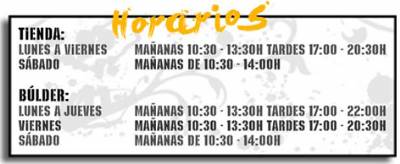
It begins in the morning at around 08.00hrs, or 09.30hrs to 10.00hrs for shops and smaller offices not part of the public sector or a national customer-facing chain, such as banks, then is 'interrupted by a traditional late-morning break' of around 40 minutes, starting somewhere between 11.00hrs and 11.30hrs, where staff leave the building en masse to go to a bar for 'breakfast', the article reveals.
Then, the day is interrupted again by the midday lunch, the reporter highlights.
In major cities, office or shop lunch breaks may run from 14.00hrs to 17.00hrs or 'only' from 14.00hrs to 16.30hrs, but in smaller towns in the provinces – even in tourist belts on the coasts – shops and customer-facing offices close between 13.00hrs and 13.30hrs and do not reopen until 17.30hrs.
“Many people say they end up working well into the evening, especially if the boss takes a long break and then works late,” the report continues.
It then cites 37-year-old solicitor and mother-of-two, Paula del Pino, who says: “These working hours are not good for families.
“Spanish society is still old-fashioned. The ones who rule are old-fashioned, they like it like it is.”
According to The New York Times, this split working day which starts early in the morning and finishes late at night is a hangover from the times when Spain's economy was largely agricultural and workers downed tools in the middle of the day, when the sun was at its hottest, to return when it started to cool down in the evening.
With Franco's decision to move Spain an hour forward from its natural geographical time-lag, which is GMT – and, in fact, the Greenwich Meridian line runs exactly through the small market town of Pego, just inland of the coast in the province of Alicante – in order to synchronise with Nazi Germany, his allies, farmers 'set their schedules by the sun, not by clocks...they ate lunch and dinner as before, even if the clocks declared it was an hour later'.
But whilst Portugal returned to GMT after Hitler's defeat, Spain did not – and the broadsheet questions whether long breaks in the middle of the day are really necessary now shops and offices have air-conditioning and given the fact that it is only really hot for three or four months of the year.
“This schedule gradually pushed [Spain] away from the European norm as it became industrialised and urbanised,” says the article.
Prior to the dawn of television in the 1950s, General Franco ordered radio stations to broadcast news and 'propaganda' twice-daily, to coincide with mealtimes at 14.30hrs and 22.00hrs, and the advent of TV brought a similar programming slot on Spain's one and only government-run channel, which ended at midnight with 'the National Anthem and a portrait of Franco', says the reporter.
Later, by the 1990s when Spain was still in the relatively early stages of post-Franco democracy, private TV channel networks sprung up and attempted to catch audience ratings by making prime-time programmes longer – and as a result, says Ricardo Vaca of Madrid-based media consultancy Barlovento Comunicaciones, surveys reveal that by the end of these prime-time shows – around 01.00hrs – 12 million Spaniards are still glued to the box.
Ignacio Buqueras believes changing programme slots would be the first step, and that an overhaul of working hours would be a huge bonus for parents with jobs and 'allow families more free time together and help Spain's economic recovery'.
He is quoted in the article as saying: “If Spain had a reasonable timetable, it would be more productive as a country.”
Yet The New York Times dispels the myth of Spain being a land of low productivity: “Spain actually outperforms many European countries in some calculations, according to Eurostat, the European Union's statistical agency.”
But it mentions results of research by Buqueras' team, which shows Spanish workers spend more far more time at work than those in Germany and yet 'only complete 59 per cent of their daily tasks'.
His team has said in the past that this does not mean Spanish workers are by nature inefficient, it is more a case of the ve