European Parliamentary elections: PP 'wins' and PSOE second, but lose a third of their seats
European Parliamentary elections: PP 'wins' and PSOE second, but lose a third of their seats
Brand-new independent left-wing party Podemos nets five of Spain's 54 seats
RESULTS of the European Parliamentary elections show that Spain's 'big two' are losing ground, but the PP remains the most-voted party.
This said, despite fears of record abstention, slightly more voters in Spain went to the polls than in 2009 – of those eligible to cast their ballot, 45.84 per cent did so, compared to 44.9 per cent five years ago.
A total of 54.16 per cent abstained, whilst invalid votes – 290,000 overall – rose from 0.62 per cent to 1.82 per cent.
'Blank' votes as a form of protest totalled over 357,000, or 2.29 per cent, compared to 1.39 per cent five years ago.
Miguel Arias Cañete gave a triumphant 'we've won' speech as the final count was made public, revealing that the right-wing leaders of the central government got 26 per cent of the votes – the highest proportion of all.
The socialists, or PSOE, followed with 23 per cent.
But both suffered a drastic drop in popularity – the PP has lost eight seats in European Parliament, going from 24 to 16, and whereas four million people in Spain voted for them in yesterday's (Sunday's) MEP elections, a total of 6.6 million did so in 2009.
Despite a similar result, the PSOE was far from elated with its candidate, Elena Valenciano, calling the outcome 'disappointing' and stating that the party 'must reflect' on its strategies and how it can best give the public what they want.
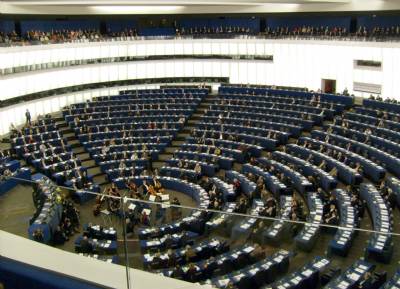
The socialists have lost nine seats in the Hemicycle, leaving them with 14.
Although Spanish president Mariano Rajoy warned the public 'not to go for the little parties', claiming it would be a waste of a vote as they would 'never get in', the brand-new left-wing outfit Podemos ('We Can') scooped up five seats in European Parliament, and the Citizens for Europe (Ciudadanos por Europa) got two.
Unión, Progreso y Democracia (UPyD) won four seats, one more than in 2009, which was a cause for celebration for its leader Rosa Díez, who did not miss the chance to point out that Spain's long-standing bipartite régime was 'on its way out' as the PSOE and PP together had gone from winning 80 per cent of the country's votes to just 49 per cent.
'Minority' parties improved their results across the board – Izquierda Plural ('Plural Left') was the third-most voted organisation, whilst Podemos was fourth and the Coalition for Europe (CEU) made up of the CiU (Convergence and Union, from Catalunya), PNV (Basque National Party), Coalición Canaria and Compromiso por Galicia fell to sixth, earning three seats, or effectively keeping the three they had already obtained after the 2009 elections.
Another party entering European Parliament for the first time is Primavera Europa – 'European Spring' – a coalition led by Equo and including nationalist party Compromís, which won a seat after netting just under 300,000 votes.
As for Podemos, which took over a million votes or 1.8 per cent of the total, its leader Pablo Iglesias says the team will run for the general elections in November 2015.
“Tomorrow [Monday] there will still be six million unemployed, millions of tenants evicted and homeowners repossessed – so, from tomorrow onwards, we will work closely with other left-wing parties in southern Europe to say we do not want to be a colony of Germany,” Iglesias stated.
“We came about in order to go for it, and our challenge is to become an alternative to the traditional political caste [the PP and the PSOE].”
He says the first proposal Podemos will make in the Hemicycle will be for MEPs' salaries to reduce from their existing 6,020 euros a month net plus 304 euros a day in meals, hotels and travel, and a further 4,299 euros a month in expenses which do not have to be accounted for.
Podemos' five MEPs will take home a salary of a maximum of three times the minimum wage, or 1,930 euros, says Iglesias.