Girl Power for Spanish sportswomen: Lady champions are overtaking the men
Girl Power for Spanish sportswomen: Lady champions are overtaking the men
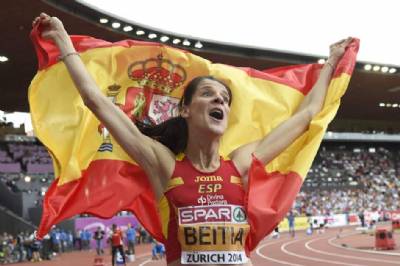
WOMEN are gradually taking over men in Spanish sporting success, with household names like Mireia Belmonte, Duane da Rocha, Ruth Beitia (pictured left) and Carolina Marín now almost as famous as the likes of Rafa Nadal, Pau Gasol and Fernando Alonso.
In fact, of the 17 gold medals Spain took home from the London 2012 Olympics, 11 were won by ladies.
“Women were not paid much attention before in sports because, the truth is, we had fewer successes,” admits Duane da Rocha, who won the 200 metres backstroke at the recent European Games in Berlin.
“Not that this means we didn't put in the effort, of course, because we always won lots of fifth and sixth places.”
One of Spain's best athletes in history, Ruth Beitia says: “There's been a female explosion on the scene. We've freed ourselves up – and this is slightly connected to women's advancing roles in society, in everyday life. Sportswomen are gradually keeping up with men and giving them a run for their money.”
This said, Ruth admits: “Equality of sexes is more generalised in athletics than in other sports – elsewhere, the difference between men and women is more accentuated.”
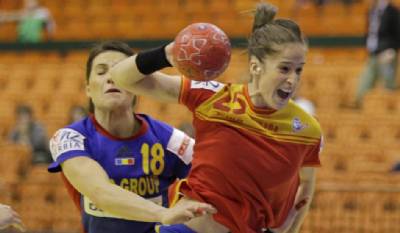
“The sporting world used to be more sexist, but with the passage of time women have freed themselves up – and nowadays, we even choose to leave the country if the general results of our chosen sport are getting gradually worse at home,” reveals handball champion Nerea Pena (pictured below right).
But she does not believe women's suddenly taking centre stage in sports is purely down to chance.
“The so-called minority sports are gaining ground thanks to women's successes in them, which means there's more and more financial help available from governments and clubs – but sportswomen have had to make big changes to their own lives to be able to get to this stage.
“Dedication is the key – in the past, women had to try to balance their sports with other activities that enabled them to earn a living; but now, things are changing and we're able to dedicate all our time to improving in our disciplines – and even, in many cases, earn a living from them.”
This said, Duane da Rocha does not believe women in sport receive more financial assistance nowadays than in the past.
“We've had to get used to the idea that we've got to fight for our own achievements, push ourselves to the limits, without looking at whether or not we might get financial help,” the swimmer believes, although she agrees with Ruth that sportswomen are 'more competitive' now than ever before.
And Ruth says women's explosion onto the sporting scene is 'the fruit of female pioneers of 50 years ago' or, at least, previous generations.
They cite names such as Arantxa Sánchez Vicario, Blanca Fernández Ochoa, and the more recently-successful Gemma Mengual and Amaya Valdemoro as these 'pioneers'.
“We needed a role model and, before this 'female explosion', other women were starting to do very well in many sporting disciplines – this has motivated those of us who came along later to try to better ourselves,” Da Rocha (pictued below left) says.
Nerea believes that to triumph in any sport, 'you have to be very, very good'.
“And it involves sacrifice, but even this does not always bear fruit. Effort, and hard work, does not always mean guaranteed success. You cannot always be the best. And if you're not, you won't get yourself onto the television,” she admits.
Swimming – including synchronised swimming – is one of the sports where women have enjoyed the most success, and chairman of the national Swimming Federation, Fernando Carpena, says 'equality' is the norm in this activity, although he does not believe women receive more financial assistance than men.
“If you're good, you get more help – like any other sportsperson,” he reveals.
“At present, there is no more assistance available than there was in the past – women, and men too, receive the same as each other and the same help as they always have.
“There's an assistance programme out there called Sports and Women, but it's not aimed at sportswomen; rather, it seeks to help ladies get into management positions in the sporting world rather than giving them a push in their actual discipline. In other words, there's no connection between this programme and female success in sports.”
Carpena believes women's growing sporting triumphs are more likely to be linked to 'the historic situation' of females in society.
“The fact they've always been forced to take a back seat has made them stronger, more determined to succeed. And now that they're competing in the same situation as sportsmen, they're more able to milk their advantages as a result of that past experience.”
He also believes that in swimming, specifically, age has a lot to do with ladies' success.
“Female swimmers are at their peak at around 21 or 22 years of age, whereas for men, this comes at around the ages of 26 or 27,” Carpena explains.
“So, for women, it's easier to prepare themselves mentally for the jump from juniors to seniors, as they know it'll come earlier in life and, with it, triumph and progress – men, though, tend to lose interest before they get there as they know it will take them until they are older, and they'll have to wait more years. We have our work cut out in terms of sports psychology with men, to try to keep them at their best so they won't lose their form before they reach their sporting maturity.”
Sporting successes for women in the past few months have included Carolina Marín, 21, winning the badminton world championship – a first for Spain, a country which has never really made a name for itself in the sport – whilst Ruth Beitia successfully defended her European high-jump championship title, Indira Terrero won the bronze in the 400 metres and Diana Martín took third place in the 3,000-metre hurdles.
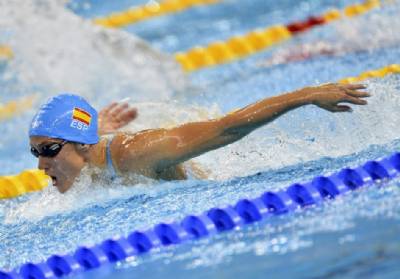
Mireia Belmonte (pictured right), from Gandia (Valencia province) netted a staggering six medals in the European swimming championships in Berlin, whilst the Olympic-medal-winning synchronised swimming team led by Ona Carbonell took four medals, Duane da Rocha took the gold, the silver went to Judit Ignacio and the bronze to Jessica Vall.
Miki Oca's all-girl team took the gold medal for water-polo in the European Games, and the bronze medal went to Spain in the rhythmic gymnastics World Cup in the Bulgarian capital of Sofia.
Traditionally male-dominated sports such as footba