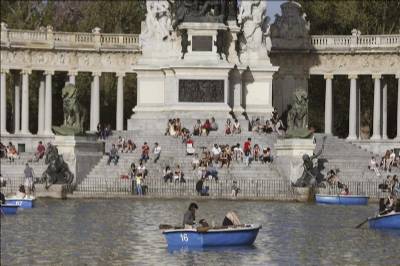
MADRID’S iconic El Retiro park and El Prado boulevard leading to the art museum of the same name are a step closer to becoming UNESCO heritage sites.
The area has been included in a shortlist, which means it is very unlikely at this stage that the keenly-sought title will be refused, but that the city will be given one year to work on and present its formal application to the world heritage department of the Paris-based global organisation.
Madrid city council says it has a ‘very strong’ case for the Retiro and El Prado boulevard becoming UNESCO world heritage sites.
At present, it is one of the few European capitals which have no UNESCO heritage sites, but it is hoped this will change in 2016.
The area in question encompasses the Retiro park with its huge boating lake, the Los Jerónimos neighbourhood from the Cibeles square – a traffic island with a life-sized statue of the Roman goddess in the centre – as far as the main Atocha station, the El Prado art museum and its adjoining avenue of the same name, and the botanical gardens, all measuring around 203 hectares.
Monuments already officially classified as local heritage assets which fall within the potential UNESCO area include the Puerta de Alcalá archway, the Spanish Language Academy and the Casón, or stately home in the Retiro park.
The stretch of the city in question covers numerous landmark moments in Spain’s rich history and that of its Monarchy, from the 17th century to the present day.
Spain has over 1,000 UNESCO heritage sites, the second most in Europe after Italy, and the third most in the world after Italy and China.