Two-thirds of Spanish children prefer the Three Kings to Santa Claus
Two-thirds of Spanish children prefer the Three Kings to Santa Claus
CHILDREN in Spain are more excited about the Three Kings bringing them presents than Santa Claus, according to a survey by the Spanish Association of Toy Manufacturers (AEFJ).
The group, based in the village of Ibi (Alicante province), where practically every resident lives off the toy-making industry, interviewed 23,500 parents and young people via social networks.
Whilst in the rest of Europe and the Anglo-Saxon world, Father Christmas brings the presents and fills stockings on Christmas Eve – between tea-time and the early hours – and these are unwrapped either on the night of December 24 or Christmas Day morning, in Spain it is the three Wise Men from the East who bear gifts, delivering them on the night of January 5.
In Spain, the Magi are known as the Three Kings, and January 6 is a bank holiday in their honour and the only chance Spanish children get to play with their new toys before going back to school on January 7.
Father Christmas does not even visit some children, but in most cases, where he does, he only leaves a few token gifts.
The study by the AEFJ found that two-thirds of children look forward to Casper, Melchior and Balthazar visiting them, and only 27.48% uphold the tradition of Santa Claus.
Other festive gift-bearing figures in different regions in Spain include the Tío de Nadal and, in the Basque Country, Olentzero, who are the preferred mythical faces of 2.7% and 2.8% of children respectively.
Many parents consider Santa Claus to be an invention by Coca-Cola – even though he is in fact based upon Saint Nicholas and has been around since the 19th century – and believe gifts brought by the Three Kings are more in keeping with tradition and the true spirit of Christmas.
The research found that the average child asks for five toys for Christmas – in 58.4% - rising to 10 toys for 32.6% of children.
In 67% of cases, parents do indeed give their children five toys each, with another 29.4% getting 10 toys.
Although toys are the most-requested presents, in a significant minority of cases they are substituted with clothing and footwear.
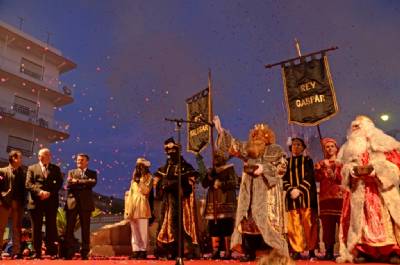
Photograph: Three Kings’ parade in Jávea (Alicante province)