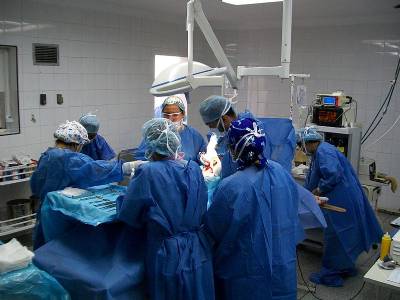
SPAIN has once again broken world records for the number of organ transplants carried out.
For the year 2014, surgeons in the country carried out transplants on an average of 12 people per day - and on February 20, managed as many as 45 in one day.
A total of 22 hospitals in 11 of Spain's 17 autonomously-governed regions achieved this feat between them, thanks to finding 16 new donors, of whom two were still alive.
A total of 4,360 transplants were carried out in Spain in 2014, thanks to 1,682 donors, breaking the country's own record.
Spain has held the number one spot for organ transplants for several years, and donor numbers currently sit at an average of 36 per million inhabitants - nearly double the European average of 19 per million, according to figures released by the National Transplant Organisation (ONT).
Heart transplants have gone up by 6% and kidney transplants by 5% in the past 12 months, although the number of pancreatic, intestinal and liver transplants decreased.
Live kidney donors rose in number by 11%, reaching 423 in total.
Kidneys are among the very few organs which can be taken from living donors - as is bone marrow, where Spain reached a new record last year of 33,506 donors.
Most organs used for transplant in Spain either come from people whose cause of death is considered to be cardiac arrest, or kidneys from living donors, and the majority are aged over 60, with 40% being women and 60% men.
Relatives who refuse to allow their loved ones' organs to be used for transplant make up around 16%, a number which has neither diminished nor increased since last year.
Northern Spain has seen the highest number of organ donors in the last 12 months, led by the region of La Rioja with 56.4 per million inhabitants, followed closely by Cantabria, Castilla y León, Asturias, the Balearic Islands and Navarra.
Although not among the highest, donor numbers have gone up in the regions of Andalucía, Valencia, Madrid, Catalunya and Extremadura in the past year.
Spain continues to be world number one in terms of umbilical cord banks, with over 60,000 frozen and in storage for treatment and research using the blood and stem cells for conditions such as hereditary illnesses and leukaemia.
This means Spain has already reached the target it set for itself in this area a year early, since the ONT wanted to get to 60,000 by the end of 2015.
The ONT's plans for the future involve increasing donor numbers by 10% and transplant operations by 20%, exceeding 5,000 per year, by the end of 2019.
Despite Spain's excellent record - as yet unbeaten in the world - waiting lists for transplants have grown for the second year running.
As at the end of 2014, a total of 5,571 patients were waiting for an organ transplant, compared to 5,418 at the end of 2013.