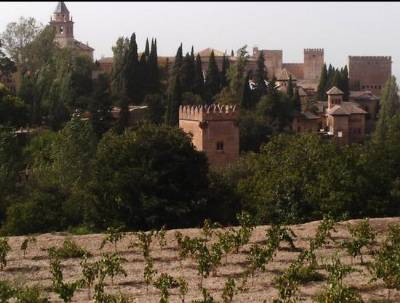
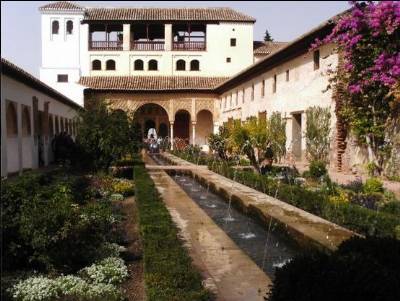
GRANADA'S iconic Alhambra Palace had a 'record year' in 2014 with the highest number of sightseers ever and has retained its honour as the most-visited attraction in Spain.
With over 2.4 million people visiting the Palace last year, representing an increase of 3.78% on 2013 – or an extra 87,500 tourists – the Mediaeval Arab complex once owned by the Nazari dynasty is not only immensely popular with foreign tourists and residents in Spain taking a weekend break, but is also a place where visitors return year after year.
The best month for tourist numbers was May, with a total of 260,727 visitors, and the best day of the year was May 1 when 9,329 people went to explore the Palace.
And the worst day for tourists last year was December 11, when 'only' 2,212 sightseers went along.
Normally, January and February are the quietest months, but in 2014 their visitor figures went up by 20% and 9.68% respectively.
Last year was the first time ever that the Alhambra Palace broke the 2.4-million-visitor barrier – in fact, the total number was 2,402,473.
In addition to visiting the main monument, or in some cases instead of, the shows and exhibitions at the Alhambra were more highly-attended in 2014 than ever before.
Art displays, music and dance festivals, a Japanese garden exhibition in the Generalife – as the landscaped grounds of the Alhambra are known – and the permanent displays at the Alhambra Museum and the Museum of Fine Arts attract literally hundreds of thousands of visitors, bringing the total number of people who went to the complex last year up to 3,113,485.
Night tours of the Alhambra attracted 65,300 people and the gardens alone, 210,000.
Most visited as individuals, families, couples or as two or three friends – just under 1.51 million – whilst nearly 900,000 visited the Alhambra as part of an organised excursion group.
The majority – 70% - book their tickets via an authorised agency or in advance by internet or telephone, whilst tickets sold on the door only accounted for 21.42%.
Getting into the Alhambra Palace, especially at peak times of the year can involve long queues and occasionally, disappointment, which is why most visitors buy their tickets in advance.
Mini-buses run regularly from the city centre straight to the Palace.
Where visitors come from
Tourists from the European Union are the most numerous at the Alhambra – 43% of the total – with the highest numbers of visitors coming from Germany and France, in that order, followed by the USA, UK and Japan.
Germans and French tourists are the most likely to return to the Alhambra for a second or subsequent visit, statistics showed.
About 767,000 of last year's visitors came from other parts of Spain, of whom 122,500 live in the same region – Andalucía – with 32,000 of those being from the province or city of Granada itself.
Last year saw a rise in the number of individuals staying overnight in Granada with the intention of seeing the Palace, as opposed to organised tour groups – a total of 1,770,300 who stayed in hotels in the city in 2014 visited the monument, being a rise of 33,400 on the previous year.
Tourists choosing accommodation in hostales, or small guest houses, or the homes of family members and friends are on the rise, but the majority of Alhambra visitors who stayed at least one night opted for four- and five-star hotels.
As for the type of tourist who is mainly attracted to the monument, the typical profile is of a professional European graduate aged between 36 and 50.
Most visitors who filled in a satisfaction survey at the end gave the Palace and complex a very high rating – 89.8 out of 100 for those who organised their own trips and 93.8 out of 100 for those on organised tours.
They mainly praised the cleanliness and state of conservation of the complex, felt the length of time spent on the visit was about right, and most enjoyed the visit to the Generalife gardens.
Complaints have risen in number since last year, although in proportion to the increase in visitors.
The 729 who were unsatisfied about certain aspects of their experience at the Alhambra in 2013 rose to 844 in 2014, but this only accounts for 0.035% of the total visitor numbers.
Grievances were mainly about the opening and closing times of the monument, or the length of the queues for those who had not booked tickets in advance.