Fallas burn despite downpours: Fiesta end looked set to be a damp squib, but rain did not stop flames and fireworks
Fallas burn despite downpours: Fiesta end looked set to be a damp squib, but rain did not stop flames and fireworks
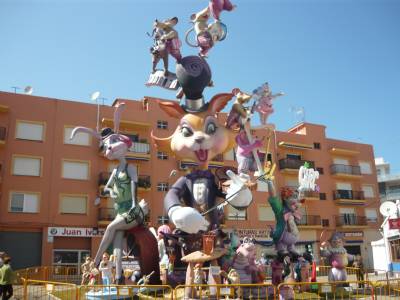
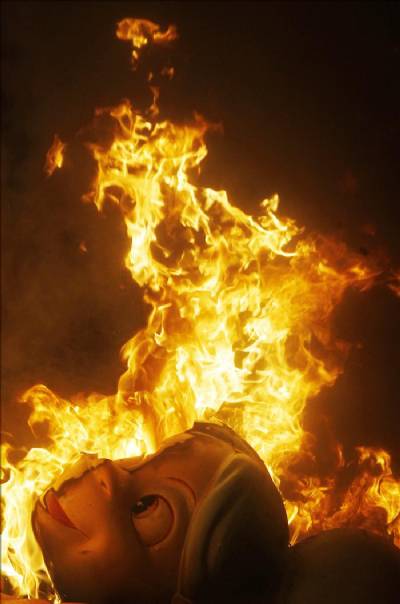
A WET and windy end to the Valencia region's fabulous Fallas festival failed to dampen participants' and spectators' spirits and, despite forecasts of torrential downpours on the crucial last night, the papier mâché statues were successfully burnt to the ground.
Known as the cremá, the monument-burning happens on the last night of the four-day fiesta, March 19, starting with the falla statue which came last in the line-up and ending with the winner.
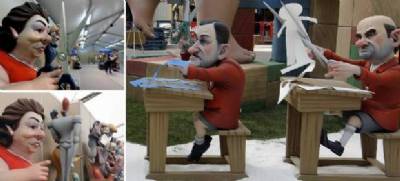
Falla monuments this year satirised independent party Podemos and its leader, Pablo Iglesias, with his trademark ponytail, beard and lumberjack shirt, as well as the credit card expenses fraud scandal affecting top-flight bosses at the now-defunct Caja Madrid bank, the Royal family, former PP treasurer Luis Bárcenas, and politicians and business-owners linked to the massive Gürtel corruption case, among many other current affairs themes.
Two fallas in Valencia – the main and children's falla Félix Pizcueta monuments – burnt down by accident before time, since a spark from the smaller of the two ignited the main one.
Parts of some of the fallas blew down in the gale-force winds and, although Valencia city's famous Nit de Foc ('night of fire') went ahead without a hitch despite torrential rain, wet weather meant the flower-offering to the Virgin finished early and the torchlight procession was called off.
Ambassadors for Egypt, India, Poland, Russia and Turkey attended the cremá, or burning of the fallas in Valencia city, a long-winded affair since over 400 main monuments and 380 children's fallas are set up every year.
The final mascletá in the city hall square caused the ground to shake, and fears it would be called off because of the downpour were unfounded after the rain gave fiesta-goers a few hours' respite.
During the mascletá, a high-decibel firecracker display which takes place at 14.00hrs every day during the festival, two youths were injured after letting off a firework they had placed inside a drinks can, and a number of others were attended to by the Red Cross after suffering fainting fits.
Elsewhere in the Comunidad Valenciana, smaller towns and villages celebrated the Fallas as every year, with one of the largest and most full-on versions of the fiesta outside Valencia city being in Gandia (Valencia province), where the huge falla in the central Plaza del Prado continued its winning streak.
Oliva and Tavernes (Valencia province) also go in for the Fallas in a big way, despite their much smaller size in comparison with the region's capital – falla La Vía won in the latter and falla Institut came first out of six in the former.
The Fallas barely touch the more southerly province of Alicante, where some towns do not even observe Saint Joseph's Day (Día de San José, also Father's Day in Spain) as a bank holiday.
But Dénia, in the north of the province, has eight fallas for its 40,000 or so inhabitants, whilst Pego, slightly inland and north of Dénia, has three for its population of around 11,000.
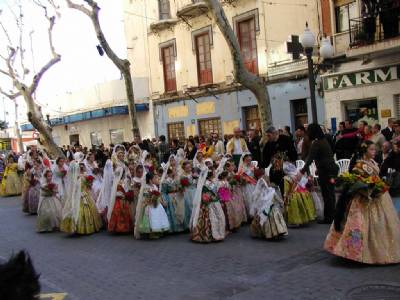
Whilst yesterday (Thursday) was a bank holiday, it is really today (Friday) that the fiesta participants – known as falleras for girls and women and falleros for boys and men – really need as a 'duvet day' after nearly a week of round-the-clock partying, parading, eating and drinking.
Spain's central government has tried to get the region, and Valencia city in particular to move the bank holiday to a Monday to cut the cost to the economy of employees being given the days before or after, linked to the nearest weekend, as additional leave – a concept known as a puente, or 'bridge'.
For example, with March 19 falling on a Thursday this year, many public sector workers and large company employees may also be given Friday off.
The same is true in other parts of the country where, although the Fallas are not celebrated, the date is a public holiday for San José and Father's Day.
Mayoress of Valencia, Rita Barberá said she prefers to 'stick with tradition' and let the bank holiday be taken on the day it falls, even if it is mid-week – and points out that the income from tourists spending a long weekend in the city more than makes up for any loss of earnings through extra days' holiday.
She appears to have been largely forgiven by the people of Valencia for her gaffes during the traditional opening speech given from the city hall balcony.
Addressing the crowds in the vernacular, valenciano, which she does not speak fluently, Rita was heard to 'invent' words, use Spanish nouns and verbs 'Valencianised' but which do not exist, and litter her speech with Spanish expressions.
One of her frequently-used words in the disastrous public address was caloret, which translates