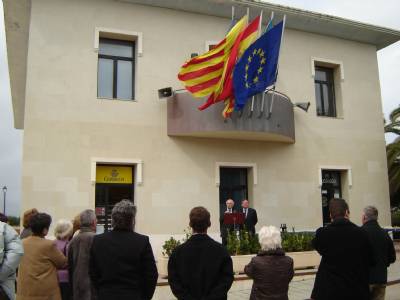
Town council parties have until June 13 to form coalitions
Town council parties have until June 13 to form coalitions
TOWN councils in Spain which were dissolved ahead of Sunday's elections will re-form on June 13 – and in some cases, the parties involved will need every minute of that time for negotiations and coalition-forming.
Residents in Spain of all nationalities voted for 8,122 mayors' roles and 67,640 councillors' seats, and with many of these more fragmented than ever, a high number of winning parties will either be governing in minority or have to wait and see whether enough parties on the opposition can band together to make a significant enough minority to be able to oust them and take control.
The PP party has, across the board, been the one to earn the most votes at local council level, but in the majority of cases with a significant loss of seats leaving them in a minority.
Saturday, June 13 will be when an internal vote is held – all councillors who now occupy a seat will be required to vote for a lead candidate to become mayor or mayoress – the female form of the title exists in the Spanish language, which differentiates between alcalde and alcaldesa, unlike in English where a mayoress is the name given to a mayor's wife, be the mayor a man or a woman – but if this vote does not decide who will lead the town, the number one candidate of the party which won the most seats will become mayor, or mayoress.
If this is tied, the 'winning' name will literally be pulled out of a hat.
Where parties which have not won enough seats to govern decide to form pacts or coalitions with others on the list in order to obtain a majority large enough to run the town, they will be expected to present details, including a lead candidate, at the first full public council meeting of the new term of office on June 13.
'Majority' means a different number for each town depending upon their population – winning more votes than any other party does not necessarily mean the most successful outfit's leader will take over the reins.
For villages with fewer than 100 inhabitants, the minimum number of council seats available in total is three, and there is no maximum.
Cities, towns and villages with up to 100,000 inhabitants have 25 council seats, and for each additional 100,000 residents, another seat is added.
Seat numbers must always be uneven to avoid stalemates in voting in new mayors or for or against policy decisions.
Madrid has the largest council with 57 seats – which former regional minister Esperanza Aguirre was hoping to get enough of to lead – and Barcelona has 41.
Barcelona's new mayoress is likely to be Ada Colau, its most-voted party leader – a campaigner against home repossessions who has led numerous protests and demonstrations meant she made few friends among the previous city council or regional and central governments.
One of the most curious cases of the current elections is Llíber, in the province of Alicante, where only one party stood for elections – the PP.
Despite knowing he was going to win whether or not anyone in town voted, the mayor still held an electoral campaign in the village.
Some villages in rural Spain have practically every inhabitant already on the council.
The now-uninhabited hamlet of Vallanca in the province of Valencia had just seven inhabitants 20 years ago, all of whom were the same family, with the father being mayor and the mother as his secretary, and their positions being dependent upon their own children voting for them, or not.