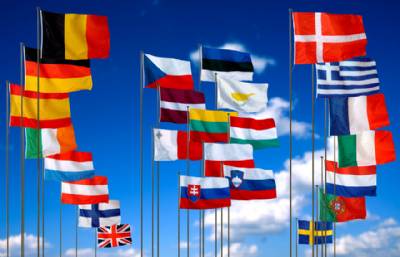
SPAIN'S and Portugal's 30th anniversary of joining the European Union saw a flood of congratulations from MEPs and heads of State yesterday – although as yet it appears UK prime minister David Cameron was not among them.
Whilst the 'talk of the town' for British expats in Spain centres on a referendum for or against a possible 'Brexit', Spain basked in praise from German Chancellor Angela Merkel, France's president François Hollande and foreign affairs minister for Italy, Sandro Gozi.
Spain and Portugal signed the treaty that would make them part of the burgeoning common market, the EEC – a precursor to today's EU – on June 12, 1985, and the two countries' connections with the rest of the continent and its vast cultural, financial and ideological differences have shaped societies in both, turning them into modern, hi-tech nations overflowing with highly-qualified and cosmopolitan residents, of whom between 10% and 13% are foreign, including other Europeans.
“Congratulations to Spain and all other Europeans,” said Germany's foreign ministry message.
“Spain has a reliable partner in Germany – we will work together for growth, employment and innovation in Europe.”
France described Spain as 'an essential partner', as it showed during the recent visit to the country by King Felipe VI and Queen Letizia where they were given the full stately treatment hitherto only accorded to Queen Elizabeth II of the UK.
“Spain has contributed greatly to building Europe via an unbreakable European commitment – today, we work together in all areas, whether it is the fight against terrorism, foreign security policies or common defence, including in Africa, but also in favour of a stronger Europe and greater solidarity in serving growth and employment,” France concluded.
Italy's European affairs minister Sandro Gozi said Spain has shown that 'Europe means democracy', since its own democratic 'career' – which started with the death of Franco and the swearing-in of the late president Adolfo Suárez a decade earlier – has been 'accompanied at every step' by Europe.
“Thirty years of evolution for Spain through 30 years of belonging to Europe,” Gozi's message read, before concluding that Europe 'must be profoundly reformed' so that it can 'continue offering opportunities' to the rest of the continent 'as Spain has done'.
Irish PM Enda Kenny drew sharp cultural and political comparisons between the Emerald Isle and Spain, recalling that both countries had 'brought a great deal' to the EU, but at the same time had 'benefited enormously from the advantages of being a member'.
“Spain's signing happened during a very fertile period in the country's history, which confirmed its strong commitment to democratic values and integration with the rest of the Continent,” Kelly commented.
“Belonging to the EU has caused profound and significant changes in both Ireland and Spain. It has helped us out of poverty and to improve our quality of life, reducing our feelings of isolation for being on the outer edges of Europe and, unquestionably, has positively transformed the lives of our people.
“Spain and Ireland are coming out of a financial and economic crisis of many years, with great strength. Our membership of the EU has played a key role in this recovery.”
European Commission president Jean-Claude Juncker said Spain was 'reunited with its natural and political destiny' 30 years ago yesterday, pulling the country out of its 'international isolation' and bringing it closer to its European partners in terms of stability.
European Parliamentary president Martin Schulz commented on the 'great steps forward' Spain had achieved in its three decades in the EU, in terms of 'stability and reinforcement of democracy'.
Write to your last MP in the UK
Spain's belonging to the EU is largely what has enabled over a million documented expatriates from the UK – and many more who have not registered yet – to make the southern European country their home, and in the case of numerous others, their part-time home for a few months of the year.
Many of these million or so fear they will not be able to vote in a 'Brexit' referendum enabling them to stay in the EU and enjoy the easy-living advantages enabled by its free movement policies, since anyone who has lived outside the UK for 15 years or more is unable to vote in a British general election.
If the referendum goes ahead in 2017 as Cameron promised in his manifesto, anyone who left the UK in or before 2002 will technically be unable to vote on their future.
Spaniards and other EU nationals living in Britain are also concerned: as general election rules apply, anyone who is not British cannot vote, either.
Expatriates – irrespective of how long they have lived abroad – are strongly encouraged to write to their MP at their last constituency in the UK, as are EU citizens living in Britain, calling for their democratic right to be recognised.
Also, British citizens in Spain who have not registered for postal voting since living there should do so immediately if they are within the 15-year bracket.
This is a simple exercise that involves giving a few personal details on the foreign office website, fco.gov.uk, and ticking a box for a form to be sent to them from their last constituency.
The form requires little more than the voter's name, new address and National Insurance number from the UK, and comes with an addressed envelop