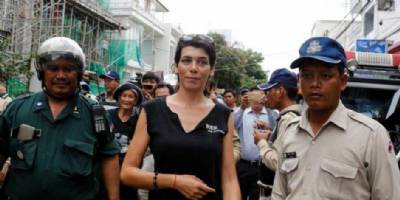
Spanish researcher allegedly deported from Cambodia for 'witchcraft': “We all know you fly around on broomsticks”
Spanish researcher allegedly deported from Cambodia for 'witchcraft': “We all know you fly around on broomsticks”
STATE authorities in Cambodia have denied arresting and deporting a Spanish scientist on suspicions of 'witchcraft', despite her saying one of the soldiers involved in her imprisonment claimed that 'everyone knows Spanish people fly around on broomsticks'.
Marga Bujosa was arrested for joining in a protest against the arrest of two of her colleagues who had been previously detained for joining in a similar march, this time in defence of human rights.
Bujosa, who is studying a PhD at Granada University and was in the Cambodian capital, Phnom Penh, on a field trip, said she was 'kicked until she had swellings everywhere' whilst in custody.
She reported this to the Spanish embassy in Thailand, the nearest, since Cambodia does not have one.
The Mallorca-born scientist said she had refused to hand over her mobile phone to police, but they forced it off her anyway and returned it with all the photos of the protest she had taken deleted.
“Everyone knows the Spanish do magic – they can fly on broomsticks,” one of the military officers involved in her arrest allegedly said to her.
He later insisted his comments were 'just a joke'.
According to head of investigation at the Cambodian interior ministry's immigration department, Uk Heisela, “the Spanish woman was very aggressive with us, but we treated her politely and respectfully.”
He told the Cambodia Daily that Bujosa 'had taken drugs' and justified deleting her mobile phone photos 'to prevent them being used for black magic', then made his comment about Spaniards and broomsticks.
Bujosa has been in Cambodia since 2009 and for the past two years, has been carrying out research about women who led the opposition against the forced eviction of 4,000 families to make way for a major development plan.
Her deportation comes just 18 months after that of compatriot Alejandro González-Davidson, co-founder of the charity Mother Nature Cambodia, who was thrown out of the country for his environmental activism.
A court case against him in Cambodia remains open.
Cambodia, now a popular tourist destination after rebuilding itself following the Khmer Rouge genocide and forced labour, remains gripped in poverty and, although technically now a democracy, locals brave enough to say so admit their vote counts for little and that the Cambodian People's Party 'arranged' to get back into power.
Criticising the government can land Cambodian residents in jail, and locals avoid doing so even among friend and family groups, since plain-clothes spies 'could be anywhere'.
Taking part in a protest march is likely to lead to getting shot dead by the military police, Cambodian people reveal, so tourists should always avoid these gatherings very carefully.
Bujosa, like González-Davidson, would have been risking her life by joining the demonstrations.
Despite freedom of speech being a chimera, Cambodia is a safe and friendly tourism destination which has grown rapidly in popularity since its iconic 'temple city', the Angkor Wat in the northern city of Siem Reap, became a candidate for the New Seven Wonders of the World and made the list of 21 finalists.