Brexit: Rajoy tells Theresa May 'British expats can rest easy'
Brexit: Rajoy tells Theresa May 'British expats can rest easy'
SPAIN'S acting president Mariano Rajoy will back British prime minister Theresa May if Scotland attempts to hold a second independence referendum, and UK foreign minister Boris Johnson has insisted nothing will change concerning Gibraltar's sovereignty once Brexit goes ahead.
May and Rajoy met on Thursday at the Moncloa Palace, Spain's answer to the White House and 10 Downing Street, and details of their talks are now starting to come to light.
It was Conservative leader Mrs May's first visit to Spain since she became prime minister after David Cameron, for whom she was Home Secretary, resigned in late June after his attempts to please everyone by calling a referendum on Britain's EU membership turned out to please nobody.
Whilst 51.9% of those who voted – 37% of adult British citizens, which included 'passing through' and resident Commonwealth nationals but barred Brits who had been living outside the UK more than 15 years – celebrated the triumph of the Brexit vote, both Brexiteers and 'Bremainers' are becoming increasingly annoyed about the lack of any concrete plan after triggering Article 50, and the absence of any information about the promised lucrative worldwide trade agreements to be put in place to replace the 27-strong open market in Europe.
And this closed-door policy was reflected in May's and Rajoy's meeting, since reporters were not given the chance to ask questions or given a debrief afterwards.
The only information gained by the Spanish media has been through their government website, which says Rajoy listened to May's plans for taking Brexit forward and pledged to her to protect the interests of the Spanish people and Spanish companies.
'British expats and tourists can rest easy'
Crucially, Rajoy mentioned British citizens living in Spain, which the Conservatives have not done – an issue which is causing serious unrest among expats, some of whom have children born in Spain or who, themselves, have never lived in the UK; many of whom work, or are retired and rely on their status as EU citizens for healthcare and unconditional residence.
In fact, in the 170 queries Labour put forward to the Conservatives about Brexit this week, only one sentence in one of the questions referred to British expats in Europe at the same time as mentioning European expats in the UK, whilst the Conservatives have not even raised the matter.
Rajoy's words to May, however, will be music to British expats' ears: “The British people living in Spain, the millions of British tourists who visit us every year, and the British companies based on Spanish territory can rest easy,” the PP leader assured.
We're so sorry, Scotland
Scotland will not get any backing from Rajoy, though, as he made clear to Theresa May – having already said as such during the European Parliamentary meeting which Scottish First Minister Nicola Sturgeon attended.
Although the PP leader denies his categoric stance has anything to do with Catalunya, it is not difficult to draw comparisons, with Spain's north-eastern region having gone as far as to announce a referendum on secession before next September with or without the blessing of the Moncloa.
Every single constituency in Scotland voted, in the majority, to remain in the EU, as was the case with London, Brighton, Norwich, Manchester, Newcastle, Liverpool, Cambridge and three-quarters of Northern Ireland, plus 95% of voters in Gibraltar, and an overwhelming majority of still-eligible voters living in the EU – with an equally overwhelming majority of those denied a vote due to the '15-year rule' having expressed their desire to remain - meaning unlike after a general election, the voters who 'lost' are not prepared to take their fate lying down.
In fact, one of the unanswered questions is what will happen to the Northern Ireland-Republic of Ireland border.
Opening the border was key in the peace agreement which saw the end of decades of IRA bombings, but this will mean the UK still has a land border with the EU and its desire to 'control immigration', even at the expense of the single market, could be very difficult.
And border issues may affect Gibraltar, where numerous Spaniards living in the Andalucía province of Cádiz commute every day.
Britain to 'remain implacable' over Gibraltar's sovereignty, says Johnson
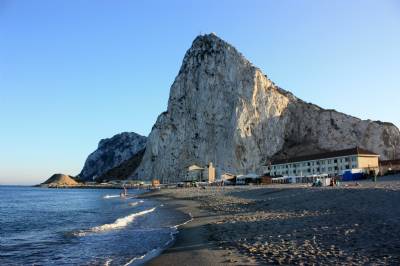
With the current PP government determined the Rock should be Spanish, and the Gibraltarians wanting to remain British, it will be the workers who are worst-affected in the event of a political battle of wits.
The subject did not arise during May's and Rajoy's meeting, according to diplomatic sources, who insisted it was a 'bilateral issue' which 'had nothing to do with the UK's Brexit negotiations with the EU'.
But UK foreign minister Boris Johnson – the main 'official' voice of the 'Leave' campaign, second only to former UKIP minister Nigel Farage whose own campaign was independent – has made it clear what the UK's stance over the Rock will be.
No changes to British sovereignty of the colony will arise as a result of Brexit, Johnson stated in a speech before the foreign affairs commission in the House of Commons