Surge in holidaymakers continues: Visitors outnumber resident population as tourism shoots up by over 10%
Surge in holidaymakers continues: Visitors outnumber resident population as tourism shoots up by over 10%
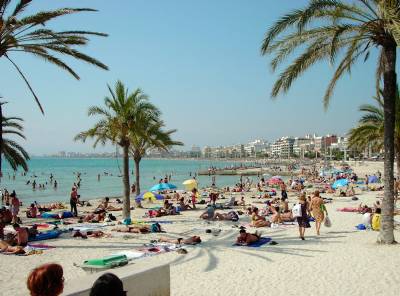
HOLIDAYMAKERS continue to flock to Spain in unprecedented numbers – and the Indian summer is proving a huge help for the tourism industry, with beaches still full up on parts of the east and south coast, a rare sight in November.
Up to and including September alone, a total of 60.3 million visitors had travelled to Spain – the equivalent of one-and-a-third of its population and a rise of 10.1% year-on-year.
And although July and August are peak holiday season in Spain, September alone saw a whopping 7.9 million foreign tourists arriving.
Of these, a total of two million – just over a quarter – were from the UK, which continues to be one of Spain's largest holidaymaker markets.
Reports from the National Institute of Statistics (INE) say British visitors were up 12.8% on last September 'despite Brexit', although it must be remembered that 'Brexit' has not happened yet and is unlikely to until at least early 2019.
Many package holidays will have been booked before the Brexit referendum and, results of this aside, Spain remains the safest short-haul sunshine destination and one of the cheapest, especially in September when the much higher school summer holiday prices no longer apply.
If this situation continues, even after Brexit happens and despite the weaker pound sterling, it is likely Spain will remain the most-affordable beach holiday spot – and British weather will still mean residents want to seek some sunshine for a week or two a year, whatever else they have to sacrifice financially.
In fact, over the year, 14.4 million Brits have visited Spain, a 13% rise on the first nine months of 2015.
France was the second-largest output country for tourism up to and including September, with 9.3 million in total, or 9.6% more, and Germany's numbers rose by 4.3% to 8.9 million.
The highest year-on-year rise was seen among the Irish – 1.5 million holidaymakers from the Emerald Isle headed for Spanish shores, an increase of 20.8%.
Whilst still a long way down the list, but slightly above the Republic of Ireland, the USA's 1.6 million visitors represented a rise of 6.9%, and Russian tourists also rose, by a total of 1.2% to exactly 842,646 people.
Belgian and Swiss holidaymakers represented the only decline in numbers in September – by 6.2% and 6.3% respectively – but for the first eight months of the year, their totals were also up on 2015.
Over the course of 2016, despite the well-deserved popularity and fame of Spain's main Costas (Alicante and Málaga) and islands, it was Catalunya which welcomed the highest amount of visitors – 14.5 million, nearly a third of the country's population and just under a quarter of the annual total, up by 4.4% on 2015.
But the staple beach haunts continued to thrive, with an increase of 10.6% for the Balearics to 11.5 million, or 19.1% of the total, and a rise of 13.2% for the Canary Islands to 9.6 million, representing 15.9% of all foreign visitors to Spain.
So far, the region seeing the biggest rise in tourism has been the Comunidad Valenciana, which includes such diverse destinations as Benidorm – which makes no secret of its 'cheesy-but-fun' and very-British appeal – and the sleek, cosmopolitan city of Valencia, plus literally everything in between including up-market villas for rent, quiet fishing villages, dramatic countryside, high-rise hotels, from the heavily-touristy to the rustic and traditional.
The region's tourism industry was rubbing its hands together with glee as 6.3 million visitors poured in, a rise of 16% on last year's figures – an even better result than the equally-popular Andalucía, which saw a rise of 13.2% to 8.5 million holidaymakers.
Not everyone sought beaches and sunshine, though – Spain's beautiful cities provide enough material for a three-month holiday with some to spare, as 4.3 million visitors found out in Madrid, creating an annual increase of the same percentage as the Canary Islands and Andalucía.
For rising numbers in general, March was the best month – visitors went up by 16.1% - followed by February, traditionally the coldest month but right in the middle of the skiing season and not too cold for city visits, with an extra 13.7%.
April, January, September, and last November came next and, although the rocketing figures tailed off this summer, every month in the last full year has seen an increase, the lowest being August with 5.8% more holidaymakers.
Stays in Spain are getting shorter – averaging four to seven days – but during that time visitors are tending to spend more money to make the most of their reduced break, meaning the high turnover and additional shelling-out has made the industry more buoyant in 2016.
Some 7.5 million visitors stayed with family or friends, and nearly four million in their own holiday homes.
Of the 60.3 million visitors, just 3.4 million travelled to Spain on business, and nearly three-quarters of the total – 42 million – did not bother with a package deal but simply booked their own transport and accommodation.