Spain to seek EU funding towards 47 road, rail and air transport projects
Spain to seek EU funding towards 47 road, rail and air transport projects
SPAIN will apply bfor a €308-million grant from the European Union to fund up to 44% of a series of transport projects, covering repairs, maintenance, new construction and amendments to road and rail infrastructure.
Some of this will be used for the so-called 'Mediterranean Corridor', as the eastern rail lines are known, and the Autopista del Mar or 'Sea Motorway'.
But it is unclear – and seems unlikely – whether this will involve the long-awaited and much-needed train between Valencia and Alicante on the coast, a stretch with hardly any public transport but which is crucial for airport travel, city commuting, and for linking France to south-eastern Spain in one unbroken line.
The central government had already rejected an appeal by the Valencia regional government for funding, and limited interest has been shown in its desire for the AP-7 coastal motorway to be made toll-free to prevent long-distance traffic, including lorries, from cutting through small towns to avoid the fees.
Other projects will include the soi-disant 'Atlantic Corridor' rail links and motorways along the Andalucía-Portugal coast, as yet not fully defined.
The north-western train network, the road link between the A-62 motorway and the IP-5 motorway in Portugal, improvement in air traffic management, increases in supplies of renewable energy for all types of transport, rail safety, 'smart' road transport, and the reopening of the Pau-Canfranc railway line in Catalunya are among the 47 plans for which the ministry of public works is seeking cash from Brussels.
It is expected that the grants will be approved by July this year, and Spain will be required to add half a billion euros to the amount requested for its own contribution to the projects.
In total, Spain is entitled to €840m, but this covers a maximum of 44% of any plans on the table, meaning the State is required to top it up by a total of €1.07bn, which it is unlikely to be able to afford to do.
The country will therefore apply for the amount it knows it can feasibly pay the additional amount towards, or 56% of the full costs.
Of the €9.3bn distributed throughout the EU-28 between 2014 and 2015, the sum of €915m went to Spain.
Any EU country, jointly or separately, can apply for funding each year for transport infrastructure, meaning Spain's request is likely to be approved.
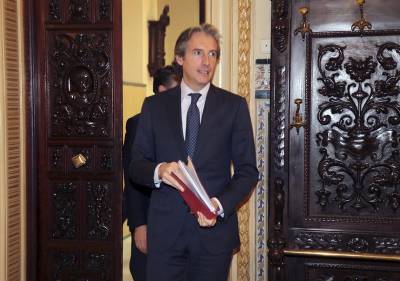
The photograph shows Spain's public works minister Íñigo de la Serna.