10 min read
Should I live in the countryside or in a city when I move to Spain? Is life easier in an urban area than a rural environment? Among the long list of questions you'll be asking yourself when thinking of buying a Spanish home, these are bound to come up. If you need help in figuring it out, read on to get a feel for what life is like in different parts of the country.

Advantages of urban life in Spain
Certain practical aspects of life in Spain may be easier in a city or big town than in a countryside location. The main ones are:
More job opportunities
A key advantage of living in a big town or city is the greater variety of job opportunities. Depending upon your work needs and profession, you will nearly always find a wider choice in larger, more densely-populated areas. Spanish companies tend to be very centralised, meaning head offices and major branches are typically found in the biggest metropolitan zones, such as Madrid and Barcelona.
Before deciding, you might like to read Best places to live in Spain for job opportunities for more ideas.
Modern and cosmopolitan
Cities in Spain are, arguably, more modern in their outlook than small towns and villages. New developments in technology, such as telecommunications cover, will reach cities first, as will new ideas and approaches to life in general. A younger, more international demographic means progress feels faster and old-fashioned attitudes and practices become obsolete more quickly.
Cities and heavily-populated areas tend to be more cosmopolitan, meaning you are more likely to meet people who share your language, nationality, or both, which might be helpful when first settling in, when seeking work, or setting up a new business. It's also a great way to get to know other cultures and languages and broaden your world view.
Transport availability
Living in a city or densely-populated area in Spain may even mean you do not need to own a car. The largest provincial capitals – including Madrid, Barcelona, Valencia and Málaga – have an underground rail (metro) network, meaning you rarely have to walk more than one or two streets. Others have an extensive bus network, and most have national rail and coach connections.
Practically every province in Spain has at least one airport, and if you're in a city, you'll probably have a direct transport connection to it.
Public transport – except taxis – is generally cheaper in Spain than in northern Europe, the USA, Australia and Canada. But outside the cities, it can be very sparse – even non-existent in small towns and villages. For more information, read our detailed guide to using public transport in Spain.
Local facilities
Infrastructure and necessary facilities will be much easier to find and access in cities and large towns. More health centres, larger and better-equipped hospitals – meaning not having to travel for more specialist treatment or consultations – and wider availability of support systems than in small towns or villages can make life much easier for you.
For shopping, you'll find almost everything you need within your home municipality. This is important in Spain, where online shopping and home deliveries are less part of the culture than in neighbouring countries. In towns of any size, face-to-face and high-street retail continue to be relevant and popular. In urban areas, you've far more chance of finding department stores and branches of large chain stores with a greater range to suit your needs.
Online ordering and delivery are, however, more widely available in cities, quicker, and less costly.
Shop and supermarket opening hours are typically more convenient in cities and major tourism areas. In smaller towns, nearly everywhere is shut on Sundays and public holidays, and often even on Saturday afternoons. In cities and holiday zones, shops and public services may be open all day, without closing for lunch – and if they do, it may only be from 14.00 to 16.00. In small towns though, you may find everything closes at about 13.00 and doesn't reopen until at least 17.30.
Choice of schools
If you're moving to Spain with children, finding a good school will be one of your biggest priorities. In a small town or village, you may have little or no choice of State school, with perhaps only one or two within the catchment area. If these are not suitable, you'd have to consider paying for private schooling, which may involve travelling some distance.
In cities and major tourism hubs, though, availability of state and private schools is much greater, giving you considerable choice. Finding an international or bilingual school is also far easier – Barcelona, for example, has over 40 of these.
If you're a parent, you will certainly find it helpful to read Education in Spain: What you need to know about schools.
Leisure opportunities
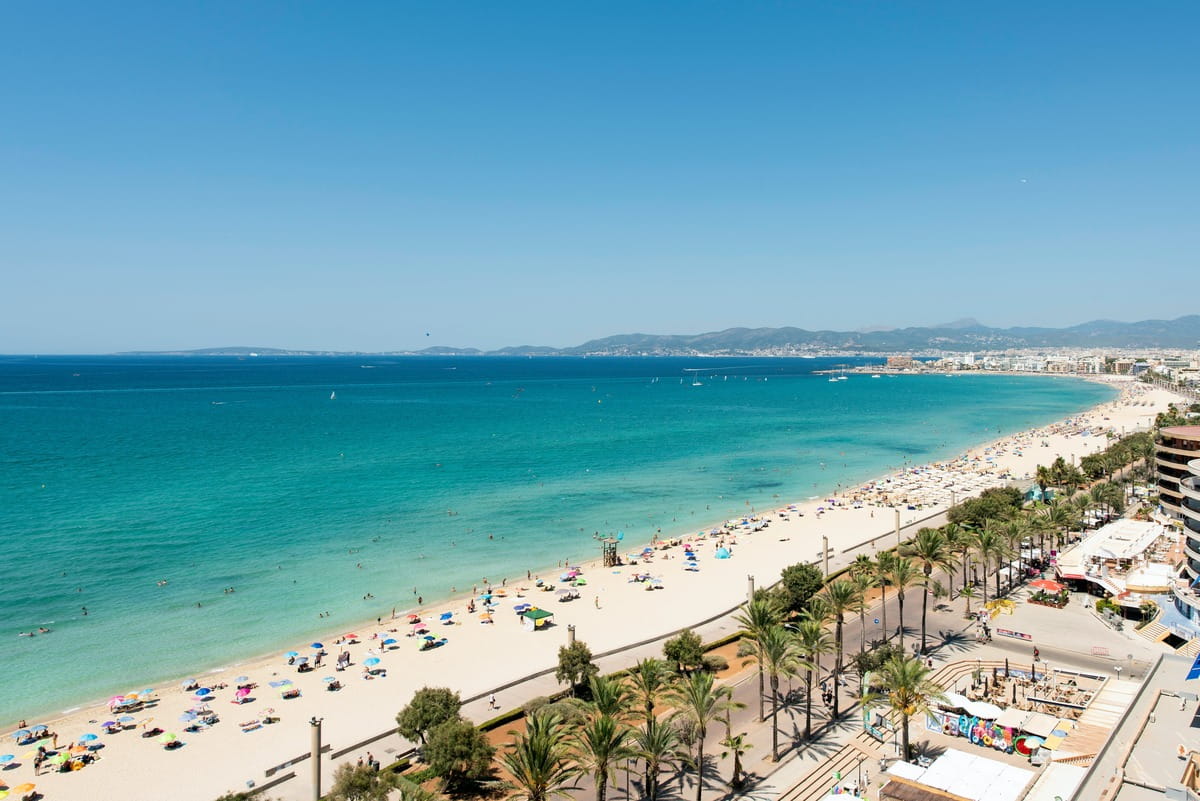
It's hard to get bored living in a big town or city: There's always something to do. Some cities in Spain have beaches – such as Alicante, Málaga, Valencia, Cádiz, Gijón, San Sebastián, and Barcelona – and even those which don't will still have plenty of leisure opportunities. Shopping, eating out, cafés and bars, art galleries and museums, concerts, theatre and film, social clubs and groups, sports facilities...you name it, you'll find it on your doorstep.
Alternatives to big-city life in Spain
Perhaps, when you move to Spain, you want to ensure a wide range of easily-accessible facilities, the option to not have to use your car, and a modern, progressive outlook on life. But you may not be a fan of cities – perhaps you find them too busy, crowded, stressful, polluted, expensive, or all of these. Can you find the best of both worlds, though?
Luckily, in Spain, yes, you can. Some provincial capitals, although cities, have a much quieter and more relaxed way of life and, as they are not on the main international tourism trail, tend to be less expensive. You can find out more by reading These are the cheapest cities to live in Spain.
Otherwise, you could look for a medium-sized or even small town which is bordered by several other small towns and well-connected between them. You're most likely to find these in the more cosmopolitan coastal areas, such as the provinces of Málaga, Cádiz, Alicante and Valencia. To get more of a feel for life in different parts of the country, you might like to read Best places to live in Spain as an expatriate.
Advantages of rural or village life in Spain
Perhaps less practical, but certainly cheaper and more relaxing, living in the countryside can be healthier and more uplifting. If you're drawn to Spain's beautiful rural landscape and keen to find out whether it's right for you, here are some of the bonus points:

Lower living costs
Local taxes tend to be far lower in rural Spain, and traders typically charge less. You're more likely to be near a weekly market, where fresh produce, basic clothing and household items are less expensive – largely due to traders' reduced overheads. You won't have to travel far for your daily essentials, meaning you'll also save money on transport.
Some of Spain's more remote villages, fearful of population decline, offer incentives to live there. Tax rebates, or even cash grants, are often available simply for moving in – especially if you have, or hope to have, children.
Cheaper property
Given that city homes are more sought after among those of working and childbearing age, property for sale and to rent is becoming more and more expensive. But villages and countryside locations are the exact opposite, meaning they're much more affordable. Depending upon precisely where you are, you might find you can buy a spacious house in a rural village for a quarter of what you would pay for a small flat in a big city.
Although the drawback to this is that increases in property value are slower and less marked in the countryside than the city, this is not an issue if you plan to live in it for many years. And you will also get far more space for your money, including more land and more bedrooms.
If budget is your biggest home-purchasing concern, take a look at The cheapest places to buy property in Spain.
Easier parking
Crucially, in rural or village settings, the lower population and older demographic mean fewer cars on the road – so you'll avoid the daily headaches of searching for a parking space. Properties in built-up areas with off-road parking tend to be much more expensive, and on-road parking often hard to find and a long walk from your home. Whilst there may be less availability of off-road parking in villages, you'll generally have no trouble finding a space to leave your car.
Close-knit community
Despite cities being home to hundreds of thousands, they can feel very lonely: Residents may be temporary, everyone is busy and in a rush, and there are generally too many people for you to ever meet the same faces by chance more than once. The opposite is true in a village or rural environment: You may only have a dozen or a couple of hundred neighbours at most, but you'll know all of them intimately.
This situation is not for everyone; people who like to be alone, or sometimes sit in a bar and read quietly and uninterrupted, may find they have to be very firm in setting boundaries. Ironically, you may need to ensure your house door is always locked – not for safety reasons, but to prevent neighbours from just popping in for a chat uninvited.
However, it can also be a life-saver – literally. If you haven't been seen or heard from, you'll quickly discover you're missed, which can create a real sense of comfort and security. You'll always have someone to talk with if you need it, a ready-made family and someone willing to help if you need a favour.
Community spirit, so often lacking in today's world, is alive and well in Spanish villages – and this applies to newcomers, too. In most cases, you'll be considered 'one of them' within less than a week of moving in, and plunged into the heart of village life.
Peace and quiet
Despite neighbours possibly popping in unannounced or stopping to chat when you're in the local café, rural and village living is still more conducive to work-life balance than city life. The peace and quiet makes it easier to concentrate. There'll be no commuter traffic or crammed public transport. Whilst job opportunities in rural Spain are extremely limited, the sudden shift towards remote working that started during the pandemic has meant more and more people able to live where they want to, not where they have to.
Deep in the heart of the countryside, internet and mobile phone infrastructure has a lot of catching up to do to reach standards of built-up areas, but Spain's government is working hard to ensure every single resident has access to these utilities. With over 53% of municipalities being in rural locations, there's a lot of demand for these facilities, meaning more and more remote villages are becoming viable as a base for working from home.
You can find out more about this lifestyle in How to work remotely from Spain: Your ultimate guide to the digital nomad life.
Cleaner air and incredible views
Lack of traffic and heavy industry, and more greenery, mean, of course, cleaner air. Starting your working day with the scent of the mountains, breathing in nature on your way to the shops, is an attraction on its own – but also better for your health.
And we promise you'll never get bored with the scenery in rural Spain. No matter how many times you see the same fields, mountains and forests, the same ruined castles on hills, it will feel like the first time you noticed them. Going about your daily errands or driving into the next town for shopping will never seem like a chore when you have so much breathtaking natural wonder to accompany you. And there's nothing like an amazing view to lift your spirits when you need it.
Less crime
Spain, as a country, is one of the safest in the world: Violent crime rates are, statistically, very low. Walking home alone, even in the dark, or letting your children play outside unsupervised are far more common practices in Spain than in most countries. But Spain's countryside and villages top the list for security.
The close-knit community means everyone looks out for each other, and in rural Spain, the older demographic typically means less crime. When a hub of people knows and trusts each other so well, the sense of safety is huge.
Alternatives to rural life in Spain
All this may sound very idyllic, but perhaps you prefer a bit more liveliness, better infrastructure, and the option to meet new people as well as spending time with a community you know well. Perhaps remote working isn't possible in your profession – rural Spain is not practical to commute from, as road infrastructure is more limited and larger towns can even be hundreds of kilometres away. So, how do you get the benefits without the drawbacks?
The simple answer is to find a village very close to a large town. You can then drive to the latter whenever you need to, but enjoy the tranquillity and cosy community when you're at home. Luckily, even small towns and villages in Spain tend to be very self-sufficient, with most everyday basic facilities available locally.
Some of Spain's coastal provinces have few large towns, but lots of smaller villages just minutes from each other and enough services and infrastructure between them to cater for residents of all of them together. Examples of this set-up can be found in the east and south, particularly the northern Costa Blanca, the Costa del Sol, Almería, Murcia, Valencia, Castellón, and Cádiz.
Working out where to set up home when starting your Spanish life often means almost too much choice. But you can narrow it down by filtering for lifestyle factors in our Find Your Place in Spain section.

Last updated: 03/03/2025
Was this article useful?
Related Topics
Related Articles