
KING Felipe VI's annual Christmas Eve speech once again included a covert appeal to secessionist politicians, as well as raising concerns about young adults' struggle to afford housing and violence against women.
Sign in/Register
Looking for the Professionals/Advertiser Login?
By Signing up you are agreeing with our Terms and Privacy Policy.Forgot your password?
Feedback is welcome

President Mariano Rajoy has refused to resign despite the scandal surrounding his party over a series of corruption cases, the latest of which – the Gürtel bribery and back-hander racket running from 1989 to 2009 – has seen the PP found guilty and ordered to pay a fine, the first time in history an entire party has been sentenced.
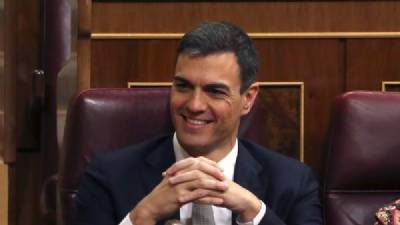
According to the Spanish Constitution, anyone who successfully raises a no-confidence vote is required to govern themselves, which means in theory, save for any about-turns tomorrow (Friday), PSOE secretary-general Pedro Sánchez, 46, will be sworn in as president of Spain.
With just 84 seats in Parliament to the PP's 137, Sánchez needed to win support from several parties for his motion to be passed.
Left-wing Unidos Podemos, Spain's third-largest political party, has voted in favour, giving another 67, and said it would be prepared to table a motion of its own if Sánchez's failed.
With Article 155 of the Constitution – designed to strip a region of its self-governing powers - invoked for the first time in history in response to Catalunya's disputed independence referendum in October, the PP government has little support from parties in the north-eastern territory, meaning Sánchez had few problems persuading the Catalunya Left Republicans (ERC) and the Democratic Party for Catalunya (PDeCAT) to back him, giving another nine and eight votes respectively.
Valencia's regional party Compromís, a left-wing outfit in coalition with the socialists in a region that has also been blighted by corruption during the PP's 20-year reign, which ended in 2015, was not hard to convince, especially after refused budget amendments mean crucial transport infrastructure will not receive any funding this year despite decades of fighting for decent road links and rail connections.
Along with Compromís' four votes, the sole MP from Nueva Canaria backed the motion, giving a total of 173 votes in favour – just short of the 176 majority Sánchez needed.
The Basque National Party (PNV) was going to be crucial to the success of the motion with its five MPs, and took some convincing – not because they support Rajoy's government, but because they are sceptical about whether Sánchez as president is a workable scenario.
Spokesman for the PNV Aitor Esteban said: “[Pedro Sánchez] will have a very weak government and face a difficult and complicated situation which is not conducive to success.
“Podemos will make things very difficult for the PSOE; Ciudadanos will be hostile, and the PP will still be in a a temper.”
The PNV 'has no ambitions of governing Spain', Esteban stressed, but was keen for 'legal changes' to be made 'through consensus' and is willing to participate in reaching agreements as a positive member of the opposition.
Sánchez had to agree to keep the State budget – recently approved – as it stands, since the PNV's five votes in support, given on condition of State pensions rising by inflation rather than the legal minimum of 0.25%, was necessary for it to be approved.
The PNV conceded on the budget because it considered Spain, and the Basque Country, could not wait any longer.
Sánchez said he would seek out the PNV as a 'preferential partner' in reaching decisions and pushing through changes.
Ciudadanos plans to vote against the no-confidence motion, since it does not believe a president whose party holds only a quarter of total Parliamentary seats is a feasible solution.
The centre-right party's leader Albert Rivera, instead, called for Rajoy to convene a snap general election, saying it would support a no-confidence motion if he did not do so.
When each party gave their speeches in today's debate on the motion, Ciudadanos said it would be undemocratic to support the motion, automatically making Sánchez president, when it should be the people of Spain who decide their leader in another election.
Concerns were raised from several quarters about whether Sánchez was effectively 'buying' the votes of the regional parties and potentially becoming a bargaining chip over the Catalunya political crisis.
Sánchez has been inches away from governing Spain several times in the recent past – following the inconclusive elections in December 2015, he attempted to create a coalition with Podemos and Ciudadanos, but neither party was prepared to work together and, after learning of the talks between Sánchez and Rivera, Podemos voted against Sánchez twice in his swearing-in ceremony.
After a second general election, with the PP still in a minority – albeit less so – Sánchez doggedly refused to back Rajoy in the in-house voting rounds, but did not make any move to form a coalition himself to keep the PP out.
Pressure over his 'no' to Rajoy led to his resigning as PSOE leader and becoming 'just another subscriber', but he was voted back in as party boss during the subsequent primaries.
From leadership being within his grasp to his political career being over completely, Sánchez's fortunes may have turned full circle.
KING Felipe VI's annual Christmas Eve speech once again included a covert appeal to secessionist politicians, as well as raising concerns about young adults' struggle to afford housing and violence against women.
'BRAVE' servicemen and women who will spend Christmas overseas are 'making Spain proud', president Pedro Sánchez assured them during his annual festive message via video-call.
NEWLY sworn-in national president Pedro Sánchez is now starting the challenging task of building his cabinet among a very divided coalition, although several names from his previous tenure are tipped to be returning to...
A NEW and limited-edition €2 coin will be in circulation in Spain until the end of this year to mark the country's Council of Europe presidency 'shift', the Royal mint has revealed.