Spain's 'Robin Hood' budget: More tax for wealthy, wages up and free pre-school places
Spain's 'Robin Hood' budget: More tax for wealthy, wages up and free pre-school places
SPAIN'S president Pedro Sánchez and leader of left-wing Podemos, Pablo Iglesias have finally shook hands on the details of next year's State budget after a long meeting following weeks of debate.
Iglesias' support is crucial for Sánchez to be able to get the budget through Parliament, given his minority government of just 84 seats out of 351, so the compromises reached between the two party heads are a major step forward.
If enough votes in favour allow the 2019 budget to become reality, this is what residents in Spain can expect from January 2019.
Minimum wage to rise to €900
Unlike the previous PP-led government, which planned to increase the minimum wage for a full-time 40-hour week to €850 a month by the year 2020, Pedro Sánchez and Pablo Iglesias have agreed to up it to €900 from the start of 2019. Minimum wages are referred to in 14-month years – with a double salary at Christmas and in August – so for the majority who earn 12 monthly salaries a year, this means they cannot be paid less than €1,050, or the pro-rata equivalent if they work part-time.
It is not clear if this figure is gross or net, but on a before-tax wage of €900 a month in 14 payments or €1,050 in 12, based upon an unmarried adult with no dependants and not registered disabled, the monthly take-home would be €964.50 in 12 payments or €884 in 14.
Podemos wanted the minimum wage to be €1,000 rather than €900, and the aim is to work towards this for 2020.
Better protection for tenants and local cap on rent prices
Landlords will not be able to charge more than two months' rent up front as deposit, the minimum rental contract term will rise from three years to five – automatically renewable for another three years, rather than one as now, unless either party has expressed their wish to end the deal - and town councils will keep an eye out for 'excessive increases' in rent prices across the board.
Councils will have the power to order property owners to decrease the rent they are asking if the costs are considered 'abusively high'.
No additional bank guarantees, nor guarantors' signatures, may be requested upon drawing up a rental contract; landlords are only permitted to charge a deposit.
Progressive rises in State funding for housing have been agreed: €630 million in 2019, €700m in 2020 and €1 billion in 2021, aiming to invest between 1% and 1.5% of the GDP in 10 years.
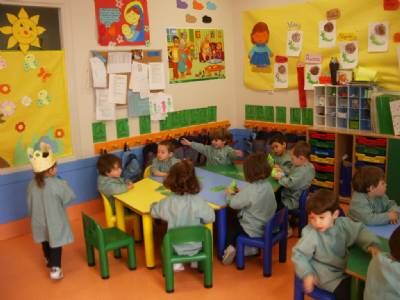
Work towards guaranteeing free nursery school places for all under-threes
Aiming for pre-school care and education to be free and universal, the government will allow town councils to invest part of their budget surpluses in funding nursery places for children from birth to three years old, when they start school. Sánchez and Iglesias calculate that this will mean around €300m a year being freed up for the purpose.
As well as the obvious benefits of allowing parents of pre-schoolers to work, research has long substantiated the fact that nursery education improves academic performance as it gives children a head start.
And Spain's government is concerned about the school drop-out rate, or children leaving at 16 with poor grades or no qualifications, so this is part of its strategy to combat the problem.
Councils which do not have a budget surplus to play with will be given grants to help make nursery places free, and €30m will be set aside in the State budget to fund these.
At the other end of young people's education, the 2019 budget will slash university tuition fees and increase the availability of student grants.
Increased income tax for those earning €130,000 or more a year
Pedro Sánchez's government wanted to up income tax for those earning €140,000 or more a year and Podemos sought to do so for incomes exceeding €120,000, so they have met halfway at €130,000.
The exact figures and additional percentages are likely to be in region of 2% more from €130,000 a year, rising to an extra 4% for those earning over €300,000.
This will mean that, for example, a person earning €200,000 per annum will see his or her tax bill rise next year by €1,100 in total.
Also, tax on assets for ultra-high net-worths, or persons or societies whose wealth exceeds €10m, will rise by another 1%.
In a bid to continue the fight against money-laundering, Sánchez and Iglesias have agreed that payments in cash between professionals in the course of their business – currently capped at €2,500 – will be limited to €1,000.
This does not affect individuals, such as gifts from parents to children or private sales of goods – the €2,500 cash limit will remain in their case.
Increased tax on diesel
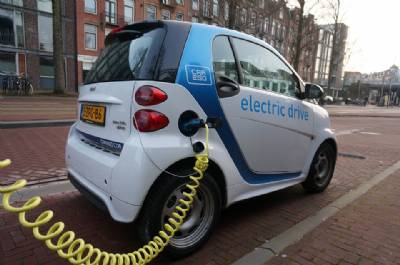
Tax on diesel for cars will rise in order to fund grants to help those who want to buy electrically-powered vehicles, although as yet the extra amount is not clear. But by the year 2020, the government expects its 'green car' plan to have an extra 30% in the pot.
This does not mean tax on diesel going up by 30%; at least at first, diesel prices will rise to the same level as that of petrol, meaning the says of buying a diesel car to save money on fuel will soon be over. Also, the tax element of the cost per litre may become a larger proportion.
Increasing production of renewable energy at the cost of traditional nuclear or fossil-fuel sources, and working towards stability in prices and lower bills are among the wider intentions in the budget plan.
Good news for homeowners who have trouble keeping warm in winter, too: a State-wide residential property renovation plan from next year, costing €400m, will fund up to 20% of any works on homes to improve energy efficiency.
Working towards maternity and paternity leave being equal and non-transferrable
Maternity leave is currently 16 weeks and paternity leave, which doubled in January this year, is four weeks, but it will double again next year to eight weeks.
From the start of 2020, dads will get 12 weeks' leave, and by 2021, they will have the same as mums, or 16 weeks.
Employees already get 100% of their salary during maternity and paternity leave, which will continue, although there are no plans for this for the self-employed, who currently earn around €600 a month on maternity or paternity leave.
Parents will not be able to 'pass on' their leave to each other so that one gets 32 weeks and the other does not, although as yet it is not clear whether paternity and maternity leave can run concurrently, overlap, or follow each other.
Employees and the self-employed
Sánchez's government plans to axe the 'more harmful' aspects of the 2012 labour reform, meaning collective bargaining and union negotiation will no longer be restricted, working conditions will not be able to be significantly worsened without employees' consent, and the government will tighten up on temporary contracts, staff rotation, outsourcing, and general job insecurity.
It is likely that employees' hours will have to be stipulated on their contracts if they are part-time and a clocking-in and clocking-out system become obligatory – not to 'check up on' employees, but to protect them from working unpaid overtime.
For the self-employed, the government aims to allow them not to pay IVA on invoices issued until they have been paid, to avoid their being out of pocket; all self-employed persons, irrespective of earnings, are required to charge IVA and pay it quarterly to the tax office, which can leave workers in difficulties if they have not received it from the debtor first.
Plans are afoot – albeit vague at the moment – to link Social Security payments to actual earnings rather than charging a blanket €278.88 per month to everyone, irrespective of their income, even if this is less. Low-income self-employed workers will be 'guaranteed a lower Social Security contribution', although it is still unclear whether the government will make these payments a percentage, rather than a scale of flat rates.
The government will restore the additional unemployment benefit for the over-52s, and eligibility will be based upon their personal income, not that of their household unit.
Child benefit to rise
Currently €291 per year per child, the government plans to pay €473 per child annually from 2019 in a bid to wipe out poverty in children.
Additional €5.7 billion in taxes 'will not affect low- or middle-earners'
Minister for the treasury María Jesús Montero says Spain 'needs this budget' in order to 'improve quality of life' for its residents.
She says extra tax clawed back by the government in 2019 will come to just under €5.68bn, but that the impact on the majority of taxpayers will be 'minimal'.
Those who end up having to reach deeper into their pockets number about 0.5% of the population, Sra Montero assures.
“Our number one principle is that those who have the greatest financial capacity should contribute the most,” she says.
“Not only will these tax rises have no effect on the working class or the middle class, but on the contrary, it will help them – 0.5% of the population will pay more, but the remaining 99.5% will not pay any extra.”
Plans to increase company profit tax by 15% will only affect major national and multi-national corporations, not small and medium-sized enterprises, and an increase of 18% will be levied on major financial entities such as high-street banks and on companies working in the fossil-fuel industry, whose profit tax is already 30%, Montero adds.
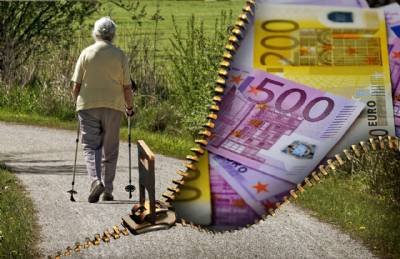
Pensions to rise in line with inflation
The aim is that, 'over time', minimum State pensions will be at least 60% of the national average salary and non-contributory minimum pensions at last 60% of the national average income.
Non-contributory and minimum pensions will rise by 3% per year, and all others will go up by the rate of inflation, which is currently around 1.6%.
Carers of dependants will be able to continue paying their Social Security stamp even if they are not in paid work, so they can still save towards a pension.
Benefits for dependants will rise 'significantly', although full details have not been given.
Pensioners will not have to pay towards their prescriptions, prosthetics or non-emergency ambulance transport eventually; starting with those on household incomes of €800 or less a month where they are widowed or have a dependant spouse, or those in family units earning less than €9,000 a year where they have at least one of their children as a dependant – a move that will help 6.8 million retirees in Spain.