11 min read
Spain's property market entered 2026 with prices rising at their fastest pace in nearly two decades. The national average for new and resale housing reached €1,987 per square metre in Q1 2026, representing a 14.3% year-on-year increase and 11.8% growth in real terms after adjusting for inflation. To put that in practical terms: at the national average, a 90m² apartment costs approximately €179,000. But that figure is almost meaningless in isolation, because Spain is not one property market — it is seventeen very different ones.
The difference between the most and least expensive regions is stark. The Balearic Islands sit at more than four times the price per square metre of Extremadura. Understanding the regional picture is the essential starting point for any buyer comparing locations. All figures in this article are drawn from Tinsa's IMIE Mercados Locales index and reflect Q1 2026 data covering new and resale housing combined. They should be treated as indicative — prices within any region can differ substantially depending on location, property type, and condition. Where city-level figures are quoted separately, these refer to resale market data and will differ from the broader regional average.

It is also worth keeping in mind that the purchase price is only part of the budget. Taxes, notary fees, land registry costs, and legal fees typically add 10 to 14% on top of the agreed price — our guide to buying property in Spain covers those costs in full.
| Region | Avg. price/m² (approx.) | Annual change | Market tier |
| Balearic Islands | €4,200 | +15.5% | Premium |
| Community of Madrid | €3,900 | +19.2% | Premium |
| Basque Country | €3,100 | +9% | Premium |
| Catalonia | €2,700 | +10% | Premium |
| Canary Islands | €2,100 | +17.8% | Mid-range |
| Cantabria | €1,950 | +16.2% | Mid-range |
| Navarre | €1,900 | +10% | Mid-range |
| Valencian Community | €1,876 | +19.1% | Mid-range |
| Andalusia | €1,870 | +12% | Mid-range |
| Aragón | €1,600 | +9% | Mid-range |
| Asturias | €1,550 | +8% | Mid-range |
| Galicia | €1,500 | +9% | Mid-range |
| La Rioja | €1,420 | +7% | Mid-range |
| Murcia | €1,380 | +16% | Affordable |
| Castile and Leon | €1,310 | +11% | Affordable |
| Castile-La Mancha | €1,030 | +18.8% | Affordable |
| Extremadura | €1,020 | +6% | Affordable |
Source: Tinsa IMIE Mercados Locales Q1 2026. Figures combine new and resale housing. Annual change figures rounded. All data indicative.
Premium markets
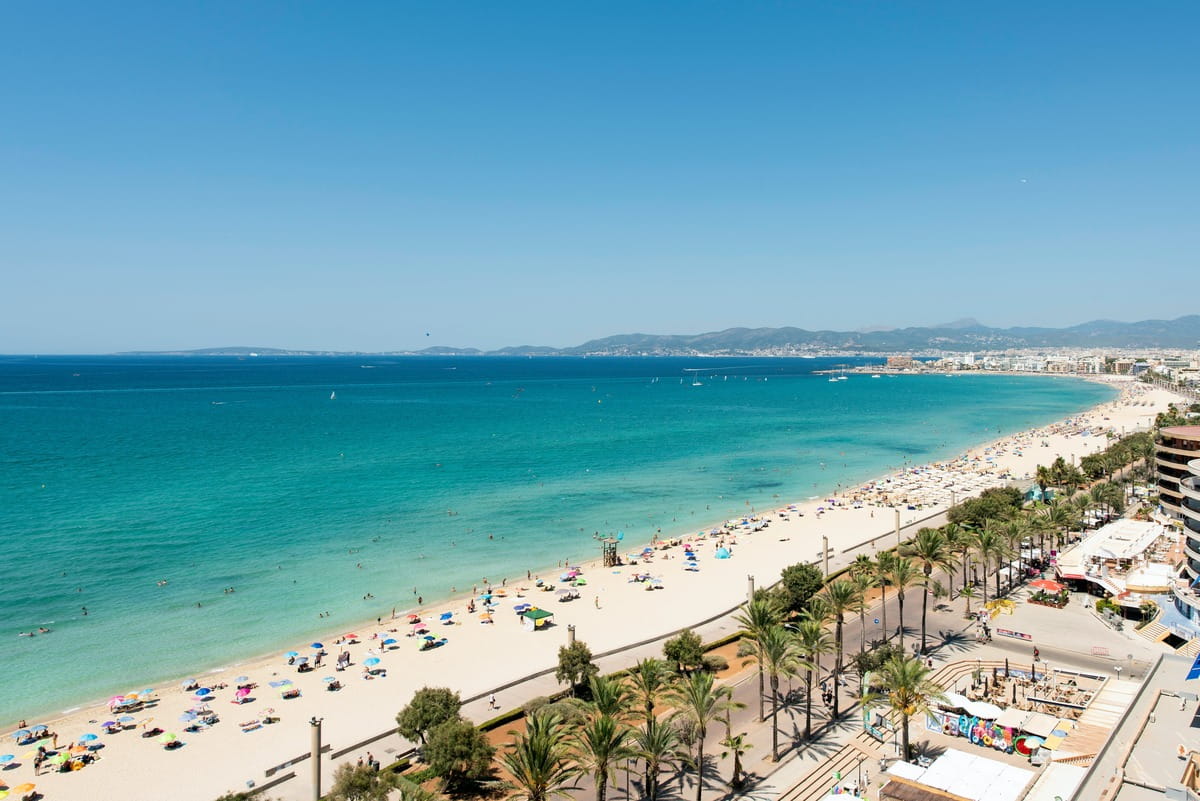
Balearic Islands — approx. €4,200/m²
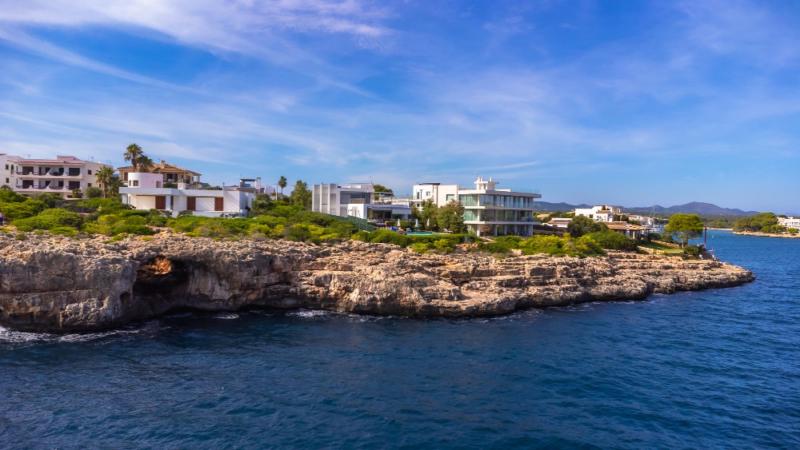
The Balearic Islands are the only Spanish region to have fully recovered and matched the peak values of the 2007 boom in real, inflation-adjusted terms. Ibiza and Formentera sit at the very top of the price range; Mallorca covers a broad spread from luxury coastal villas to more accessible inland towns; Menorca offers the most moderate entry point of the four islands.
At the regional average, a 90m² apartment costs around €378,000, though prime coastal locations will take that considerably higher. Supply is structurally constrained across all islands, and short-term rental licensing restrictions have added further pressure on the purchase market. If the islands are on your shortlist, see what is currently available in the Balearics.
Community of Madrid — approx. €3,900/m²
The Community of Madrid recorded the highest year-on-year growth of any region in Q1 2026, at 19.2%. The capital itself averages around €5,162 per square metre for resale properties, though the spread within the city is substantial — prime central districts approach €10,000 per square metre, while more accessible outer areas remain under €3,000. Madrid is one of the most liquid and transparent property markets in the country, with strong rental demand and excellent connectivity. Browse properties for sale in Madrid to get a sense of what the market looks like right now.
Basque Country — approx. €3,100/m²
The Basque Country is the third most expensive region in Spain, with San Sebastián holding the title of most expensive provincial capital in the country — a position driven by chronic supply shortage in an already densely built coastal city. Bilbao offers a more accessible entry point and has undergone significant urban regeneration over the past two decades. Unlike the southern coastal markets, this region draws predominantly domestic buyers rather than international ones, which gives the market a different character and more stable, less seasonal demand.
Catalonia — approx. €2,700/m²
Barcelona recorded 11.5% year-on-year price growth in Q1 2026. After years of uncertainty around rental regulation and tourism licensing, the city's purchase market has reasserted itself strongly, with sustained demand from international buyers and remote workers drawn by its position as a major tech and creative economy hub.
The Costa Brava commands a significant premium over the wider Catalan average, while inland provinces — Lleida in particular — offer some of the most affordable prices in the country. If Catalonia is on your radar, explore properties across the region.
Mid-range coastal and urban markets
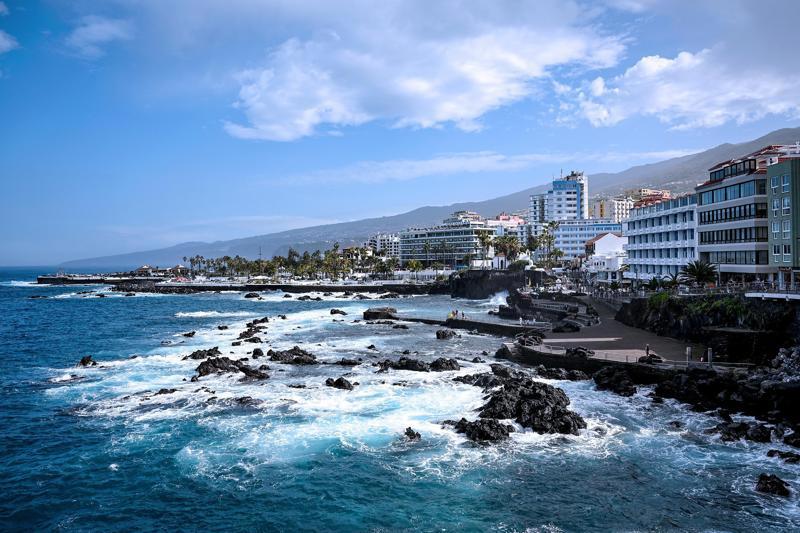
Canary Islands — approx. €2,100/m²
The Canary Islands recorded 17.8% year-on-year price growth in Q1 2026, with the archipelago now exceeding its nominal price levels from the 2007 boom. Tenerife and Gran Canaria account for the majority of international purchases — within Tenerife, the southern resort areas attract buyers seeking established rental markets and year-round sunshine, while the north offers a quieter, more local feel.
Lanzarote and Fuerteventura have seen growing interest from buyers seeking Atlantic coastal living at more accessible price points. The islands also benefit from a favourable tax regime under the Canarian Economic and Fiscal Regime (REF). If the islands appeal, take a look at what is available.
Cantabria — approx. €1,950/m²
Cantabria recorded 16.2% year-on-year price growth in Q1 2026 — one of the strongest rates of any region in Spain. The figures reflect growing demand for the northern Atlantic coast among buyers seeking green landscapes, a cooler climate, and a more authentically Spanish environment than the international resort areas of the south.
Navarre — approx. €1,900/m²
Navarre combines a strong regional economy with a high quality of life and prices that remain accessible outside Pamplona, the dominant urban market. Rural areas of the Pyrenean foothills offer good value for buyers seeking countryside properties with mountain access.
Valencian Community — approx. €1,876/m²
The Comunitat Valenciana recorded a 17.26% annual price increase in Q1 2026, with a 90m² apartment across the region now averaging €168,863.
Valencia city has been one of the fastest-growing urban property markets in Europe over the past five years, driven by strong domestic demand and a growing reputation as a liveable, affordable alternative to Barcelona.
Alicante province — covering the Costa Blanca — continues to draw strong demand from northern European buyers at prices that remain competitive relative to the Costa del Sol, particularly in the south of the province. Whether you are drawn to the city or the coast, properties across the Comunitat Valenciana cover a wide range of budgets and locations.
Andalusia — approx. €1,870/m²
The regional average understates how dramatically prices have shifted in Andalucía's most active areas. Málaga city has emerged as a tech and international business hub, attracting remote workers and younger international buyers alongside the traditional retiree market, with resale prices now well above €3,500 per square metre.
Marbella and the western Costa del Sol remain among the most exclusive addresses on the Mediterranean, while the eastern Costa del Sol — Nerja, Almuñécar, and toward Almería — offers considerably better value. Inland provincial capitals such as Jaén and Huelva remain among the most affordable in Spain. Discover an enormous range of options across Andalucía.
Aragón — approx. €1,600/m²
Zaragoza benefits from high-speed rail connectivity between Madrid and Barcelona, making it a practical choice for buyers who need access to both cities. Rural Aragón and the Pyrenean areas attract buyers interested in mountain properties at prices well below equivalent Alpine markets elsewhere in Europe.
Asturias — approx. €1,550/m²
Asturias shares Galicia's Atlantic character — dramatic coastal scenery and prices comfortably below the national average. Oviedo and Gijón are the main urban markets, drawing buyers who prioritise natural surroundings and a slower pace of life over resort amenities.
Galicia — approx. €1,500/m²
Galicia offers accessible coastal prices in a green, Atlantic setting that is increasingly attracting buyers looking for an alternative to the Mediterranean. The Rías Baixas is the most active coastal market, while A Coruña and Vigo are well-connected cities with good amenities at prices well below equivalent Mediterranean locations.
La Rioja — approx. €1,420/m²
Logroño offers a high quality of life at accessible prices, and growing interest in wine-country rural properties has pushed some village prices upward, though the region remains one of the more affordable options in Spain.
Affordable markets
Murcia — approx. €1,380/m²
Murcia recorded 16% year-on-year price growth in Q1 2026, yet remains one of the most competitively priced regions with a Mediterranean coastline. The Mar Menor and the wider Costa Cálida attract consistent interest from northern European buyers, with gross rental yields among the highest in Spain — reflecting the combination of lower purchase prices and solid tourist rental demand. At the regional average, a 90m² apartment costs approximately €124,000. For a region that often surprises buyers with its value, it is worth seeing what is on the market.
Castile and Leon — approx. €1,310/m²
Spain's largest region by area offers a varied market. Valladolid, Salamanca, and Burgos sit above the regional average and offer well-connected mid-sized cities with good amenities. For buyers seeking farmhouses, country estates, or village homes with land, this region offers some of the best value in the country.
Castile-La Mancha — approx. €1,030/m²
Castilla-La Mancha recorded the third highest year-on-year growth rate in Q1 2026 at 18.8%, though it remains one of the two most affordable regions overall. Toledo is the most active market, commanding prices well above the regional average due to its proximity to Madrid and strong heritage appeal.

Extremadura — approx. €1,020/m²
Extremadura is the most affordable region in Spain. Cáceres and Badajoz are the main urban markets, and the region is beginning to attract buyers looking for large rural properties at a fraction of the cost of coastal areas, though transaction volumes remain modest.
Rental yields by region
The regional picture for rental income differs from the pure price ranking — higher prices do not necessarily mean stronger yields. Murcia delivers some of the strongest gross rental yields in Spain, estimated at around 6% or above in coastal areas, reflecting its combination of lower purchase prices and solid tourist demand. The Canary Islands perform well given their year-round tourist season, though licensing restrictions are tightening across all the main islands. Valencia city has emerged as one of the highest-yield major cities in Spain, driven by strong rental demand at purchase prices that remain well below Barcelona or Madrid.
The Balearic Islands and prime Costa del Sol locations deliver strong absolute rental income but typically lower gross yields, tending to attract buyers prioritising capital preservation and long-term appreciation over income.
One important caveat: short-term tourist rental licensing has become progressively more restricted across Spain's most popular regions. Before factoring rental income into any purchase decision, it is worth verifying the licensing position for the specific property and municipality — our guide to buy-to-let investment in Spain covers the key legal considerations and investment strategies in detail.
What is driving prices in 2026?
14 of Spain's 17 regions recorded year-on-year growth above 10% in Q1 2026, compared to just 11 in the previous quarter. The acceleration is broad-based but most concentrated around employment hubs and tourist-facing coastal areas.
The structural driver is supply. According to the Banco de España, Spain faces a shortfall of approximately 700,000 homes, growing by roughly 275,000 units annually as household formation outpaces new construction. New build homes typically carry a 6 to 8% premium over equivalent resale properties, reflecting modern energy efficiency standards and the scarcity of new development in high-demand areas.
Affordability is beginning to tighten, with the average purchase effort reaching 33.9% of disposable income in Q1 2026 — still within broadly acceptable bounds nationally, but masking considerably higher stress in the most expensive markets. Bankinter's property market analysis forecasts annual growth of around 7% for 2026 as a whole, a moderation from the 13 to 14% pace of 2025 but still well above historical norms.
Common questions about property prices in Spain
Where is property most expensive in Spain?
The Balearic Islands are the most expensive region in Spain, averaging around €4,200 per square metre in Q1 2026. Within the islands, Ibiza and Formentera command the highest prices. The Community of Madrid is the second most expensive region at approximately €3,900 per square metre, with the city centre itself reaching €5,162 per square metre for resale properties — and prime central districts approaching €10,000. The Basque Country, and San Sebastián in particular, rounds out the top three.
Where is property cheapest in Spain?
Extremadura is the most affordable region in Spain, averaging around €1,020 per square metre — less than a quarter of the Balearic Islands’ average. Castilla-La Mancha is the second most affordable at approximately €1,030 per square metre, followed by Castilla y León at €1,310. For buyers seeking coastal living at lower prices, Murcia offers the most affordable Mediterranean coastline in Spain, at around €1,380 per square metre.
Which regions have seen the biggest price increases in 2026?
The Community of Madrid recorded the highest year-on-year growth at 19.2%, followed closely by the Comunitat Valenciana at 19.1% and the Canary Islands at 17.8%. Castilla-La Mancha also saw strong growth of 18.8%, driven by demand spilling over from Madrid. The slowest-growing markets in Q1 2026 were Extremadura at 6%, La Rioja at 7%, and Asturias at 8% — though all three still recorded positive growth.
Is property in Spain still affordable compared to other European countries?
At the national average of €1,987 per square metre, Spain remains significantly more affordable than comparable coastal and urban markets in France, Italy, Portugal, and the United Kingdom. Even in the most expensive Spanish regions, prices compare favourably to equivalent locations elsewhere in Western Europe. The combination of lower purchase prices, a favourable climate, and strong rental demand continues to attract international buyers looking for value relative to other Mediterranean destinations.
How much extra should I budget on top of the purchase price?
As a general guide, budget for 10 to 14% on top of the agreed purchase price to cover taxes, notary fees, land registry costs, and legal fees. The exact figure depends on the region, the type of property (new build or resale), and the purchase price.
When you are ready to explore what is available across Spain’s regions, see all properties for sale in Spain and use our search filters to find the right property in the right place.

Last updated: 13/05/2026
Was this article useful?
The information contained in this article is for general information and guidance only. Our articles aim to enrich your understanding of the Spanish property market, not to provide professional legal, tax or financial advice. For specialised guidance, it is wise to consult with professional advisers. While we strive for accuracy, thinkSPAIN cannot guarantee that the information we supply is either complete or fully up to date. Decisions based on our articles are made at your discretion. thinkSPAIN assumes no liability for any actions taken, errors or omissions.
Related Topics
Related Articles