10 min read
Spain is one of the most active property investment markets in Europe. Foreign buyers account for around 14% of all purchases, property prices have risen in 51 out of 52 provincial capitals over the past year, and rental yields across the country average around 5.5% gross — competitive by European standards and significantly ahead of many northern European markets.
That said, investment performance varies enormously by location, property type, and strategy. A coastal holiday let in the Balearic Islands operates very differently from a long-term rental apartment in Valencia or a renovation project in inland Andalucía. This guide focuses on where the strongest investment opportunities are, what the numbers look like, and what foreign buyers need to understand before committing.

Is investing in property in Spain a good idea?
For many investors, yes — but the answer depends on your strategy, timeline, and how you approach it. Several factors work in Spain's favour as an investment destination:
- Strong and sustained price growth: property prices have risen nationally for several consecutive years, with some cities recording double-digit annual growth. Valencia rose 16.8%, Alicante 15.7%, and Málaga 15.5% in the year to late 2025, according to data published by International Investment
- Rental demand outpacing supply: Spain faces a structural housing shortage — new completions are running at around 100,000 units per year against a peak-cycle demand of 400,000. This imbalance supports both rents and prices
- Strong foreign buyer demand: foreign buyers accounted for 13.5% of all registered purchases in Q4 2025, with the highest concentrations in Alicante, the Balearic Islands, Málaga, and the Canary Islands
- Tourism-driven rental income: Spain's position as one of the world's most visited countries provides a deep pool of short-term rental demand in coastal and urban markets, supporting yields for well-located properties
- Favourable entry costs in many areas: outside Madrid, Barcelona, and the Balearics, purchase prices remain significantly below those of comparable markets in France, Italy, or the UK
The risks are real too. Rental regulations have tightened in several major cities, tourist licence restrictions have been introduced in some municipalities, and net yields after running costs, taxes, and management fees are materially lower than gross figures suggest. For a full picture of the financial and legal considerations, our guide to buying an investment property in Spain covers this in detail.
The best places to invest in Spain
Different locations suit different investment strategies. Here is an overview of the strongest markets and what each offers:
Valencia — best for rental yield and long-term growth
Valencia has become one of the most closely watched investment markets in Spain. Property prices remain significantly below those of Madrid and Barcelona, yet rental demand is strong and growing — driven by students, remote workers, and an increasing number of international residents. Gross yields of 6% to 7% are achievable in well-located neighbourhoods, with one-bedroom apartments performing particularly well. The city's price growth of 16.8% in 2025 suggests that capital appreciation potential is also building. For investors seeking a combination of strong current yield and medium-term capital growth, Valencia is currently one of Spain's most compelling markets.
Madrid — best for capital growth
Madrid's property market is driven primarily by capital appreciation rather than yield. Price growth of 18.1% in 2025 — the highest of any major Spanish city — reflects both chronic undersupply and very strong demand from domestic and international buyers. Yields are respectable at 5% to 8% depending on neighbourhood and property type, but the primary attraction here is long-term value growth in Spain's largest and most liquid property market. Entry prices are the highest on the mainland, which raises the capital requirement. Madrid properties suit investors with a longer horizon and a focus on capital preservation and growth.
Málaga and the Costa del Sol — best for tourism-driven income
Málaga has transformed over the past decade from a gateway city into a destination in its own right. It attracts remote workers, digital nomads, and a growing international residential population alongside its traditional tourist base — which gives it a more resilient rental profile than purely seasonal resort markets. Gross yields of 5% to 7% are achievable, with the city centre and emerging neighbourhoods performing strongly. The broader Costa del Sol offers a wide range of price points, from affordable apartments in Fuengirola to premium villas in Marbella, and benefits from one of the longest reliable rental seasons in mainland Spain.
Alicante and the Costa Blanca — best for affordability and yield
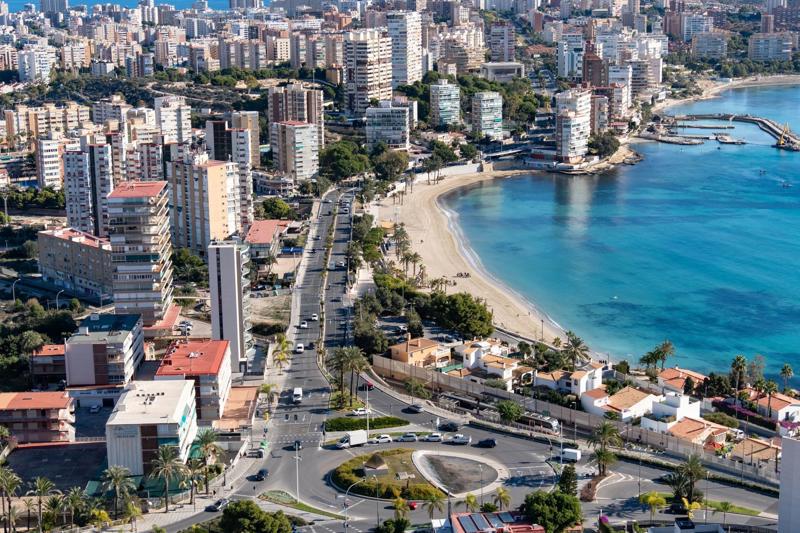
Alicante offers some of the best value for money of any Mediterranean coastal city. Property prices are 30% to 40% lower than in Valencia or Barcelona, yet rental demand is solid and growing. Gross yields of 5.6% to 6.6% are consistently achievable, and the city's strong price growth of 15.7% in 2025 indicates appreciation potential too. The southern Costa Blanca — around Torrevieja and Orihuela Costa — offers even lower entry prices, making it one of the most accessible coastal investment markets in Spain, though rental demand and liquidity are also lower than in the city.
Barcelona — best for a balanced urban investment
Barcelona is Spain's most internationally recognised property market and remains in high demand from both investors and end buyers. Gross yields of 5.6% to 7.4% are achievable, and the city's undersupply of housing supports long-term price growth. The key consideration for investors is the regulatory environment: Barcelona has introduced restrictions on new tourist licences and has at various points implemented rental price controls. Any investor considering Barcelona should take specialist legal advice on the current regulatory position before purchasing, as this affects both rental strategy and yield.
Canary Islands — best for year-round rental income
The Canary Islands are unique in the Spanish market for their year-round rental demand. Unlike mainland coastal markets, which have a strong summer season but quieter winters, the islands attract visitors and longer-stay residents throughout the year — which significantly reduces void periods and improves net yield. Gross yields of 5% to 6.5% are achievable across the islands, with Tenerife and Gran Canaria offering the widest range of investment options. The trade-off is higher management complexity for remote investors. For buyers looking at the Canary Islands, professional property management is particularly important.
Murcia — best for high gross yield
Murcia consistently records some of the highest gross rental yields in Spain — up to 8.2% in some analyses — driven by low purchase prices relative to rental demand from students, workers, and tourists using the Costa Cálida. It is a higher-yield, lower-profile market than the destinations above, which means liquidity and resale demand are more limited. For investors focused primarily on income return rather than capital growth or resale flexibility, Murcia warrants serious consideration as part of a diversified portfolio.
What returns can you expect?
Property investment in Spain generates returns through two main channels: rental income and capital appreciation. Understanding both — and how they interact in different markets — is essential to choosing the right location.
Rental yields
The average gross rental yield across Spain stands at around 5.45% as of early 2026, according to Global Property Guide. This is a gross figure — before property taxes, community fees, management costs, void periods, and income tax. Net yields typically run 1.5% to 2.5% lower depending on location and management approach.
Yields vary significantly by city. The table below summarises current gross rental yield estimates for the main investor markets in Spain:
| Gross rental yields and price growth by city or area, 2025–2026 | |||
|---|---|---|---|
| City / Area | Gross yield (approx.) | Price growth (2025) | Investor profile |
| Valencia | 6.1% – 7.1% | +16.8% | Yield + growth |
| Alicante | 5.6% – 6.6% | +15.7% | Yield + affordability |
| Murcia | 6.0% – 8.2% | Strong | High yield |
| Barcelona | 5.6% – 7.4% | +9.7% | Growth + yield |
| Málaga | 5.2% – 7.0% | +15.5% | Tourism + growth |
| Madrid | 5.0% – 8.0% | +18.1% | Capital growth |
| Costal del Sol | 6.3% – 7.0% | Strong | Tourism + lifestyle |
| Balearic Islands | 4.9% – 6.0% | Strong | Premium / capital |
| Canary Islands | 5.1% – 6.5% | Strong | Year-round rental |
Sources: Global Property Guide (Q1 2026), BestYieldFinder (2025–2026), International Investment (Q3–Q4 2025), Alta Moderna (2025). Figures are indicative gross yields; net yields will be lower.
Capital appreciation
Spain's property market has delivered average annual price growth of 3% to 6% nationally over the past decade, with coastal and urban markets frequently exceeding this. The current cycle has been particularly strong, driven by the housing supply shortage, strong foreign demand, and interest from digital nomads and remote workers. Madrid recorded 18.1% annual price growth in 2025 — the highest of any major Spanish city — while Valencia, Alicante, and Málaga all exceeded 15%.
Capital appreciation is harder to predict than rental yield, but the structural supply constraints in Spain suggest continued upward pressure on prices in the near to medium term, particularly in markets where new construction is limited.
What to consider before investing
The investment case for Spanish property is strong in the right locations, but several practical factors need to be understood before committing:
Gross yield versus net yield
Gross yield figures — which most market reports cite — do not reflect what you will actually receive. From a gross yield of 6%, subtract: IBI (property tax), community fees, insurance, maintenance, property management fees (typically 15% to 25% of rental income), income tax on rental earnings (19% for EU residents, 24% for non-EU), and void periods. A gross yield of 6% may produce a net yield of 3.5% to 4.5% after these costs. Always model on net yield before making an investment decision.
Tourist licence regulations
If you plan to let the property as a short-term holiday rental, you will need a regional tourist licence. Requirements vary by autonomous community and municipality, and several areas have introduced restrictions on new licences or placed moratoriums on approvals. Always verify the current position for the specific property and municipality you are considering before purchasing. Our guide to tourist licences in Spain covers the rules in detail.
Purchase costs and taxes
As a non-resident investor, your upfront costs will include transfer tax (ITP) of 6% to 11% depending on the region, notary fees, Land Registry costs, and legal fees — totalling approximately 10% to 12% of the purchase price. For new-build properties, ITP is replaced by 10% VAT (IVA) plus stamp duty. Non-resident owners also pay an annual Modelo 210 income tax, even on a property that is not formally rented out. The tax guide for property owners in Spain sets out the full picture.
Legal due diligence
Always engage an independent property lawyer before signing anything. They will check the Land Registry, verify that all built space is licensed, confirm there are no outstanding debts on the property, and review any contracts before you commit. For investment properties in particular — where the rental licence and legal history of the property are critical — this step is not optional. Our guide to property lawyers in Spain explains what to expect.
Property management
Unless you are based in Spain or have a trusted local contact, you will need a property management company to handle lettings, maintenance, and guest or tenant relations. Management fees for holiday lets typically run at 15% to 25% of rental income; long-term rental management is generally cheaper. Factor this into your yield calculations from the outset, and choose a manager before you complete — not afte
Find investment properties in Spain
Whether you are looking for a high-yield rental apartment in Valencia, a holiday let on the Costa del Sol, or a long-term growth play in Madrid, thinkSPAIN lists properties across every region and price point in Spain. Use our filters to search by location, budget, and property type, and explore properties for sale across Spain to find the right opportunity.

Last updated: 03/09/2026
Was this article useful?
Related Topics
Related Articles