11 min read
Costa Blanca, Costa Brava, Costa del Sol...no doubt you've heard these and other names lots of times in conversations about holidays in or living in Spain. Maybe you're planning a trip or hoping to move to Spain yourself, and are unsure where the Costas are and whether they would suit your chosen lifestyle. If so, read on for an overview of what these terms mean, and their exact locations.

What are the Costas of Spain?
Costa simply means 'coast' in Spanish. And although you may hear of people taking their sunshine break 'on the Costa del Sol', for example, the 'Costas' are not specific place names in the same way as, perhaps, Madrid, or Barcelona. They are commercial terms used to describe the beach tourism belt in a given province – you would not write them in your postal address, but might refer to them to ask a travel agent when choosing an approximate location for your holidays.
Many parts of mainland Spain's coastline are equally popular for tourism and as sunshine retirement hotspots, but do not have a 'Costa label'. These include the Gulf of Valencia, which we'll also cover here.
Some of the Costas are more geared up to traditional package resort trips, others to hotels or holiday apartments and villas, or predominantly residential. Some are more unspoilt and rural, and their names describe a strip of outstanding natural beauty rather than a holiday hotspot.
They're all very different, highly enriching, and beautiful – as you'll see from our descriptions.
Costa del Sol
One of Spain's most mature and well-established tourism destinations and home to generations of international expatriates, the coast of the province of Málaga in southern Spain – to the east of the Gibraltar tip – is perfect for those who want an 'easy' holiday with all facilities and services at their fingertips. Multi-lingual and multi-national, the Costa del Sol's key towns are extremely proud of their foreign residents and tourists, and work hard to make them feel welcome.
It's a great location for families, too – outdoor life, freedom and safety, as well as a huge network of international and bilingual schools, make the Costa del Sol a key choice for expatriates with children.
The Costa del Sol is a known magnet for the rich and famous. If you have no upper budget limit, Marbella and its surrounding residential complexes and towns – Puerto Banús and Benahavís (especially La Zagaleta) are where you'll find the last word in luxury. But the Costa del Sol is still very liveable for those with more average means, especially if you're willing to live a few short kilometres inland.
Bright, beautiful buildings in white and gold, bedecked with flowers, narrow cobbled streets and pavement-café culture mean the traditional essence of local life is alive and well, but you won't have to search far for excellent nightlife, shopping, dining, and a full-on year-round holiday atmosphere.
Also, the province of Málaga has more golf courses per square kilometre than anywhere else in Europe.
- Provincial capital: Málaga
- Nearest airport: Málaga-Costa del Sol
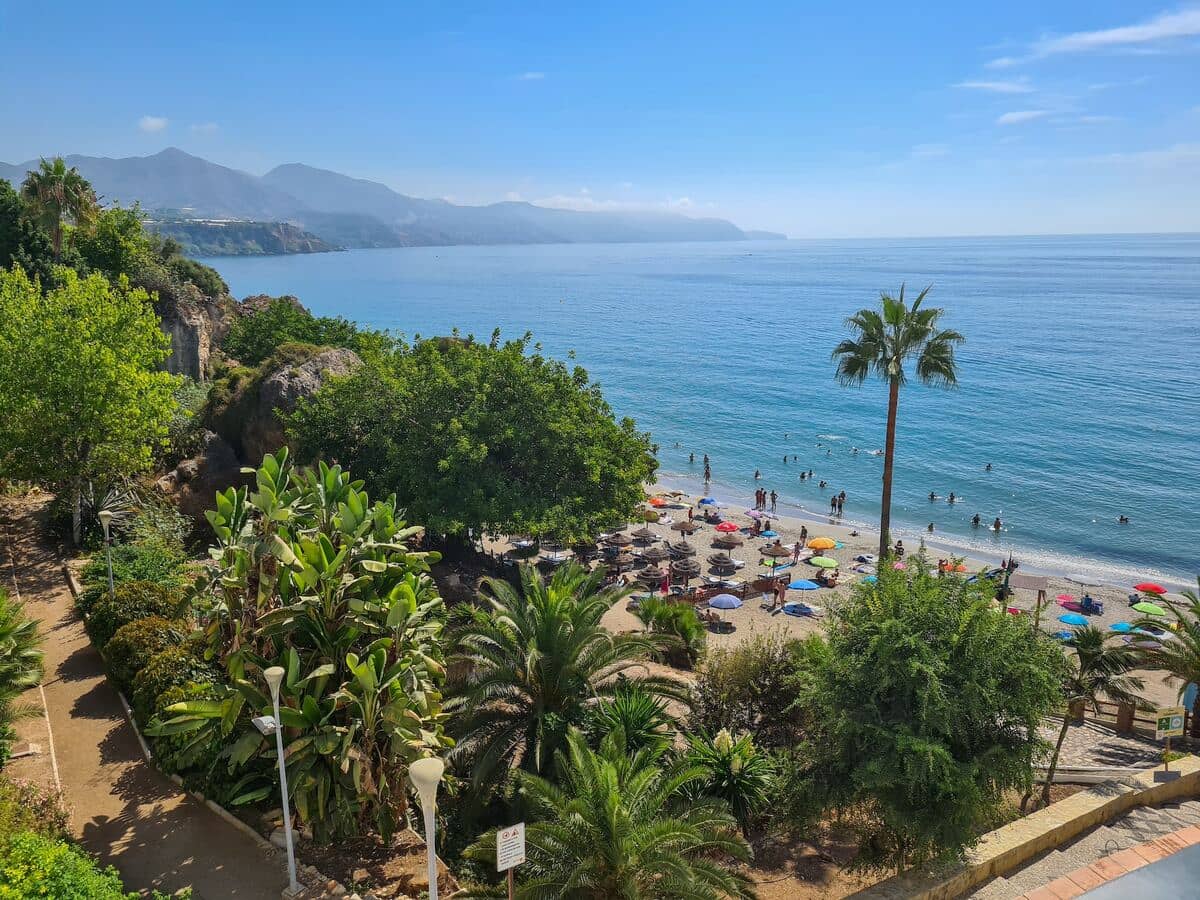
- Most popular areas: Marbella, Benahavís, Estepona, Torremolinos, Fuengirola, Mijas, Nerja, Rincón de la Victoria
Costa Blanca
Its name translates as 'white coast', and it covers the entire shoreline of the province of Alicante in eastern Spain. Originally radiating out from what was one of Spain's earliest beach tourism towns – Benidorm – the Costa Blanca stretches for around 200 kilometres and is vastly different at either end.
In the south, from Alicante city onwards, you'll find swathes of white villa estates home to northern European expatriates and holiday apartments, urban beaches, and internationally-run shops and bars. In the north, pine-covered mountains, orange groves and a scattered network of 'very Spanish' small towns and villages – close together and linked with excellent roads – means that, despite the relatively high foreign resident population, you do actually feel as though you're living in Spain itself, rather than in a purpose-built resort.
The province of Alicante has some of the warmest weather in Spain: Long, hot, humid summers, pleasant and sunny springs and autumns, and very mild winters – perfect for outdoor life. Countryside hiking, watersports and golf are some of the most popular al fresco activities there.
At either end of the Costa Blanca, you're never more than 100 kilometres from the busy international Alicante-Elche airport, which is quick and easy to reach by motorway.
- Provincial capital: Alicante
- Nearest airport: Alicante-Elche (also Valencia for the northern end)
- Most popular areas: Dénia, Jávea, Calpe, Teulada-Moraira, Benitatxell, Alfaz del Pi, Benidorm, Elche, Santa Pola, Torrevieja, Orihuela Costa
Costa Brava
Spain's northernmost Mediterranean Costa has long been popular with French tourists and expatriates, given that it is just over the international border. Yet, despite its cosmopolitan community and long history as a holiday destination, the coast of the province of Girona has never been overdeveloped: Small fishing villages with just a few hundred residents, clifftops and dunes, beautiful countryside, remote, rocky coves and secluded beaches mean you can effectively choose whether you want the liveliness of a typical tourism hotspot or peace and quiet with a traditional way of life.
Spain's Mediaeval era is only ever just around the corner from the hotels and urban beaches of the Costa Brava. Tossa de Mar is a national heritage site and the only fortified Mediaeval town in Catalunya, and Lloret de Mar's fairytale-like Sant Joan castle sits on a rocky ledge just above the beach.
- Provincial capital: Girona
- Nearest airport: Girona-Costa Brava
- Most popular areas: Tossa de Mar, Begur, Lloret de Mar, Castell-Platja d'Aro, Calonge i Sant Antoni Sant Feliu de Guíxols

Costa Tropical
Despite the name, this coast is not in the tropics – although it's very close to the start of the subtropics and summers are very warm and bright. Found in the far south-east corner of mainland Spain and encompassing the entire coastline of the province of Granada, the Costa Tropical is very 'traditionally Spanish' and nothing like your typical package holiday resort district. If it's total immersion, relaxation, or both, that you're looking for, you'll find it here.
Naturally, you cannot take a trip to the Costa Tropical without seeing Granada city itself – the huge, Mediaeval Arab complex known as the Alhambra Palace is one of Europe's most-visited landmarks.
If you visit between approximately December and March, you can combine some winter sun with guaranteed snow: Spain's most world-renowned ski resort, the Sierra Nevada, is just a short drive from Granada city and the coast.
- Provincial capital: Granada
- Nearest airport: Granada airport
- Most popular areas: Almuñécar, Motril, Salobreña
Costa de la Luz
One of the lesser-developed coasts in southern Spain, Luz translates as 'light', and it's easy to see why. Like most of the east and south, you'll get an average of 300 days of sunshine per year, hot summers, and mild winters.
Stretching along the shoreline of the province of Huelva – in the far south-west, bordering Portugal – and its eastern neighbour, that of Cádiz, the Costa de la Luz retains plenty of 'traditional Spain' whilst being well-equipped for and experienced with catering to national and international holidaymakers and residents.
One of the area's biggest attractions, aside from its stunning beaches, is the Doñana National Park – a giant meadowland combining marshes and dunes, home to its very own breed of horses (the Retuerta) which still lives wild.
The province of Cádiz is the home of sherry – known in Spain as fino or jerez. The latter term is named after the town of Jerez de la Frontera, where one of the main airports serving the province is found. Like many of southern Spain's more 'old-school' parts, it's still fairly common to be offered free tapas, or small snacks, alongside a drink in local bars, and the seafood- and fish-based cuisine deserves its excellent reputation.
Upmarket residential areas include Sotogrande and Sanlúcar de Barrameda – in the former, you can watch a polo match at one of Spain's largest clubs.
- Provincial capitals: Huelva and Cádiz
- Nearest airports: Sevilla and Jerez
- Most popular areas: San Roque (including Sotogrande), La Línea de la Concepción, Ayamonte, Chiclana de la Frontera, Tarifa
Costa del Azahar
This is one of the least-touristy Costas on Spain's Mediterranean shores – even in high season, there's plenty of space on the beaches and the vast majority of holidaymakers are Spanish. So, if you want some sea and sun but without the more 'artificial' and multi-national feel of a typical resort, the strip that translates as the 'orange-blossom coast' should fit the bill.
The Costa Azahar is the coast of the province of Castellón, eastern Spain – the most rural and least-populated of the three that make up the thriving, busy region of the Comunidad Valenciana, including those of Alicante and Valencia.
Tiny villages where everyone knows everyone else, where time seems to have stopped centuries ago, and low-rise seaside towns, with vast swathes of red and pine-covered mountains in between, Castellón province is ideal for combining remote countryside with sunning yourself on the beach. Be aware, though, that inland from the coast, it can get extremely cold in winter, autumn and early spring – much of the province is at a high altitude.
- Provincial capital: Castellón
- Nearest airport: Castellón, which is local, but small; Valencia offers more frequent routes and, although it is at least an hour's drive away, is well-served by rail
- Most popular areas: Peñíscola, Benicàssim, Burriana, Vinaròs, Oropesa de Mar, Alcalà de Xivert, La Vall d'Uixó, Benicarló
Costa Cálida
The coastline of the single-province region of Murcia, in the south-east, has only recently become a key tourism and expatriate belt – in the last 20 years or so – meaning it is still relatively quiet and features less in standard package holiday brochures. But it's always been popular with Spanish holidaymakers, and this up-and-coming coast is becoming more and more international.
Golf courses abound, with urbanisations (villa complexes) alongside them, meaning you can combine a relaxing poolside break with a few rounds. Most of these radiate from the ancient Naval city of Cartagena, whose seafaring tradition is evident wherever you go.
Among the most sought-after destinations on the Costa Cálida is the La Manga del Mar Menor strip. A curious accident of geography, this 21-kilometre-long istmus is only 100 metres wide at its narrowest point, and driving along it, you have the sea on either side of you. It encloses what is apparently an inland sea but which, in reality, is Europe's largest salt lake.
Murcia city itself is not on the coast, but relatively quick to reach from it, and a visit is highly recommended. Ornate, attractive architectural gems include the cathedral, where Murcia's most famous artist, the Baroque sculptor Francisco Salzillo's works are on display.
- Provincial capital: Murcia
- Nearest airport: Murcia-San Javier; also Alicante-Elche for the northern end
- Most popular areas: Los Alcázares, Mazarrón, Lorca, Águila, San Javier, La Unión, Cartagena, Torre Pacheco
Costa Maresme and Costa Garraf
You may not have heard these two Costas mentioned much, since they tend to be overshadowed by their nearest, and more famous, city: Barcelona.
Maresme simply means 'coastal land', and the Costa of this name runs for 50 kilometres north starting in Barcelona city. 'Garraf' is merely the name of the district or county where the Costa is located. This coast starts in Castelldefels, around 20 kilometres south of Barcelona, and finishes at the border of the province of Tarragona.
Quaint fishing villages, narrow cobbled lanes, traditional-style houses, woodlands and open countryside are the main backdrop of both Costas, which are mainly popular with Spanish holidaymakers and less frequented by international tourists.
For peace and quiet and to experience traditional Spanish coastal life, head to the Costa Maresme villages of Premià de Mar, Arenys de Mar, and Sant Pol de Mar. For lively tourism, shops, bars and restaurants, head for Calella, Canet de Mar and Mataró. El Masnou is perfect for living the high life, despite its ancient charm, with its lively atmosphere and élite yacht club, whilst in Canet de Mar you can visit the quirky, modernist summer home of Barcelona architect Antoni Gaudí.
- Provincial capital: Barcelona
- Nearest airport: Barcelona-El Prat
- Most popular areas (Costa Maresme): Sant Andreu de Llavaneres, Sant Vicenç de Montalt, Malgrat de Mar, Pineda de Mar, Santa Coloma de Gramenet, Tordera, Barcelona city
- Most popular areas (Costa Garraf): Vilanova i la Geltrú, Sitges, Castelldefels, Gavà, Sant Pere de Ribes, Cubelles
Costa Almería
Famed for its lunar landscape and home to the only 'official' desert in Europe, the province of Almería has long been an international holidaymaker staple, but never lost its classical charm or community spirit.
If village life is your ideal setting, the tiny enclave of Agua Amarga, in the heart of the picturesque protected coastal nature reserve of the Cabo de Gata-Níjar, only has around 400 inhabitants out of season. For cosy community life and traditional southern-Spanish whitewashed houses, but with all the life and soul of a tourism hotspot, the hilltop town of Mojácar has been an international favourite on the Costa Almería for decades.
- Provincial capital: Almería
- Nearest airport: Almería
- Most popular areas: Mojácar, Roquetas de Mar, Pulpí, Vélez-Rubio, El Ejido, Vera, Cuevas de Almanzora, Níjar
Costa Daurada
The shores of the province of Tarragona translate as 'the golden coast', and are sandwiched between the northern Costa del Azahar and southern Costa Garraf. Its burgeoning expatriate community remains very widely distributed, meaning you can still live a 'totally Spanish' lifestyle if you want, but have the choice of mixing with your own, or other nationalities.
One of the lesser-known and quieter Costas on the Mediterranean – with the exception of the vibrant holiday towns of Reus, Cambrils and Salou – you won't find package-holiday resorts there, but you will find some incredible sights.
Ideal for families, the Costa Daurada is home to one of Spain's largest and most popular theme parks, PortAventura World. Based in Salou, replete with extreme rollercoasters, the complex also houses the Caribbean-themed Caribe Aquatic Park – and Ferrari Land, a must for motorsport fans.
- Provincial capital: Tarragona
- Nearest airport: Reus
- Most popular areas: L'Ametlla de Mar, Alcanar, Sant Carles de la Ràpita, El Perelló, Cambrils, Tarragona city, Salou, Reus
Gulf of Valencia
This part of mainland Spain deserves an additional mention, since it is often confused with either the Costa del Azahar or the Costa Blanca. It is neither, but is situated between the two.
The coastline of the province of Valencia has long been a favourite destination for summer tourists from Madrid and other parts of inland Spain, many of whom own second homes close to beaches. It's also common for local residents in Valencia-province towns to own homes on their nearest beaches, which they live in for two or three months of the year. To this end, although a key holiday hotspot, the Valencia coast is far less international and not normally on the package-resort trail.
But the Gulf of Valencia is popular with expatriates – mainly those who prefer not to live an expatriate lifestyle. Most tend to be of working age, integrated into the community and are predominantly Moroccan, European and Latin American.
The birthplace of paella, a major orange-producing and exporting hub, green and mountainous, the province is where you'll find Spain's third-largest city. Valencia's compact centre with its stately, classical architecture and underground rail (metro) network makes it easy to get around, and a direct transport link to the airport means you can get right inside the terminal from the city hub in under half an hour.
Popular beach towns – as well as Valencia city itself – include the Manhattan-style Cullera, famous for its Hollywood-inspired giant letters; Sueca, whose northern beaches blend into the huge coastal salt marshes, the Albufera; and Gandia, whose historic town centre is worlds away from the plush hotels along its urban beach.
- Provincial capital: Valéncia
- Nearest airport: Valencia-Manises
- Most popular areas: Valencia city, Gandia, Oliva, Miramar, Villalonga, Puçol, Sagunto, Bellreguard
Choosing the best location in Spain to live in or buy a holiday home can be an enormous task: There are almost too many options. To help with your research, have a look at Best places to live in Spain as an expatriate.

Last updated: 13/02/2025
Was this article useful?
Related Topics
Related Articles