If you go down to the woods today, look out for evil elves, flying devils and blood-sucking witches…
Deep within the rolling emerald slopes of the Picos de Europa, tucked away inside the dense forests, hidden between the rocky shards of the immense gorges that slice the beautiful, verdant landscape of the unspoilt but much-visited region of Cantabria, lurk a number of creatures you wouldn’t want to meet on a dark night. Or even in broad daylight, really.
Just when you thought all Cantabrian people were friendly, welcoming and keen to show off their homeland to visitors from far and wide, you discover that there is a dark side to this spectacular part of the world that will send a chill down your spine faster than the eternal scotch mist.
Up there in the bracing north, where the landscape is more reminiscent of middle England or rural France than the Spain we are used to, some of the native inhabitants include viper¬-wielding giants, bloodsucking monsters, fire-breathing devils on horseback – which have nothing to do with dates wrapped in bacon – and cheeky little elves that are responsible for the disappearance of your pens and odd socks.
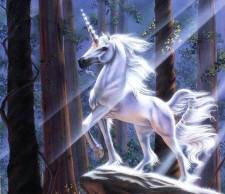
Fortunately, not all of Cantabria’s cave-dwelling creatures are out to kill or maim us, rip up innocent trees and scare the living daylights out of poor little field mice. Some are the proverbial do-gooders, committed to righting the wrongs of their roguish companions. Unicorns and fairies fight for justice in and out of Cantabria’s enchanted woods, whilst the Imp of Lost Items undoes the annoying work of the little chap who likes to hide our saucepans in the microwave and our shoes in the fridge by kindly placing all those objects we had given up for lost down the back of the sofa.
Although these colourful creatures were conjured up by Cantabrian folklore centuries ago, you will no doubt recognise their traits in other legendary characters that have crept into your own country or region’s mythology – particularly those which, like Cantabria, witnessed the passage of the Celts.
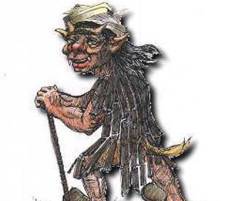
Now, where did I put…? Most of us have shared our homes with El Trastolillo from time to time. One of the most notorious figures in Cantabria’s story-telling tradition, the cheeky, smiling, playful imp, always seen in a white cap and carrying a wooden pole, is responsible for all the bizarre happenings in our houses. Items which disappear, ornaments that fall off shelves for no apparent reason, and noises in the night are all the work of the Trastolillo – and you’ll never escape him, even by moving house. He’ll follow you into your next home and carry on his mischief.
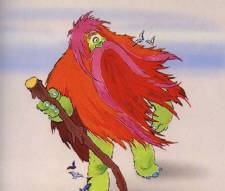
Goliath was handsome next to this lot Walkers in the woods should keep a careful eye out for the Ojáncano, a gigantic creature with a long red beard, on eye, ten fingers on each hand and ten toes on each foot, who passes his time destroying trees, houses, animals and birds. Ojáncanos carry wooden walking sticks like the Trastolillo, but can turn it into a viper, raven or wolf at will. They live in caves in rural Cantabria with Ojáncanas, the female of the species, who are monstrously ugly with long, matted red hair and survive by sucking the blood of children. Ojáncanos as a species cannot reproduce, but when a female dies she is buried at the foot of an oak tree and, after a few months, a plague of worms comes out of the ground that later metamorphose into baby Ojáncanos.
What the Devil…? Luckily, we are spared the presence of the Caballucos del Diablo for another year, as they only come out on June 23, the night of San Juan and the summer solstice. Seven red horses with long, transparent wings like those of a dragonfly, they carry the souls of seven wicked men – demons with skulls – bearing swords with which they make seven crosses in the sky to scare people