Has Miguel de Cervantes been found? Historians may have uncovered Don Quijote's 16th-century creator
Has Miguel de Cervantes been found? Historians may have uncovered Don Quijote's 16th-century creator
ONE of Spain's greatest historical mysteries may be about to be solved - the final resting place of Miguel de Cervantes, author of the legendary novel Don Quijote de la Mancha.
Historians say they are looking for 'a man of about 69, with only six teeth, and a paralysed left hand containing lead cannon shrapnel', which the author suffered in the armed forces when fighting in Italy, Portugal and Algeria and in Spain during the Battle of Lepanto.
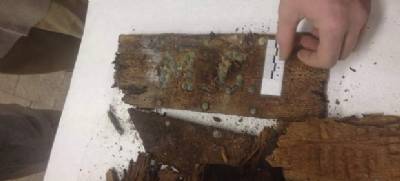
And they have uncovered a niche in the Trinitarias church in Madrid with the initials 'MC' embossed onto the lid.
They are now attempting to open the niche and examine the remains inside to see whether they do indeed match those of Spain's most famous novelist and playwright.
Said to be the most-edited and translated work in history after the Bible and considered to be a pioneering work of modern literature which kick-started Spain's 'Golden Age', or artistic renaissance, The Ingenious Knight Don Quijote of La Mancha centred on a man driven mad by reading knights' tales, to the point where he believes he is one, and sets off across Spain in search of adventure with his fat, faithful 'page' Sancho Panza and his trusty mare Rocinante.
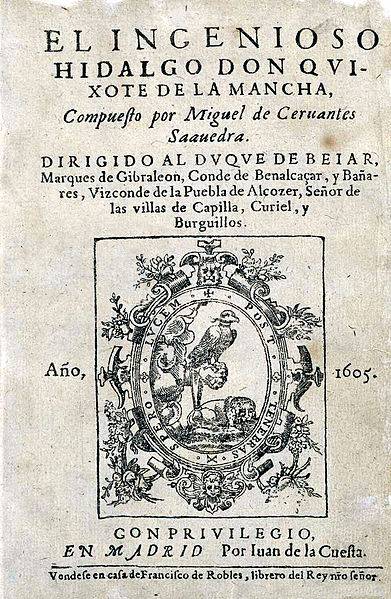
The first part of the novel came out in 1605 and, although Cervantes wrote numerous other short and full-length novels, normally tongue-in-cheek but with moral messages - including The Jealous Extremaduran and The Spanish Englishwoman - and collections of short, satirical plays such as Eight Entremeses, it is Don Quijote and his adventures in Castilla-La Mancha for which he is best remembered.
Originally from Alcalá de Henares (Madrid), Cervantes died from diabetes in 1616, aged 68, in the capital, in the well-known Casa de Cervantes on the corner between C/ León and C/ Francos - in what is known as the Letters District or the Muses District - and was originally buried in the Trinitarias Descalzas Convent at his own request.
When Cervantes had been taken prisoner in Algiers during his spell as a soldier, it was the Trinity congregation who helped secure his and his brother Rodrigo's release.
A church was later built on the site of the convent and the remains of those buried there moved, but the exact location of Cervantes has never been found since.
It has always been believed Cervantes and William Shakespeare died on the same day in Spain and England alike, but in practice Cervantes died on April 22 and Shakespeare on April 23.
And as Great Britain used the Julian Calendar at the time and Spain was using the Gregorian Calendar, even if Shakespeare had died on April 23, this would have been May 3 in Spain.
Despite this, April 23 was declared International Book Day by UNESCO 20 years ago and is celebrated throughout Spain, coinciding in Catalunya with El Dia de Sant Jordi, or Saint George, who is the patron saint of this region as well as that of England.
Other interesting facts about Cervantes' best-known novel which have come to light in recent times are that Israeli prime minister David Ben Gurion and Russian novelist, playwright and poet Alexandr Pushkin both learnt Spanish deliberately so that they could read Don Quijote in the original.
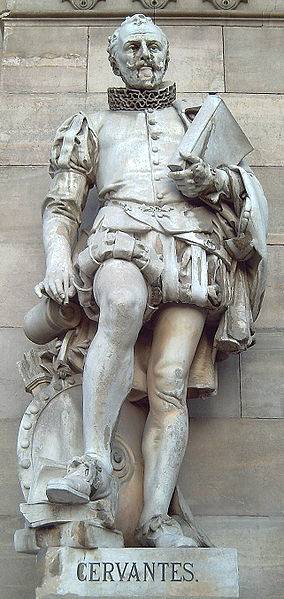
Photographs 2 and 3: Statue of Miguel de Cervantes outside the Spanish National Library in Madrid, and cover of the first edition of Don Quijote de la Mancha (Wikimedia Commons)