
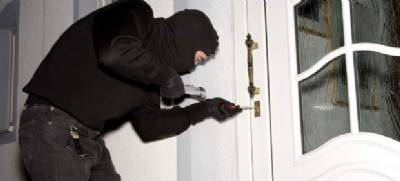
It's not just about the premium, though: Here's what you need to know about choosing a policy
HOME insurance premiums decreased slightly in Spain last year and the trend is set to continue in 2015, according to financial websites.
But an estimated 8.5 million households in the country have no buildings or contents insurance, meaning they are not covered if their house burns down, is damaged by storm, flood or burst pipes, or is broken into.
Now is a good time to take out a policy, however - on average, the cost of annual cover went down in 2014 by 1.4%, or €3.67, bringing the typical annual premium to €250.30.
This is on an all-risks basis - which would include, in many cases, loss or theft outside the home and accidental damage - but the most basic form of cover has gone down in price by an average of 9.1% to €192.20 a year.
A policy which falls somewhere in the middle now costs a typical €241.40, having decreased by 2.1% overall.
Risk factors mean premiums vary greatly, with the type of house or flat and construction, location, security measures, previous claims and age among the many features used to calculate costs, and where an excess applies some companies allow a higher or lower one in exchange for reducing or increasing the premium.
Only premiums for blue-chip policyholders have gone up, by an across-the-board figure of 16.9%, bringing the total to €352.
Top-floor flats saw the lowest fall in premiums, at an average of 0.9%, compared to terrace houses where the cost of insurance went down by 8.9%, with annual prices coming in at €217 and €306 respectively.
Ground-floor flats saw a reduction of 2.2% and those in between the top and bottom floor, 4.1%, with both costing in region of €210 a year.
Only detached houses and villas experienced an increase in premiums, of about 4%, leading to a typical figure of €412.
Finding, comparing and buying insurance: What to bear in mind
Between 2007, the last year before the financial crisis, and 2013 the number of homes with no insurance rose by 13.3% from 7.5 million to 8.5 million.
And a further 10 million are estimated to be underinsured, where the sum insured for buildings does not cover the full rebuilding cost or the sum insured for contents does not reach the full sum needed to replace every item inside the house on a new-for-old basis.
Where a policyholder is underinsured, a reduction in proportion to the percentage of cover lacking is deducted from all claim settlements, meaning it is not cost-effective.
In Spain, the contents element of an insurance policy covers kitchen units and bathroom sanitaryware, even where they are fixed.
This differs from the UK where contents are defined as any item a person could take with them if they moved, even if they would not normally do so - such as carpets not glued down - or as anything that would fall out of the house if it was turned upside-down with the roof off.
Many British-run insurers in Spain may be underwritten in the UK, thus following English and Welsh law and insurance practice.
Spanish insurance policies can be more restrictive in their cover offered, with accidental damage or loss or theft of personal effects outside the home remaining rare.
However, on the more positive side, most Spanish insurers offer 'matching items cover' for a small extra premium, which can be crucial in the event of a large claim - damage to one chair or one sofa of a three-piece suite, to tiles on one wall, carpets up to door-breaks, or kitchen or bathroom fixtures means a British insurance policy would only cover the actual item damaged or destroyed, whilst Spanish policies offer the option to pay for cover for all the undamaged matching items in the set or suite to be replaced at the same time.
Additionally, home insurance policies in Spain rarely carry an excess, even on contents - although motor insurance generally does - whilst British ones, by contrast, always include a minimum sum to be borne by the insured.
And claims settlement is frequently more straightforward, quicker and less onerous than with British policies - for the former, a sum of money is paid in cash based upon the loss adjuster's valuation, whilst for the latter, items are normally replaced or repaired using the insurers' own contractors or suppliers, or a maximum sum equal to the estimates from these firms if the policyholder objects, and where the insured wants a cash settlement he or she will be expected to find at least one written estimate to justify the cost.
Spanish insurers will not pay for damage caused by another identifiable party, such as a wall or fence smashed by someone else's car, as the policyholder will be expected to pursue the culprit or his or her insurers - in contrast, UK insurers will pay the claim and seek to regain the money from the third party insurers, a process known as 'subrogation'.
Natural disasters such as major storm, flood, snow or a rare and serious earthquake like the one in Lorca (Murcia) four years ago are normally covered by the government-run Insurance Compensation Consortium, which the policyholder is required to approach directly and the insurance company itself will not intervene.
In some cases, however, especially with expatriate-run insurers in Spain, the company will pay the claim and then seek the money back from the Consortium.
And in all cases, insurance companies in Spain will be happy to give advice on making independent third-party claims if needed.
When comparing insurance policies, the cost of the premium is only part of the story - a cheap policy may disguise a very basic level of cover with heavy restrictions, whilst a stiffer premium may mean a far more comprehensive type of cover and few upper limits on claim amounts.
Homeowners are advised to ask for a copy of the policy wording and carefully examine the 'exclusions' sections and monetary limits before committing themselves.
Buildings insurance automatically offers property owners' liability cover, for accidents caused to third parties by any aspect of the house or flat - falling roof tiles or a floor giving way, for example - and contents insurance includes occupiers' liability as a matter of course, covering loss or damage to third parties caused by an item of contents, or damage to the house or flat where the policyholder is a tenant.
Until recently, home insurance prices were fairly standard across the board, but firms are now beginning to compete more and newer players are tending to en