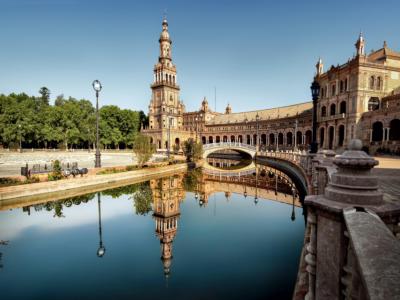
A STAMPEDE during Sevilla's traditional early-morning Good Friday processions has led to eight people arrested and charged with public disturbance, and 17 injured.
One of the wounded is said to be in a critical condition in intensive care after suffering serious head injuries.
Police say the first three people they caught, in the Marqués de Paradas area, have existing records and are well-known to authorities as 'common criminals'.
Many of the injuries were caused by the public starting to panic, but police stress there is no cause for alarm and tourists who have travelled to the city to enjoy the fiestas can continue to do so without qualms.
The crush happened during the city's famous Madrugá, or early-morning parade when the accused parties barged into the paths of the processions and caused widespread panic, stamping at the ground and screaming threats.
A similar chaotic Madrugá was reported 17 years ago – huge stampedes and general confusion turned the celebration into a nightmare which many remembered this time around.
Tonight, however, is the event tourists in Sevilla have all been waiting for: the famous Good Friday parades, re-enacting the crucifixion, with marchers wearing pointy hoods and their faces covered in an act of penitence.
Although they have been compared to the Ku Klux Klan, it is said that the latter's costumes were based upon Spain's Semana Santa, or Easter week hats, gowns and masks, not the other way around.
Whilst Sevilla is arguably the capital of Easter week, practically every town, city and village in Spain hosts its own Good Friday parades and, on Easter Sunday, the Reencuentro, or reunion, between the newly-resurrected Christ and his mother, the Virgin Mary.
Pointy hoods are folded down, masks come up and the dirge on the drums from Friday night becomes upbeat and uplifting.
Doves are sometimes released as a sign of peace, and in some towns flower petals are scattered like confetti and in others, huge handfuls of sweets are thrown around the streets.