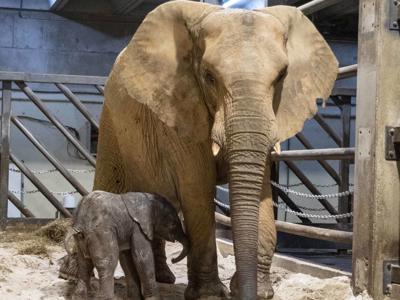
Into the wild: 'Baby safari' at the BioParc
ELEPHANTS being born in the middle of Spain's third-largest city is not something that happens every day. In fact, until this month, it had never happened before.
Sign in/Register
Looking for the Professionals/Advertiser Login?
By Signing up you are agreeing with our Terms and Privacy Policy.Forgot your password?
Feedback is welcome


Creutzfeld-Jakob Disease (CJD) or Bovine Spongiform Encephalopathy (BSE), commonly known as 'mad cow disease' is the reason anyone who lived in the United Kingdom between the years of 1983 and 1996 is not allowed to donate blood anywhere in the European Union, but has not reared its head in 20 years either in Britain or on the continent to any degree.
Now, however, the regional agricultural ministry in Cantabria says a cow who is thought to have died of the condition, and who was born in 2002, has been reported to them from a farm in the town of Camargo.
The virus was detected after routine veterinary checks were carried out, as is required for all cows aged four years old or over upon death.
According to usual procedures and as a precaution, all cows of the same breed and age, within a margin of two years, and all descendants of the animal which caught BSE have had to be identified and put to sleep.
In the case of the Camargo farm, this means five out of a herd of 90, and they will all undergo tests after being put to sleep.
But they have to be humanely killed first, because they may be carriers even if they show no symptoms and tests prove negative.
All beef cattle over a year old have their brain and spinal cord removed at the slaughterhouse before being processed for meat, meaning the specific CJD-risk elements do not come into contact with beef eaten by the end consumer.
As a result, says regional minister Jesús Oria, there is no danger to the public and nobody has to stop eating beef or drinking milk.
Any cows slaughtered, whether on humane grounds or for meat, are fully tested whether or not their carcasses are destined for public consumption and even in the absence of any BSE alert, Oria explains.
He reveals that another case has recently been reported in Cantabria's southern neighbour, Castilla y León, but that Spain is considered to be of 'insignificant risk' Europe-wide for CJD.
Detecting 'the occasional isolated case' is 'completely within the norm', and a sign that the thorough testing for the disease 'is working properly', Oria stresses.
He urges meat-eaters and dairy-consumers to remain 'calm' and insists there is no cause for alarm.
ELEPHANTS being born in the middle of Spain's third-largest city is not something that happens every day. In fact, until this month, it had never happened before.

RAIL board RENFE has made two announcements this week: One, that pet-parents may be able to take their dogs on trains if a pilot study works out as hoped, and two, that the long-distance ALVIA routes to and within the...

A FUN, splashy and cute coastal sport has come to Europe for the first time ever and is being held right now in Asturias – dog-surfing is very deep-rooted in California, USA, and Australia holds regular championship...

PET PARENTS who get a new fluffy friend from Fuengirola's local shelter will not have to pay for vaccines, microchips, sterilising or compulsory paperwork – even if they take them home months before these are due.