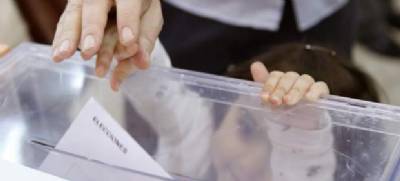
Mossos ordered to cordon off polling stations and block access
Mossos ordered to cordon off polling stations and block access
CATALUNYA'S police force, the Mossos d'Esquadra has been ordered to seal off all polling stations and a 100-metre radius around them to prevent voting on October 1 in the 'illegal' independence referendum.
Now that the State has taken control of the Mossos, they are required to follow orders from the ministry of the interior and not from Catalunya's regional government.
However, the order to block access to polling stations has come from the prosecution in Catalunya, led by José María Romero de Tejada who issued the orders last week for the national government to seize jurisdiction of the Mossos.
Mossos chiefs, although they admit they have little choice but to obey orders from the regional prosecution, say trying to stop the voting altogether – even in the street outside the polling stations – could lead to 'serious public disturbance issues'.
Already, many officers have been around the voting stations to identify and interrogate their team leaders and seize documents, ballot slips, and even ballot boxes and computers.
Meanwhile, the Guardia Civil has blocked access to over 140 websites in support of the referendum, including the internet portal of the Catalunya National Assembly, following orders from the regional High Court of Justice.
Spain's minister of health, Dolors Montserrat – the only national cabinet member from Catalunya – has urged the president of the north-eastern region, Carles Puigdemont, to 'get back to legality' and 'speak for everyone'.
If he wants to hold an independence referendum, says Sra Montserrat, Puigdemont should gather together his pro-secession parties and put pressure on the national Parliament to amend Spain's Constitution – which was drawn up in 1978 and has not been amended since, other than a couple of minor tweaks such as the gender of the first in line to the throne.
Any referendum on independence, even a non-binding opinion poll, goes against Spain's Magna Carta which calls for complete national unity, and cannot be agreed in any format.
The only way a valid referendum could be called would be by amending the Constitution – something the majority of Spanish society and many opposition politicians believe is long overdue, given that it was drafted to 'guide' national law at the end of a 40-year dictatorship and at a time when Spain was still little more than a third-world nation.