
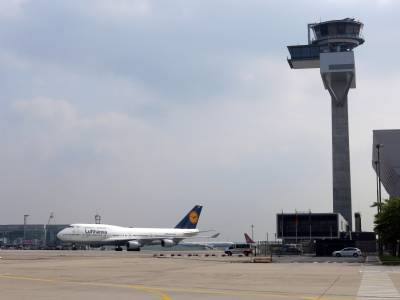
PILOTS and air-traffic controllers are allowed to communicate with each other in Spanish rather than English if this is the mother tongue they have in common, or both parties feel more comfortable using it, Spain's ministry of public works has agreed.
A European Union directive requiring captains and air-traffic control to use the English language at all times caused a stir in Spain, since most pilots on national airlines and control-tower staff in the country are native Spaniards, and it seemed illogical that they should have to speak to each other in a foreign language – especially in emergencies.
But an agreement by the national government in response to pilots' unions SEPLA and USCA means the two parties can use Spanish 'where operative scenarios render it advisory'.
The idea of English becoming the lingua franca is to increase safety, and it only applies to airports with a minimum of 50,000 international flights per year.
These, in Spain, are Alicante-Elche, Madrid's Adolfo Suárez-Barajas, Barcelona's El Prat, Málaga-Costa del Sol, Palma de Mallorca, Gran Canaria, and Tenerife South-Reina Sofía.
USCA and SEPLA say they are 'satisfied' with the verdict from the national government, and reveal that other European Union member States have introduced similar exceptions.
The directive does in fact allow member States with working languages recognised by the International Civil Aviation Organisation (ICAO) to continue using these where the situation allows it, or where it is recommended.
Pilot unions stress that precedence should always be given to effective communication, which they say is always more likely to be the case where both parties share a native language and use it – even though airline captains and air-traffic control use English constantly every day.
Countries which decide to apply this exception are required to advise the European Commission as such by the end of this year.