
NEW legislation aiming to protect the public from telephone scams and cold-calling is under construction, and will attempt to attack it at source by tightening up on commercial use of customers' personal data.
Sign in/Register
Looking for the Professionals/Advertiser Login?
By Signing up you are agreeing with our Terms and Privacy Policy.Forgot your password?
Feedback is welcome

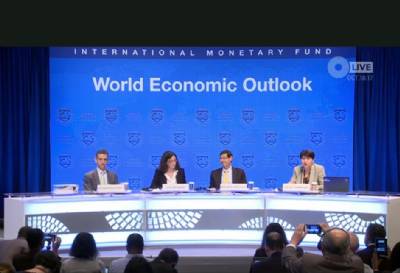
Although the global organisation said on Friday that the banned referendum and threats of a unilateral declaration of independence (UDI) would 'weigh heavily on investor confidence and decisions', the FMI's World Economic Outlook report presented today (Tuesday) remains consistent in its growth predictions for Spain.
The banking association chaired by Christine Lagarde has been forecasting 3.1% economic growth for Spain in 2017 and 2.4% for 2018, and the former has not changed as a result of the Catalunya troubles, whilst the latter has actually increased to 2.5%.
Spain is predicted to be the first-world economy that shows the most growth in both years, ahead of some of the largest and wealthiest Eurozone nations and global forces such as Japan, the UK, Canada and the USA.
Inflation forecast for 2017 in Spain has dropped to 2% from 2.4%, according to the FMI, and the group believes unemployment will fall from 17.1% in 2017 to 15.6% by the end of 2018.
Once again, the FMI recommends Spain ends its 'two-speed' labour market, caused by the high level of temporary contracts and job insecurity, and calls for redundancy and end-of-contract pay-outs to be equalled to eliminate any benefits employers may see in keeping staff on a string of three- or six-month contracts.
The FMI also wants Spain to introduce a sole, blanket job contract type rather than the numerous varieties that currently exist and which add to the problem of the 'two-speed' labour market.
Eliminating the high level of temporary work as opposed to permanent jobs would 'help increase productivity and employment as well as resilience against future financial shocks', the FMI considers.
Overall, the FMI believes the global economy will continue to recover at a gradually faster rate, growing by 3.6% this year and 3.7% next year.
But this recovery is 'incomplete', the FMI says – firstly because salary rises in first-world countries are 'weak' in comparison with their gradually-strengthening GDP; secondly because small energy exporter countries, particularly those in the Middle East, are still blighted by 'political unsettlement', and thirdly because recovery in general is proving to be 'very slow'.
“Technological progress and trade have lifted some nations but left others behind,” the FMI's research director Maurice Obstfeld says.
“The wealth imbalance generated as a result has ignited political discontent and scepticism about the gains to be found in globalisation, putting recovery at risk.”
NEW legislation aiming to protect the public from telephone scams and cold-calling is under construction, and will attempt to attack it at source by tightening up on commercial use of customers' personal data.
INTEREST rates in the Eurozone could fall to 2.5% next year, having closed August 2024 on 3.75%, according to latest research.
GRANTS of up to €250 are available this year for replacing older air-conditioning units in a bid to encourage greater energy efficiency.
TWO of Spain's largest high-street banks are reported to be in merger talks, potentially resulting in the joint entity being the second-biggest in the country in terms of share capital.