Chemical purchase restrictions 'to prevent terrorism' introduced
Chemical purchase restrictions 'to prevent terrorism' introduced
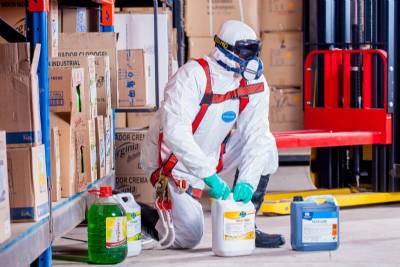
CHEMICALS which could be used to create explosives will now be restricted in sale and require a special permit to buy them now that Spain has incorporated a European law passed in 2013.
Substances affected by the new rules include certain weed-killers, insecticides and disinfectants, as well as chemicals used in arts and crafts.
Certain preservatives and even components found in toothpaste and shampoo – which are not explosive or dangerous in the quantities used in these products, but in very large amounts could be dangerous in the wrong hands – will also require a permit,
Use or purchase of everyday consumer goods such as cleaning fluids, hair dye, nail-polish remover – which usually contains acetone – barbecue-lighting or fire-lighting cubes, bleach, detergents and so on will not be affected by the new legislation.
Chemicals such as nitromethane, used in making model aircraft and cars, nitric acid which is used for engraving metal and jewellery, anti-corrosion fluids for metal often used in the fine arts or for preserving licensed firearms such as potassium chlorate, and weed-killers like sodium chlorate will need a licence.
Interior minister Juan Ignacio Zoido says the new legislation 'is not seeking to go against anyone', but merely to 'improve safety for everyone' by limiting availability of certain toxic or corrosive fluids to the general public and 'guaranteeing adequate communication' in the event of 'suspect transactions' – a fundamental tool in fighting terrorism.
The legal reform was sparked by the fact that the Jihad terrorists who staged the Catalunya attacks two months ago had tried to create explosives to commit the massacres, but resorted to using vehicles and knives when their laboratory in an abandoned house in Alcanar (Tarragona province) blew up, killing a rogue Imam now known to have been indoctrinating young Moroccans, and leading to the identification of others involved in the cell.
Ingredients used in Alcanar included triacetone and triperoxide, both of which they were able to purchase without a permit or any kind of monitoring.
Now, if anyone tries to buy them without a licence, police will be notified, and anyone who buys them with the required permit will be instantly trackable.
PDeCat votes against
The only party in national Parliament which voted against the move was PDeCat, one of the main pro-secession outfits in Catalunya, saying the law clashed with existing measures already in force in the region.
PDeCat was reproached by MP Ana Vázquez of the PP for being the only party opposing the move, which infuriated its leader Carles Campuzano as he took it that they were being held responsible for the terrorist attacks in August in Barcelona and Cambrils (Tarragona).
“You've linked our position with terrorism issues,” stormed Campuzano.
“It's intolerable to claim that our attitude makes us responsible for the attacks.”