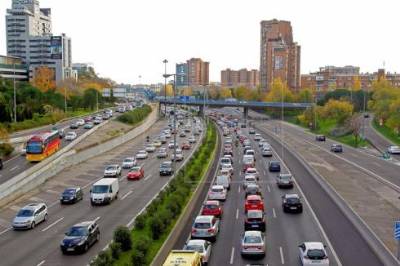
Traffic police predict 6.7 million car journeys over Constitution holiday
Traffic police predict 6.7 million car journeys over Constitution holiday
From Tuesday afternoon (December 5th) until midnight on Sunday (December 10th), the Dirección General de Tráfico (DGT) will be upping police presence on Spanish roads in view of the 6.7 million car journeys expected to be undertaken by people across the country over this week's Constitución and Inmaculada holidays.
According to the DGT, the largest volume of road traffic is expected early on Tuesday afternoon, especially on the exit roads from Spain's major cities towards mountain and coastal areas, as well as large volumes of traffic travelling to local leisure and shopping centres.
Most of the returning traffic is expected on Saturday afternoon and Sunday, with long tailbacks predicted on roads leading out of mountain and coastal areas in the afternoon and evening, and on the roads into the main cities. People travelling back on Sunday are advised to set off in the morning.
Most of the traffic is expected in central and southern areas and along the Mediterranean coast.
The road traffic police reinforcements will mean more drink and drug driving checks, more speed checks and the implementation of additional lanes to cope with heavy traffic in any particular direction when possible, restrictions on vans and lorries, the suspension of roadworks and the advertisement and promotion of alternative routes.
The DGT will also employ eight Pegasus (helicopter-mounted) radars, in addition to the conventional radars, which will be centred on the most dangerous roads.
This additional police presence will involve almost 6,000 additional Guardia Civil agents, more than 800 civil servants, supervisory technicians and emergency service personnel, and over 13,000 highway maintenance employees.
The DGT has reminded drivers that weather conditions at this time of year can often complicate road trips, insisting that good journey planning is "essential", and reiterating the importance of winter tyres or chains when travelling to more mountainous regions.