Greenpeace blames 'poor water management' for drought, not just lack of rain
Greenpeace blames 'poor water management' for drought, not just lack of rain
GREENPEACE'S latest report warns that a third of Spain's territory is at risk of becoming desert and up to 75% of the country's land is 'vulnerable'.
The paper, Drought: More than lack of rainfall says the effects of climate change in Spain are the 'most worrying and severe' on the continent.
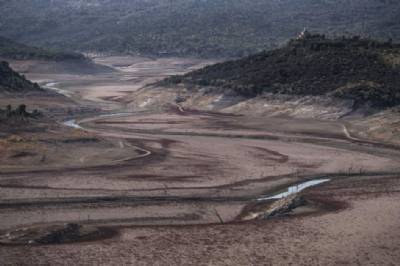
At the time of the report, reservoirs were down to 37.3% of capacity after the driest spring since 1965 – with rainfall 23% below normal – and the least rain year-round in over 22 years.
But this week, it was reported that water levels had dropped once again, to 36.5%.
Reservoirs in Spain have lost 129 cubic hectometres (1.29 million litres) of water in less than a week, or around 0.2% of their capacity.
Rivers in particular risk include the Segura, through Alicante and Murcia, now only 13.5% full, and the Júcar, through Valencia and Castellón, at 24.9% full.
The Canada-based environmental charity says 'poor water management' and policies that 'have not worked to mitigate dry periods and desertification' are to blame almost as much as the lack of rainfall.
“Spain has lived and legislated as though it were a country with an endless supply of water,” Greenpeace states.
The Mediterranean and the Canary Islands are the most at-risk areas for desertification, and yet the former has historically seen spring and winter monsoons – known as a gota fría – keeping it green and its reservoirs topped up whilst the centre of the mainland rarely saw a drop.
But the last five or six years has seen the typical seasonal storms pass over the Mediterranean completely.
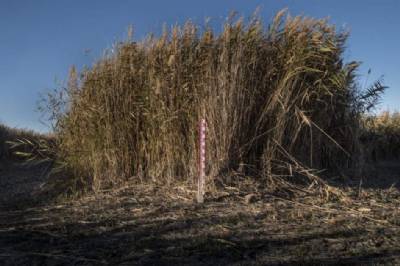
As far back as 2005, the Gallocanta Lagoon in the province of Zaragoza was already suffering the effects of drought, and by 2007 it was almost empty, whilst the Tablas de Daimiel wetlands (second picture) in the province of Ciudad Real, which has capacity for up to 2,000 hectares (4,942 acres) of its surface to be filled with water, was down to a quarter by November – 500 hectares, or 1,236 acres.
Greenpeace has also named the Ruidera Lagoons in the province of Ciudad Real, the La Tranquera reservoir in the province of Zaragoza and the Entrepeñas swamp in the province of Guadalajara as being in an emergency situation and not even 10% full.
Spain's largest and fullest river, the Ebro, all but dries up in the Caspe (Zaragoza province) area, and the river Tajo, another of Spain's main water courses, shrinks to a trickle through the province of Guadalajara.
Last year saw water restrictions in the northern Alicante province on the coast, although emergency measures have been taken to try to prevent it happening again, and the towns of Jávea, and Torrevieja in the south of the province, have desalination plants to ensure a permanent on-tap supply – although these are an expensive option which customers will be paying off through their bills for decades.
Inland regions, including Navarra, Aragón, Extremadura, Castilla-La Mancha and Castilla y León have had to turn off supply for part of the day either for set periods, such as in summer, or throughout the year and ongoing.
Parts of Andalucía, Cantabria, Asturias and Galicia have also been affected, showing that not even the coast is completely safe.
In total, 124 towns, villages and even provincial capital cities such as Zaragoza, Oviedo, Ourense and Zamora have seen their supply restricted.
Greenpeace calls for an holistic approach to water management – encompassing farming, freshwater and salt-water ecosystems, forest fires, energy supply, health, public safety and climate change as one complete issue rather than separate problems.
“Basing water supply policies on there being an unlimited amount available is a big mistake with serious social and environmental consequences and, despite Spain's having more reservoirs per head than any other country in the world, supply issues continue whenever rainfall is low,” Greenpeace warns.