
HIGH-SPEED rail services between Spain's largest two cities and France have been snapped up by half a million passengers in less than nine months, reveals the transport board.
Sign in/Register
Looking for the Professionals/Advertiser Login?
By Signing up you are agreeing with our Terms and Privacy Policy.Forgot your password?
Feedback is welcome

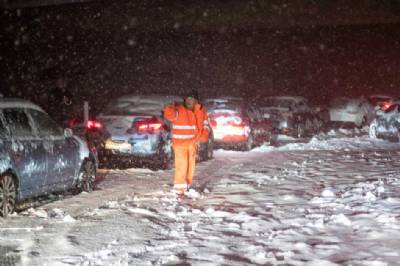
The possible change in the law has arisen in light of recent chaos on the AP-6 motorway in Castilla y León, where over 3,000 cars were trapped for more than 18 hours overnight in snowdrifts.
General Directorate of Traffic (DGT) boss Gregorio Serrano has apologised for 'any mistakes he may have made', and his Road Safety Committee has reported on 'serious and significant defects' in procedures and communication on the part of toll franchise firm Iberpistas, which is responsible for road maintenance and security – defects which the team has even described as 'negligent'.
Dozens of main roads were blocked over the last few days, including the AP-68 in La Rioja (first picture) and an estimated 115 were affected by slow-moving traffic as a result of the heavy snowfall - up to 45 centimetres (18 inches) in some cases.
Areas of the country where drivers may be required to carry 'snow kits' could include Aragón, Castilla y León, La Rioja, Navarra, Cantabria, Asturias, and other central and northern areas known for their low winter temperatures, particularly at high altitudes.
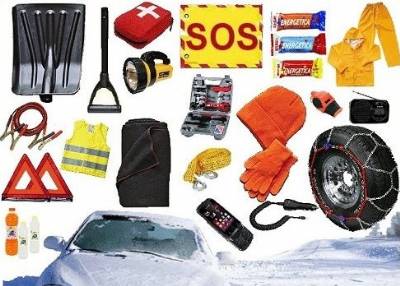
But drivers have already complained about the possibility of emergency snow implements being made obligatory, given that it could include up to 18 items.
A spade, windscreen scraper, de-icer, snow chains, a torch, a whistle, a radio, a waterproof coat, trousers and wellington boots, a mobile phone with a spare battery and charger, blankets, woolly hat and gloves, large bottles of water and energy snack bars, a tool box, red triangles, reflective jackets, a first-aid kit, jump leads, a tow-bar and other items may be included.
Although some are already a legal requirement for driving anywhere in Spain – two red warning triangles, reflective jackets for all occupants, a first-aid kit and bulb kit – and others, such as jump leads, mobile phone chargers, food and drink, and torches are normally carried by drivers in any case, a flood of outraged comments has appeared on social media.
Some Twitter and Facebook users ask 'where they are supposed to put their suitcases', others say they will need a trailer to fit it all in, and one Twitter-user adds: “They've forgotten to add a Swiss Army knife, a compass, several litres of cooking oil, a gas-powered fridge, a hamper of food, a tent, a coffee machine, a kettle and a travel stove.”
Many say it is 'a bit much' to expect drivers to carry a spade in their boots when traffic authorities should be prepared by ensuring snow-ploughs and gritter lorries are on stand-by.
HIGH-SPEED rail services between Spain's largest two cities and France have been snapped up by half a million passengers in less than nine months, reveals the transport board.
LOW-COST self-service petrol station chain Ballenoil plans to open a further 110 premises in Spain this year on top of the 233 it already operates nationally.
LEARNING to drive may sound as thrilling as it is daunting, but can be one of the most frustrating times in a young adult's life – and one of the most expensive, too.
EVERY now and again, Spain's traffic authority launches a campaign to remind drivers of what they should and should not be doing, or to answer common questions – such as, can drivers be fined if passengers do not...