Storms boost reservoirs and ease nationwide drought
Storms boost reservoirs and ease nationwide drought
RECENT storms sweeping Spain have helped ease the drought a little – reservoirs were down to under 37% full at the beginning of 2018, but are now up to 42%.
The last week alone, which brought a cold front from the Atlantic with snow in the centre and north of the mainland and torrential rain and gales on the east coast, has seen reservoirs rise by 0.4%, or a total of 23,487 cubic hectometres.
Although relatively little and still well below the amounts needed to guarantee a water supply 24 hours a day for the entire population this summer, it is still the eighth increase in a row, says the ministry of agriculture.
Downpours this week left up to 85.5 litres of rainfall per square metre (8.55 centimetres, or 3.36 inches) in the province of Alicante especially, one of the areas of Spain which most suffers from the drought and typically sees less annual rainfall than in the Sahel strip of the Sahara desert.
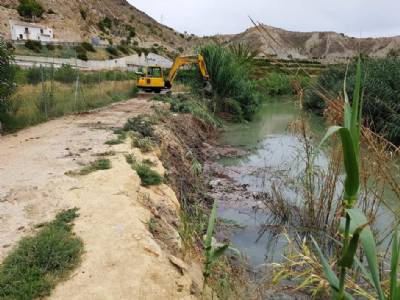
As a result, the river Júcar, through the province of Valencia, is up to 25.8% of its capacity and the river Segura, through the province of Alicante and the Region of Murcia, is now at 15.4%, having been at barely 13% at the end of 2017.
Rivers, wells and reservoirs in the Basque Country are now completely full, and at the eastern end of the Cantabrian Sea coast, they stand at 96%.
Last year ended with a rainfall shortage of 44% and with reservoirs on average at 38.1%.
Photograph by the water supply and rivers authority in Alicante and Murcia, the Segura Hydrographic Confederation (CHS)